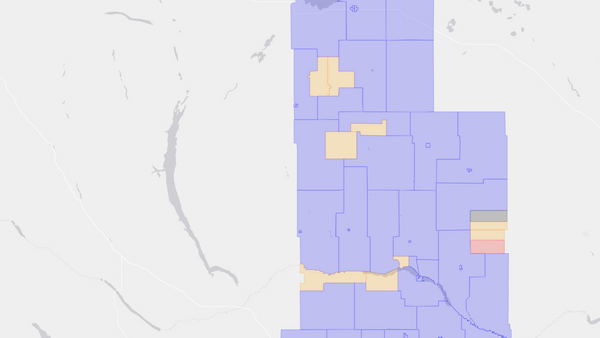
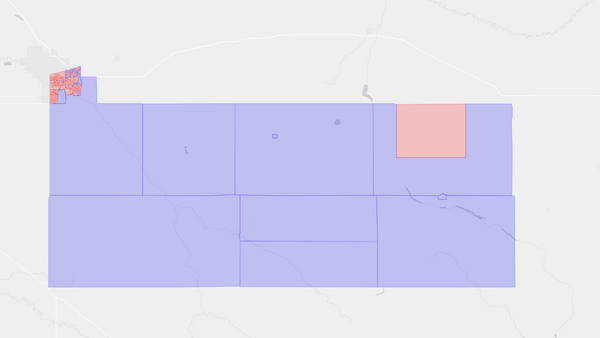
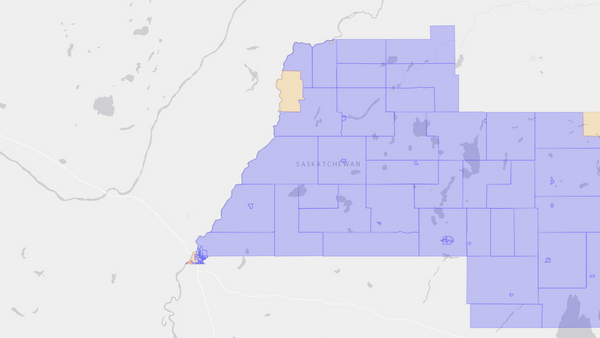
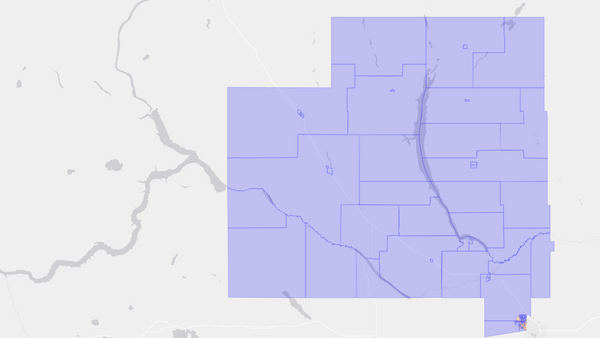
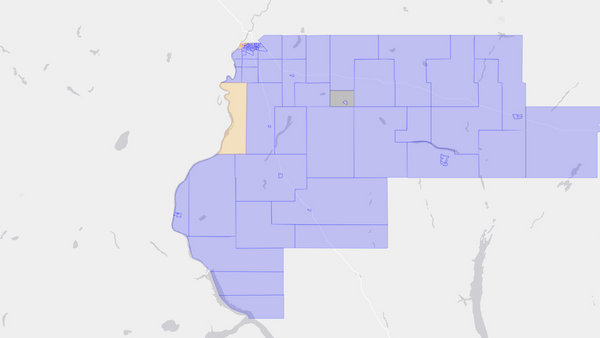
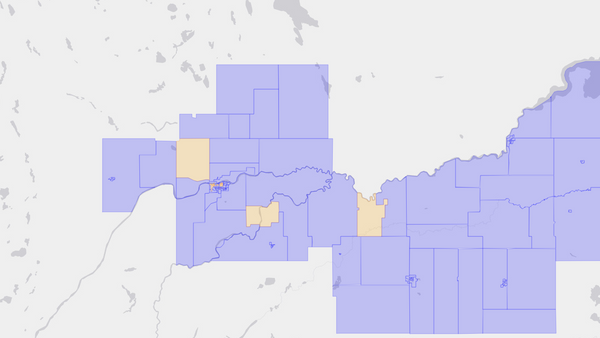
Yorkton—Melville, SK — 2008 Federal Election Results Map
Yorkton—Melville — 2008 Election Results
📌 The Canadian federal electoral district of Yorkton—Melville was contested in the 2008 election.
🏆 Garry Breitkreuz, the Conservative candidate, won the riding with 19,824 votes (68.0% of the vote).
🥈 The runner-up was Doug Ottenbreit (NDP-New Democratic Party) with 6,076 votes (20.8%), defeated by a margin of 13,748 votes.
📊 Other notable candidates: Jen Antony (Green Party, 6%) and Bryan H. Bell (Liberal, 5%).
Riding information
Auto generated. Flag an issue.Yorkton—Melville
Yorkton—Melville covered 38,027 square kilometres of east-central Saskatchewan, running from the Qu'Appelle River in the south to the country around Hudson Bay in the north and pressed against the Manitoba line on the east. Yorkton and Melville were its two cities. Canora, Kamsack, Esterhazy, Langenburg, Foam Lake, Wadena and Preeceville anchored the trading districts between them, and grain terminals, potash headframes and the CN main line set the working landscape.
Candidates
Garry Breitkreuz (Conservative) — Breitkreuz, born in 1945, farmed and taught school in the Springside district before he took the seat in the Reform Party's 1993 breakthrough, ending a New Democrat hold that had run through Lorne Nystrom's twenty-five years as member. He kept it in four further elections under the Reform, Canadian Alliance and Conservative labels and was seeking a sixth term. His signature file in Ottawa was the federal firearms program: he pressed repeatedly for repeal of the long-gun registry through private members' business, and used written questions and access-to-information requests to challenge the registry's cost and the accuracy of its records.
Doug Ottenbreit (NDP) — A lawyer practising in Melville, Ottenbreit stood for a party that had held this stretch of country until the early 1990s and still kept an organisational base in the rail and farm towns.
Jen Antony (Green Party) — A journalist from MacNutt, a village close to the Manitoba boundary, Antony carried the Green banner across a riding where the party had almost no standing organisation.
Bryan H. Bell (Liberal) — Bell, a manager who gave his residence as Regina, stood for the Liberals in a part of Saskatchewan where the party had been out of contention for years.
About the Riding
The 2006 census counted 66,094 people here, down 6.8% from 2001, one of the corners of the country shrinking even as the western resource economy ran hot. Ukrainian and German settlement shaped the towns and the churches, and the Cote, Keeseekoose and Key First Nations near Kamsack formed part of the riding's population. Yorkton, with roughly 15,000 residents, worked as the regional retail, health and equipment-dealer hub; Melville was a railway town whose fortunes tracked CN's operations.
Farming here meant canola, wheat, barley and cattle, and 2008 was a year when the value of what came off the land collided with what it cost to grow. Fertilizer and fuel prices spiked through the spring and summer. Two canola crushing plants were under construction at Yorkton, one announced by Richardson International at about $100 million and one by Louis Dreyfus at about $90 million, promising a local market for a crop that had mostly left the province raw. Harvest Meats, a sausage and processed-meat business the Propp family had run in the city since the 1930s, kept several hundred on its payroll. To the south, Mosaic's Esterhazy potash mines were running at capacity, and in April the company announced a $3.15-billion expansion of its Saskatchewan operations, $1.7 billion of it at Esterhazy.
Federally, grain marketing was the argument that divided farmers. The Conservative government had spent its first term trying to strip the Canadian Wheat Board of its single desk for barley and wheat exports; Stéphane Dion had committed the Liberals to leaving the monopoly in place unless producers voted it away, and the New Democrats took the same line. Breitkreuz's firearms work cut the same way in a riding of hunters and farm gun owners. Beyond that, campaigning turned on the practical grievances of a thinning rural population: doctors and nursing homes, highway and bridge repair, branch-line abandonment, and whether federal money would follow people out of towns that kept getting smaller.