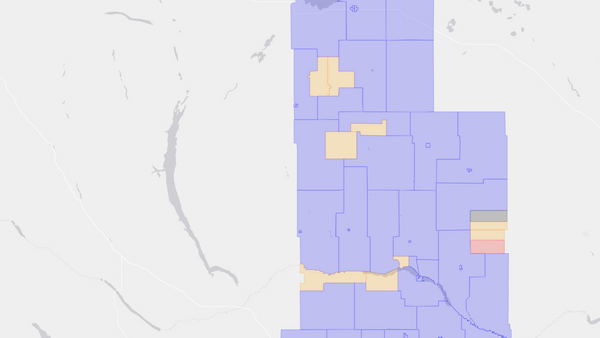
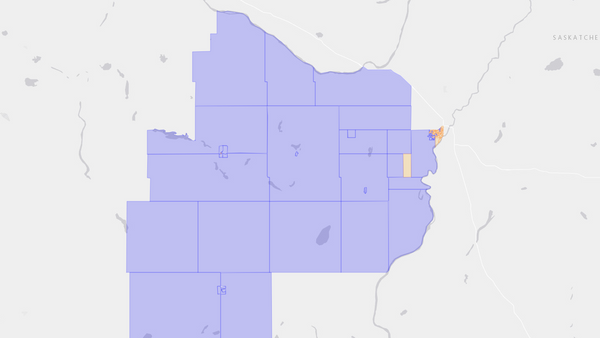
Prince Albert, SK — 2008 Federal Election Results Map
Prince Albert — 2008 Election Results
📌 The Canadian federal electoral district of Prince Albert was contested in the 2008 election.
🏆 Randy Hoback, the Conservative candidate, won the riding with 16,542 votes (57.7% of the vote).
🥈 The runner-up was Valerie Mushinski (NDP-New Democratic Party) with 8,243 votes (28.8%), defeated by a margin of 8,299 votes.
📊 Other notable candidates: Lou Doderai (Liberal, 8%).
Riding information
Auto generated. Flag an issue.Prince Albert
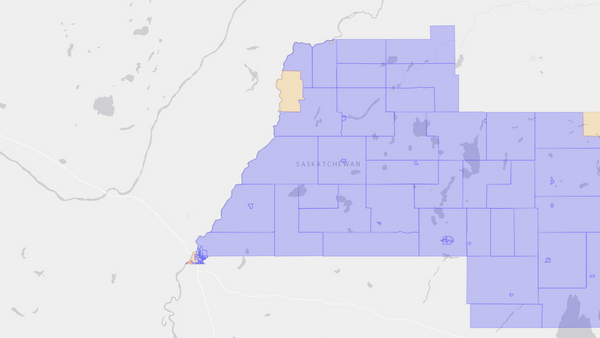
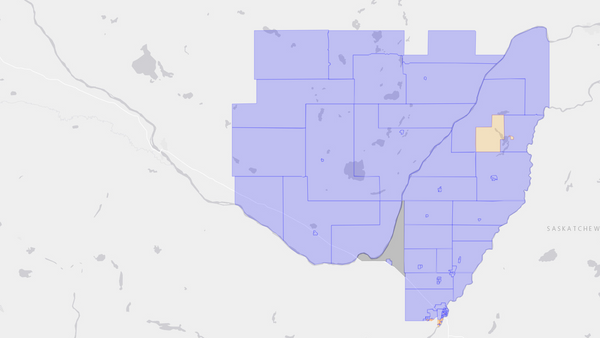
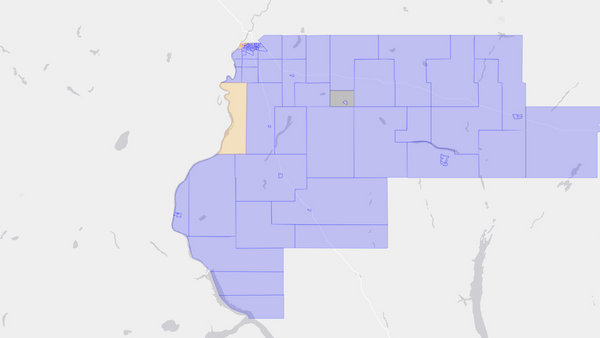
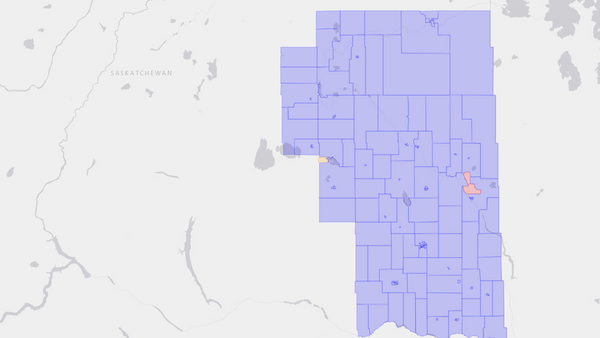
Prince Albert follows the North Saskatchewan River through the city that names it, then reaches east across the Carrot River country to Melfort, Tisdale and Nipawin. The riding sits on the seam where grain land gives way to boreal forest, spreading across about 19,000 square kilometres of farmland, bush and small service towns.
Candidates
Randy Hoback (Conservative) — Born in Prince Albert in 1967, Hoback spent the years 1986 to 2000 with the farm machinery manufacturers Flexicoil and Case New Holland, then bought the family farm and ran it alongside a custom seeding, spraying and trucking business. He held a business administration certificate from the University of Saskatchewan and a Chartered Director designation earned through McMaster University and the Conference Board of Canada. Chairing the Western Canadian Wheat Growers Association took him to World Trade Organization sessions in Geneva and Hong Kong, and gave him standing in the marketing debates splitting prairie farmers.
Valerie Mushinski (NDP) — A chief executive based in Nipawin at the eastern end of the riding, Mushinski had carried the New Democratic banner in Prince Albert in 2006 and campaigned on health care, affordability and the pressures facing working families in the north.
Lou Doderai (Liberal) — Doderai worked as a realtor in the city of Prince Albert.
Amanda Judith Marie Smytaniuk (Green) — An account manager living in Prince Albert, Smytaniuk ran on the Green platform.
Craig Batley (Canadian Action Party) — A Prince Albert security guard, Batley stood for the Canadian Action Party.
About the Riding
The seat was open. Brian Fitzpatrick, the lawyer who took it for the Canadian Alliance in 2000 and held it through two further elections, was not on the ballot, leaving the Conservatives to defend the riding with an untested candidate.
Nothing had shaped local argument more than the collapse of the forest industry. Weyerhaeuser shut the Prince Albert paper line in January 2006 and closed the pulp mill that April, ending about 690 jobs at the plant. The company's sawmill at Big River, which had shipped chips to the mill, went down the same year, and the Wapawekka mill north of the city cut its crew. Domtar took over most of the Weyerhaeuser assets under a merger announced in August 2006 and completed the following spring; through 2008 the paper machine and converting equipment were being stripped out rather than restarted.
Mayor Jim Scarrow laid out the municipal damage before the Commons natural resources committee on 11 March 2008. The mill had accounted for about 19% of the city's total budget; Prince Albert had lost roughly $1.7 million in property tax and $1.6 million in energy surcharges; and he counted close to 4,000 jobs gone across the province once sawmills and suppliers were included. He pressed Ottawa to back higher-value wood products rather than commodity pulp.
Public payrolls and the farm economy carried the city in the meantime. The Saskatchewan Penitentiary, the provincial correctional centre and Victoria Hospital ranked among the largest employers, and the long-vacant Holy Family Hospital, closed since 1997, was demolished in March 2008. East of the city, the black soil around Melfort, Tisdale and Nipawin grows some of the strongest wheat and canola yields in the province, and the 2008 crop was coming off into unusually high grain prices.
Prince Albert is also the doorway to the north. The Prince Albert Grand Council, the tribal council for twelve First Nations across the province's northern half, keeps its offices in the city, and about a third of residents identified as Aboriginal in the 2006 census — one of the highest shares of any city in the country. Housing, policing, addictions and youth employment were argued in local rather than national terms here. City polls carried a New Democratic tradition; the farm country wrapped around them was among the most reliably Conservative ground in Saskatchewan.