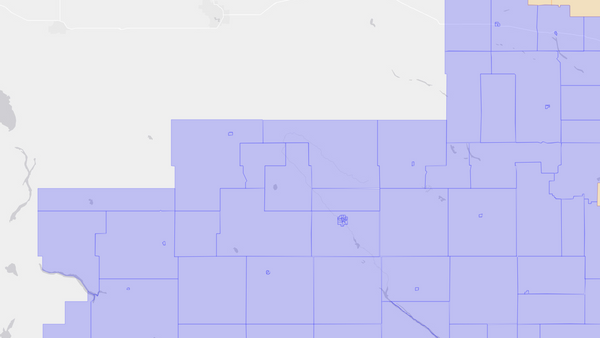
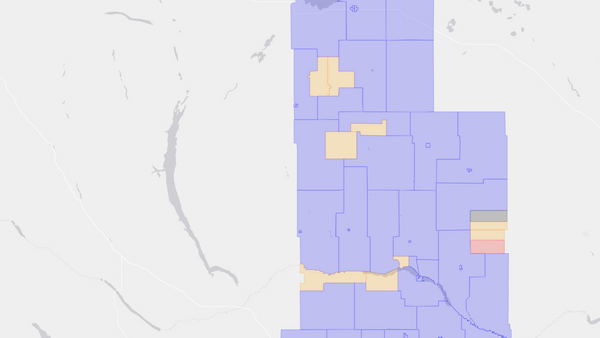
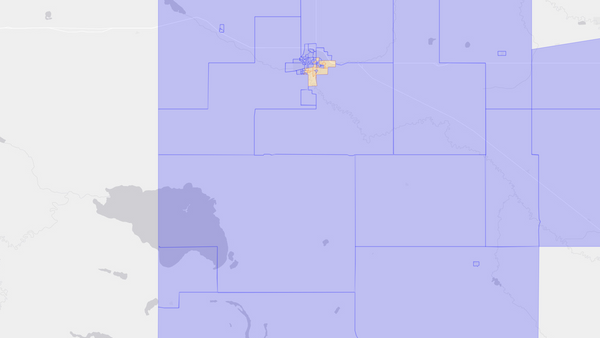
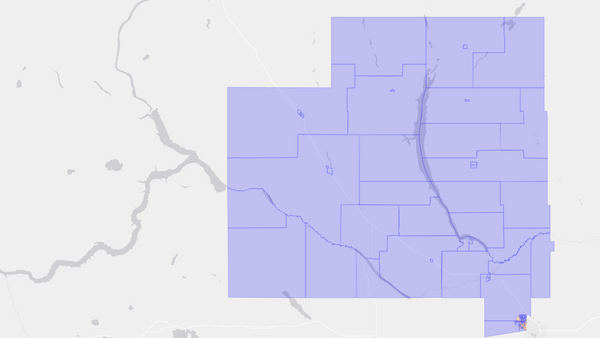
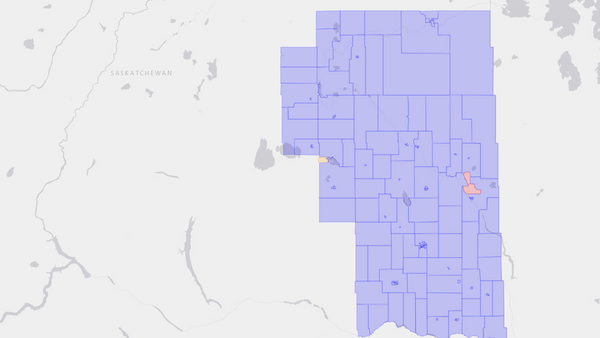
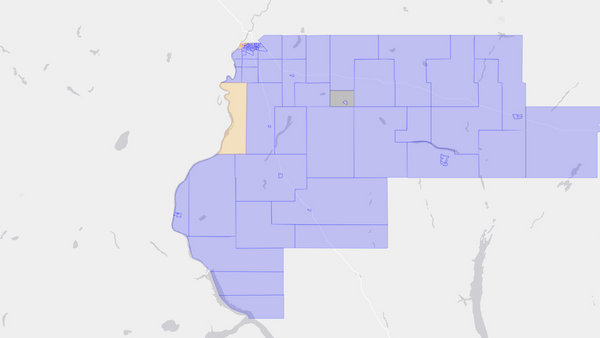
Wascana, SK — 2008 Federal Election Results Map
Wascana — 2008 Election Results
📌 The Canadian federal electoral district of Wascana was contested in the 2008 election.
🏆 Ralph Goodale, the Liberal candidate, won the riding with 17,028 votes (46.1% of the vote).
🥈 The runner-up was Michelle Hunter (Conservative) with 12,798 votes (34.6%), defeated by a margin of 4,230 votes.
📊 Other notable candidates: Stephen Moore (NDP-New Democratic Party, 15%).
Riding information
Auto generated. Flag an issue.Wascana
Wascana covered Regina east of Albert Street, bounded on the north by the Canadian Pacific main line and Victoria Avenue and running east to the edge of the built-up area. Within those lines sat the downtown core, the Saskatchewan Legislative Building, Wascana Centre, the University of Regina and the established residential districts between them — the most nearly urban of the seats that touched Saskatchewan's capital.
Candidates
Ralph Goodale (Liberal) — Born in Regina in 1949 and raised on a farm near Wilcox, he took a law degree at the University of Saskatchewan and won Assiniboia for the Liberals in 1974 at the age of 24. Defeated in 1979, he led the Saskatchewan Liberal Party from 1981 to 1988 and sat in the provincial legislature from 1986, then returned to Ottawa in 1993. Agriculture, natural resources and public works were his portfolios through the Chrétien years, and Paul Martin made him Minister of Finance from 2003 to 2006. The RCMP investigation into a possible leak ahead of his November 2005 income trust announcement, which had shadowed the end of his time at Finance, closed in February 2007 with a charge laid against a Finance Department official and none against him or his office. He had been Opposition House Leader since February 2006, first under Bill Graham and then under Stéphane Dion, and was seeking a sixth consecutive term.
Michelle Hunter (Conservative) — A director of corporate relations in Regina, Hunter was the Conservative challenger in the one Saskatchewan seat the party had not been able to take.
Stephen Moore (NDP) — A Regina teacher, Moore ran for the New Democrats on health care, housing and post-secondary costs.
George-Richard Wooldridge (Green) — Living at Edenwold east of the city, Wooldridge carried the Green Party platform.
About the Riding
Government is the industry here. The Legislative Building stands in Wascana Centre, a park of 9.3 square kilometres laid out around the artificial lake that Wascana Creek feeds, and the departments, agencies and Crown corporation head offices that make Regina a capital employ a large share of the riding's residents. The University of Regina occupies the park's southern end, together with First Nations University of Canada and its Douglas Cardinal building, and the campus population gave the constituency a younger and more highly educated profile than the province as a whole.
Beyond the public payroll the riding held the downtown office towers, the retail and hospitality trade around Victoria Park, and settled residential districts such as Hillsdale, Whitmore Park and the older streets of the Crescents. Regina had spent the decade recovering from a long stretch of flat population figures; by 2008 house prices were climbing sharply and the city was arguing about growth for the first time in years.
The campaign put Goodale in an awkward spot. His party's central proposal was a carbon tax offset by income tax cuts, and Saskatchewan's economy ran on oil, potash and coal. Premier Brad Wall opposed the plan and likened it to the National Energy Program, an analogy built to work in exactly this province. Equalization gave Goodale a counter-argument: the Conservatives had promised in 2006 to take non-renewable resource revenue out of the formula, then capped what a province could receive — a grievance Saskatchewan governments of both stripes had pressed in Ottawa.
Underneath the policy, the contest was about whether a personal vote could survive a partisan tide. Goodale had held the seat since 1993, and since Gary Merasty stepped down in Desnethé—Missinippi—Churchill River in 2007 he had been the only member of Parliament from Saskatchewan who was not a Conservative. Constituency service, cabinet experience and a sense among Regina voters that the city gained from having someone near the centre of a national party had sustained him, and the Conservatives put real effort into ending that run. When global credit markets seized up in the campaign's final weeks, the national conversation turned to the economy — terrain a former finance minister knew well.