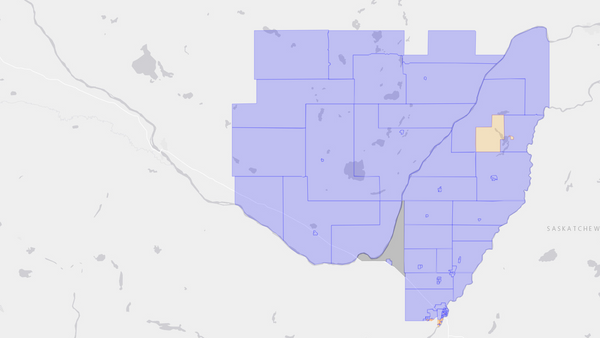
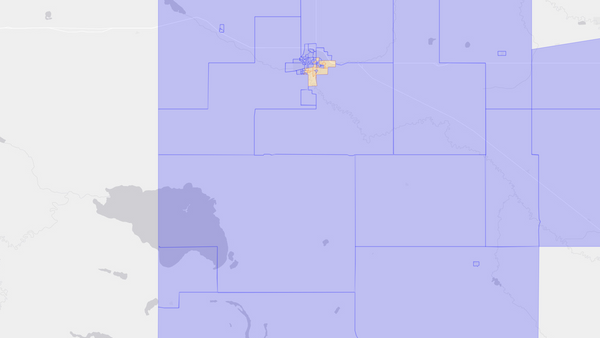
Blackstrap, SK — 2008 Federal Election Results Map
Blackstrap — 2008 Election Results
📌 The Canadian federal electoral district of Blackstrap was contested in the 2008 election.
🏆 Lynne Yelich, the Conservative candidate, won the riding with 20,747 votes (53.9% of the vote).
🥈 The runner-up was Patti Gieni (NDP-New Democratic Party) with 9,876 votes (25.7%), defeated by a margin of 10,871 votes.
📊 Other notable candidates: Deb Ehmann (Liberal, 14%) and Imre Pallagi (Green Party, 6%).
Riding information
Auto generated. Flag an issue.Blackstrap
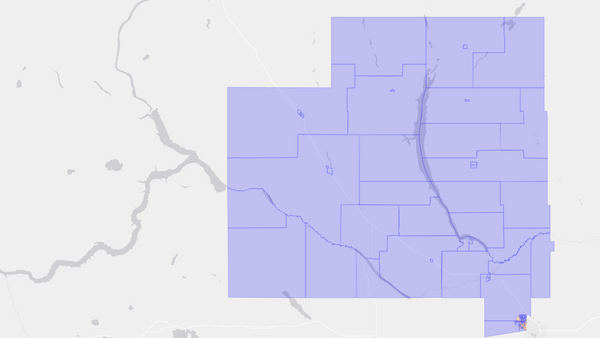
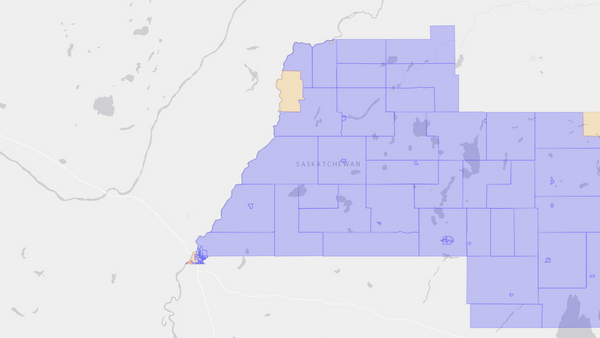
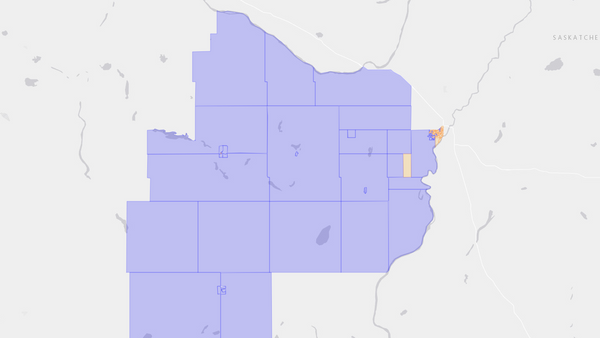
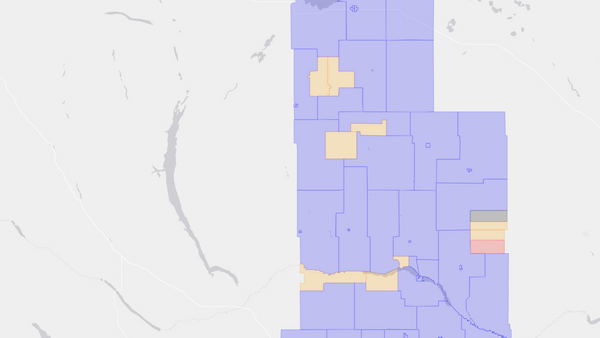
Blackstrap was an awkward hybrid: a slice of Saskatoon stitched to a long rural tail running southeast across the grain belt. Created in 1996 out of Saskatoon—Dundurn and pieces of Mackenzie, Moose Jaw—Lake Centre and Saskatoon—Humboldt, it took in the city's southeast quadrant and then stretched south to Elbow, southeast past Bladworth, and east through Lanigan as far as Jansen. It took its name from a reservoir filled in 1967 as part of the Saskatoon South East Water Supply System.
Candidates
Lynne Yelich (Conservative) — Born Lynne Zdunich at Saskatoon in 1953, Yelich worked in farming and in banking before entering politics and farmed with her husband Matt at Kenaston, a district long identified as the largest Croatian farming settlement in Canada. She won the seat in 2000 as a Canadian Alliance candidate and held it in 2004 and 2006. From February 2006 until dissolution she was parliamentary secretary to the minister of human resources and social development, sitting on that department's standing committee; earlier in her career she had served on the citizenship and immigration, transport and status of women committees. She ran on the government's record and on a constituency profile built in both halves of the riding.
Patti Gieni (NDP) — Gieni worked as a transit time clerk in Saskatoon and carried the New Democrat banner in a constituency where the party's strength sat in the city polls rather than the countryside.
Deb Ehmann (Liberal) — A human resources manager from Saskatoon, Ehmann ran for the Liberals against the headwind of her party's carbon tax platform in a farming riding.
Imre Pallagi (Green Party) — Pallagi was a student in Saskatoon and stood for the Green Party.
About the Riding
The urban end of Blackstrap was among the fastest-growing residential territory in Saskatchewan. Stonebridge, laid out on former farmland at the city's southern edge, was filling in rapidly through the mid-2000s, and the broader southeast quadrant absorbed much of the population Saskatoon gained during the resource boom. Voters there were suburban, comparatively young, and often employed in construction, health care, retail or at the University of Saskatchewan, which sits outside the riding across the river.
Beyond the city limits the character changes completely. Dundurn, Hanley, Kenaston, Bladworth and Elbow are small agricultural service points strung along Highway 11 and the rail lines, and the surrounding land is committed to wheat, canola, lentils and cattle. The Canadian Forces detachment at Dundurn, an ammunition depot and training area, is one of the few large non-agricultural employers in the rural section. Mount Blackstrap, the artificial ski hill raised on the prairie for the 1971 Canada Winter Games, still draws local recreation traffic.
The 2008 campaign arrived at the peak of a Saskatchewan boom. Potash prices had spiked to record levels that year, grain prices were unusually strong, and the province was gaining population after two decades of decline. That prosperity muted the economic anxiety driving the campaign elsewhere in the country until the September market collapse.
Farm policy set the terms of the rural debate. The Wheat Board's single desk, which the government was working to dismantle, divided producers along familiar lines, and the Green Shift was framed by Conservative campaigners as a direct tax on the fuel, fertilizer and freight that prairie agriculture depends on. In the Saskatoon polls the arguments were more urban: infrastructure money for a city growing faster than its roads and water systems, and housing costs that had climbed sharply with the boom.