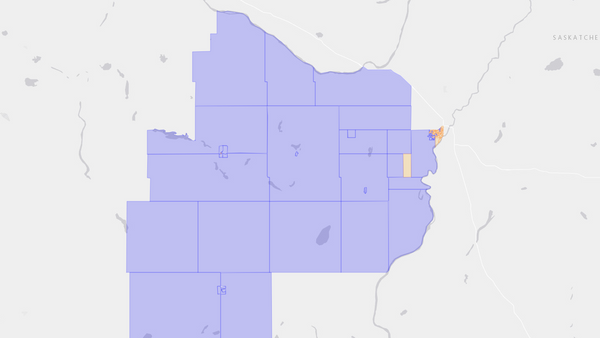
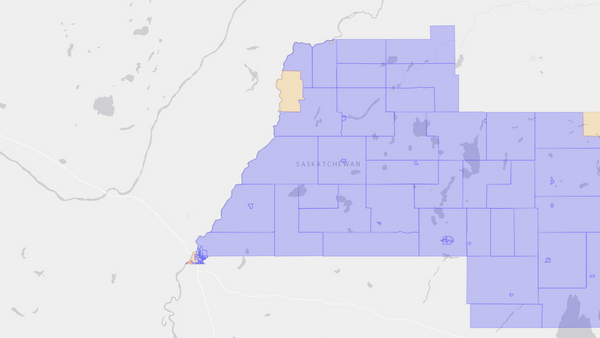
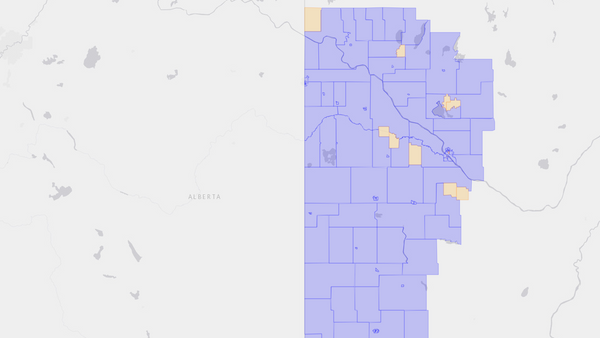
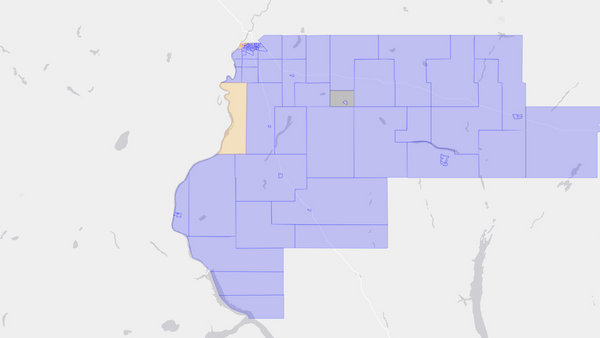
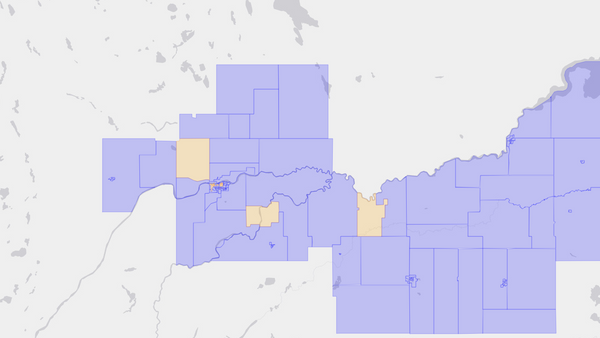
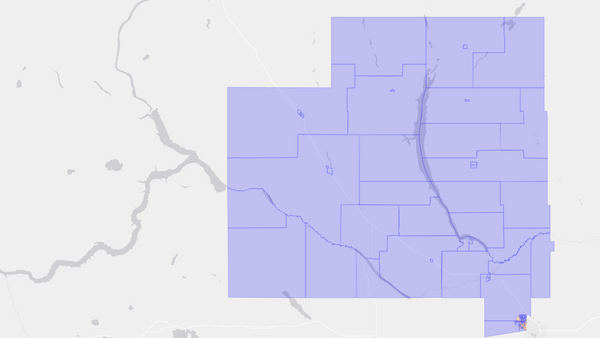
Saskatoon—Wanuskewin, SK — 2008 Federal Election Results Map
Saskatoon—Wanuskewin — 2008 Election Results
📌 The Canadian federal electoral district of Saskatoon—Wanuskewin was contested in the 2008 election.
🏆 Maurice Vellacott, the Conservative candidate, won the riding with 18,320 votes (56.5% of the vote).
🥈 The runner-up was Clint Davidson (NDP-New Democratic Party) with 7,898 votes (24.4%), defeated by a margin of 10,422 votes.
📊 Other notable candidates: Patricia Zipchen (Liberal, 12%) and Tobi-Dawne Smith (Green Party, 7%).
Riding information
Auto generated. Flag an issue.Saskatoon—Wanuskewin
Named for the heritage site on Opimihaw Creek just north of the city, Saskatoon—Wanuskewin combined Saskatoon's northwest quadrant with roughly 10,200 square kilometres of country reaching past Duck Lake in one direction and out toward Ruddell in the other. The commuter towns of Warman and Martensville sat inside it, as did the Mennonite settlement belt along the South Saskatchewan River.
Candidates
Maurice Vellacott (Conservative) — Vellacott spent close to two decades in pastoral ministry — 1976 to 1979 and again 1984 to 1995 — before running for office. Born at Wadena in 1955 and raised at Quill Lake, he trained at Briercrest Schools for a Bachelor of Religious Education, then took a Master of Divinity at Canadian Theological Seminary and a Doctor of Ministry at Trinity International University. He won the seat for the Reform Party in 1997, held it through the Canadian Alliance and Conservative years, and was seeking a fifth term. Aboriginal policy, property rights on reserve and parental rights were recurring themes in his work in the Commons, and he was among its most consistent social conservative voices.
Clint Davidson (NDP) — A corrections worker living in Saskatoon, Davidson ran on the New Democratic platform of pensions, health care and household affordability.
Patricia Zipchen (Liberal) — A Saskatoon nurse, Zipchen carried the Liberal banner in a riding where the party's organization was thin.
Tobi-Dawne Smith (Green) — A dog trainer from Saskatoon, Smith ran for the Green Party.
About the Riding
The Saskatoon portion ran from the northern edge of downtown out to the city limits on the west bank — City Park, Kelsey-Woodlawn, North Park, Richmond Heights, Lawson Heights, Silverwood Heights and River Heights — along with Hampton Village, a subdivision that barely existed at the start of the decade and was filling in fast by 2008. Those areas ranged from modest older housing close to the city centre to some of Saskatoon's more expensive riverfront property, and their politics were correspondingly mixed.
Just beyond the city limits, Warman and Martensville were doing something unusual for Saskatchewan: growing quickly. Both were still towns in 2008 — Martensville had counted 4,968 residents at the 2006 census — and both were absorbing families priced out of Saskatoon's rising housing market while remaining a fifteen-minute drive from work. Their growth was the clearest local evidence of the provincial boom, and it brought the ordinary problems of expansion: water and sewer capacity, school construction, and highway traffic on the road into the city.
North of the towns the riding runs through the Mennonite communities around Hague, Osler and Waldheim, past Rosthern, and into the country that carries the memory of 1885. Duck Lake is where the North-West Resistance began, and Batoche, the Métis settlement where it ended that May, lies inside the riding's northern end. Wanuskewin Heritage Park itself preserves camps, bison drives and a medicine wheel documented across some six thousand years of Northern Plains history, and had become one of the province's main interpretive sites.
Farming remained the base of the rural economy — wheat, canola and increasingly lentils — supplemented by potash work and by the construction trades feeding the Saskatoon region's building activity. Federal issues split along those lines: grain marketing and input costs in the country, housing and infrastructure in the commuter belt.
Vellacott went into the campaign with eleven years of incumbency and no internal challenge. His social conservatism had drawn national criticism at various points, but it matched the outlook of a good part of a riding containing several conservative religious communities. The seat had been in Reform, Alliance and Conservative hands without interruption since its creation in 1997.