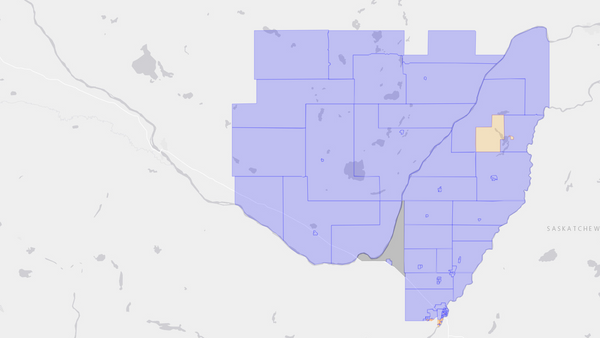
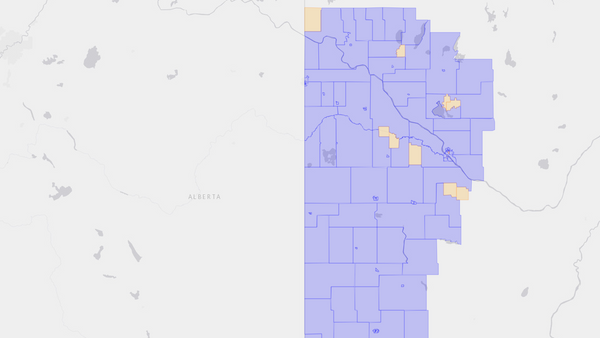
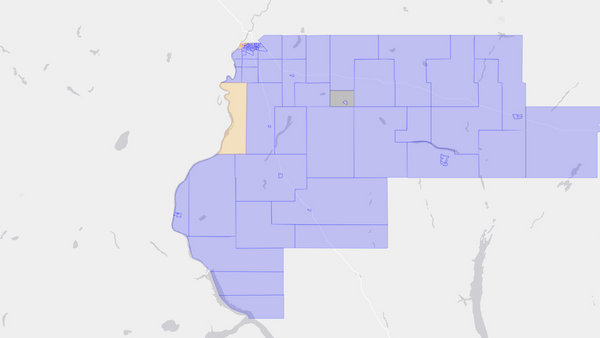
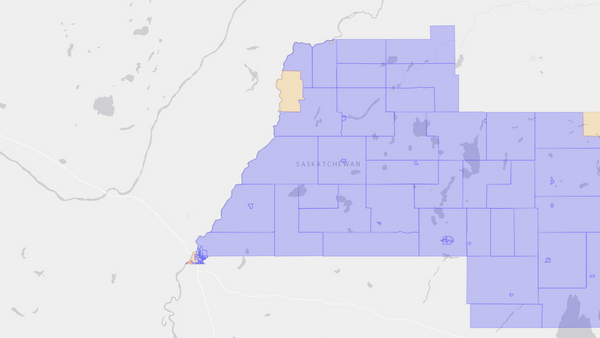
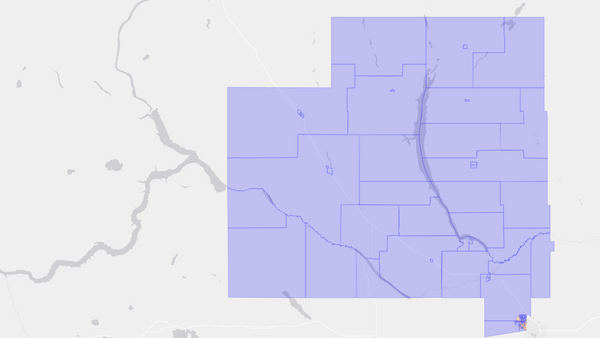
Saskatoon—Rosetown—Biggar, SK — 2008 Federal Election Results Map
Saskatoon—Rosetown—Biggar — 2008 Election Results
📌 The Canadian federal electoral district of Saskatoon—Rosetown—Biggar was contested in the 2008 election.
🏆 Kelly Block, the Conservative candidate, won the riding with 12,231 votes (45.4% of the vote).
🥈 The runner-up was Nettie Wiebe (NDP-New Democratic Party) with 11,969 votes (44.4%), defeated by a margin of 262 votes.
Riding information
Auto generated. Flag an issue.Saskatoon—Rosetown—Biggar
The west side of Saskatoon, plus close to 11,000 square kilometres of country running west and southwest toward Biggar, Rosetown and Delisle, made up Saskatoon—Rosetown—Biggar. Drawn in 1996, it ran from the old neighbourhoods along 20th Street out through the postwar suburbs and then into some of the flattest, most productive wheat land in Saskatchewan.
Candidates
Kelly Block (Conservative) — Block had been elected three times to the town council of Waldheim and served two terms as its mayor. She chaired the Gabriel Springs Health District, moved to the Saskatoon Regional Health Authority when the province amalgamated its health districts, and handled administration for Forest Grove Community Church. She took the Conservative nomination for an open seat: Carol Skelton, the riding's member since 2000 and Minister of National Revenue and of Western Economic Diversification in the first Harper cabinet, had said in the summer of 2007 that she would not run again.
Nettie Wiebe (NDP) — Wiebe, born in 1949, studied philosophy at the University of Saskatchewan through a bachelor's and a master's degree and took her doctorate at the University of Calgary. She was women's president of the National Farmers Union from 1988 to 1994 and the union's president from 1995 to 1998, farms organically and raises cattle near Delisle, and teaches church and society at St. Andrew's College in Saskatoon. Third on the ballot in the 2001 Saskatchewan NDP leadership race, she had run federally in Saskatoon—Humboldt in 2004 and in this riding in 2006.
Amber Jones (Green) — An environmental consultant working in Saskatoon, Jones ran for the Green Party.
Roy Bluehorn (Liberal) — A case review officer living in Saskatoon, Bluehorn carried the Liberal banner.
Three others rounded out the ballot: Rick Barsky, an educational assistant running as an independent, Marcel Leon Bourassa for the Christian Heritage Party and Kevin Stricker for the Libertarians.
About the Riding
Saskatoon's west side supplied the urban vote and most of the riding's social variety. Riversdale, Pleasant Hill and King George, the oldest neighbourhoods on that side of the river, had the city's lowest household incomes and its largest urban Indigenous population. Beyond them sat Westmount, Caswell Hill and Mayfair, and past those the postwar and later suburbs — Mount Royal, Fairhaven, Confederation Park, Massey Place and Montgomery Place — full of tradespeople and public sector workers. Housing costs in Saskatoon had risen abruptly during 2007 and 2008 as the provincial boom drew people in, and affordability was a live municipal argument that fed into the federal campaign.
Past the city the land flattens and the towns thin out. Delisle, which sent the Bentley brothers to the NHL in the 1940s, sits close to Vanscoy, where Agrium ran a potash mine expanding along with every other shaft in Saskatchewan. Rosetown functions as the commercial hub for the surrounding grain districts along Highway 7, and Biggar — whose sign has advertised "New York is big, but this is Biggar" for generations — grew up as a railway division point and still served the farms around it.
Farm policy therefore mattered more here than in most seats. Wheat, canola, lentils and peas came off in a year of high commodity prices and higher input bills, and the Conservative intention to end the Canadian Wheat Board's single desk put Wiebe and Block on opposite sides of a question farmers in the riding had been arguing among themselves for two decades. The Liberal carbon tax proposal, opposed by Premier Brad Wall, found few defenders in either half of the constituency.
With no incumbent on the ballot and a nationally known farm leader carrying the NDP colours, the seat drew attention that ridings elsewhere in the province did not. Conservative support concentrated in the rural municipalities and the outer suburbs; New Democratic strength sat in the west-side core.