Battlefords—Lloydminster, SK — 2008 Federal Election Results Map
Battlefords—Lloydminster — 2008 Election Results
📌 The Canadian federal electoral district of Battlefords—Lloydminster was contested in the 2008 election.
🏆 Gerry Ritz, the Conservative candidate, won the riding with 15,621 votes (60.1% of the vote).
🥈 The runner-up was Bob Woloshyn (NDP-New Democratic Party) with 6,572 votes (25.3%), defeated by a margin of 9,049 votes.
📊 Other notable candidates: Gregory Nyholt (Liberal, 8%).
Riding information
Auto generated. Flag an issue.Battlefords—Lloydminster
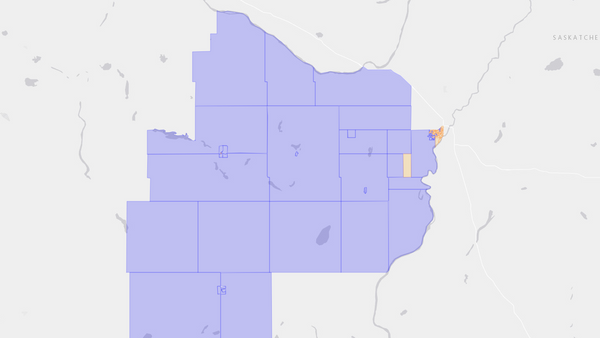
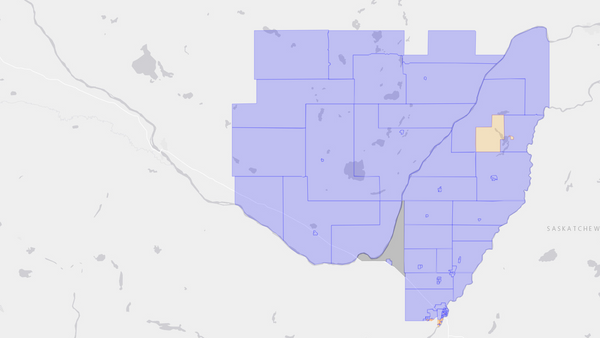
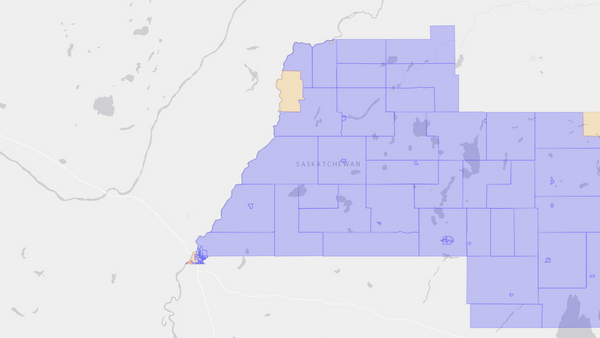
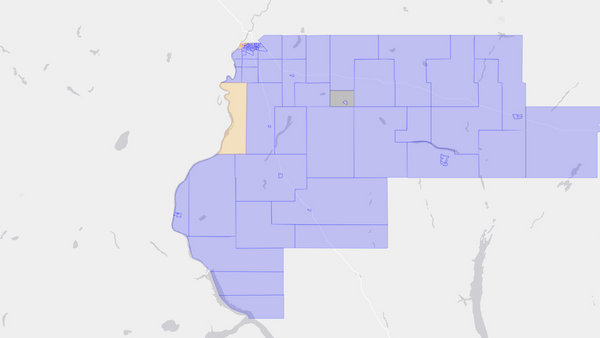
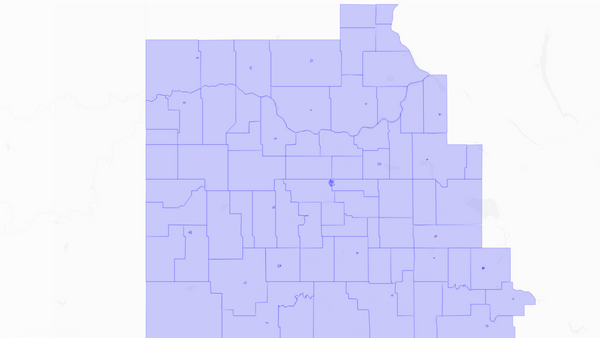
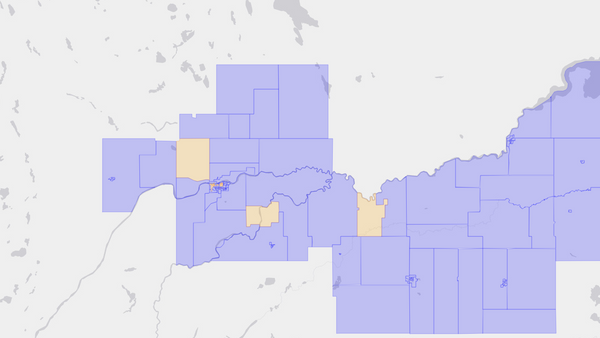
The Alberta boundary runs down the middle of Lloydminster's main street, and the Saskatchewan half of that city sits at the western end of this riding. From there the constituency reaches east across grain country to North Battleford and the town of Battleford, facing one another across the North Saskatchewan River, north to Turtleford and St. Walburg, and south through Wilkie and Unity to Kerrobert and Kindersley. Battleford was the capital of the North-West Territories from 1876 until the seat of government moved to Regina in 1883, and the two Battlefords still function as the service centre for the whole northwest quarter of the province.
Candidates
Gerry Ritz (Conservative) — Ritz was born at Delisle in 1951, farmed for more than two decades, ran a contracting business and lived at St. Walburg. Elected in 1997 as a Reform candidate and returned under the Canadian Alliance and Conservative labels, he became the Canadian Alliance agriculture critic in 2003 and chaired the Commons agriculture committee in 2006 and 2007. He entered cabinet as secretary of state for small business and tourism in January 2007 and was promoted that August to minister of agriculture and agri-food and minister for the Canadian Wheat Board, replacing Chuck Strahl. The listeriosis outbreak traced to a Maple Leaf Foods plant in Toronto shadowed his early weeks on the trail: remarks he made making light of the outbreak on a departmental conference call were reported in mid-September, and he apologized publicly.
Bob Woloshyn (NDP) — Woloshyn spent close to two decades with an industrial moving company in southern California before founding his own firm in the same line of work. He returned to Saskatchewan as a managing partner and head of sales at Battlefords Supercycle in North Battleford, where he lived.
Gregory Nyholt (Liberal) — A farmer based at North Battleford, Nyholt was the Liberal candidate.
Norbert Kratchmer (Green Party) — Kratchmer farmed organically near Unity and had carried the Green banner in the riding in 2006 as well. He campaigned against genetically modified seed and hormone use in livestock, and for labelling that told buyers exactly what their food contained.
Harold Stephan, a plumber from Lloydminster, ran for the Christian Heritage Party.
About the Riding
Two industries pay the bills here. Grain and oilseed farming dominates the centre and east, where wheat, barley and canola come off the land around the Battlefords, Wilkie and Unity. Heavy oil dominates the west. The bi-provincial upgrader outside Lloydminster, begun in 1989 and opened in 1992, and the refining complex in the city transformed the local economy, and by 2008 drilling and service work in the surrounding fields employed thousands. Crude reached record highs in July 2008 and then fell hard through September and October, so the campaign ran precisely as the boom began to wobble.
The riding also contains a substantial First Nations population, with the Poundmaker, Sweetgrass, Little Pine, Moosomin, Red Pheasant, Mosquito Grizzly Bear's Head Lean Man and Thunderchild reserves inside its boundaries. North Battleford itself has struggled with poverty and addictions and has for years reported one of the highest crime rates of any Canadian city of its size; policing and social programmes were a standing municipal ask of Ottawa.
Wheat Board policy overshadowed everything else in farm country. Ritz's government had spent two years trying to end the board's single desk over the objections of its elected directors, and producers in the riding were genuinely split. The Liberal carbon tax proposal was the other lever, attacked locally as a levy on the diesel, fertilizer and long hauls that prairie farming requires. Food safety and the adequacy of federal meat inspection entered the conversation through the listeriosis file.