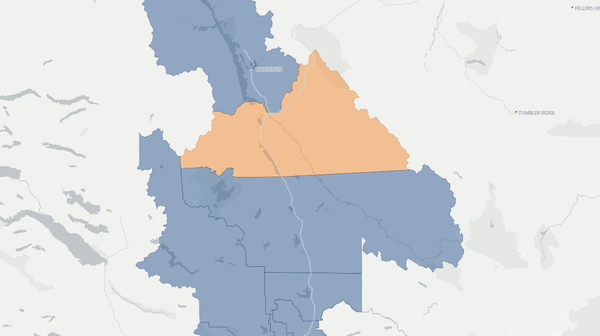
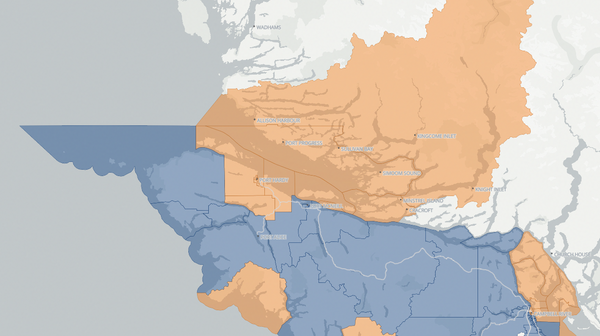
Skeena — 2024 British Columbia Provincial Election Results Map
Skeena — 2024 Election Results
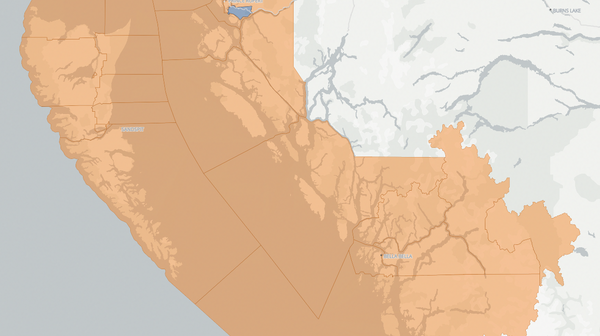
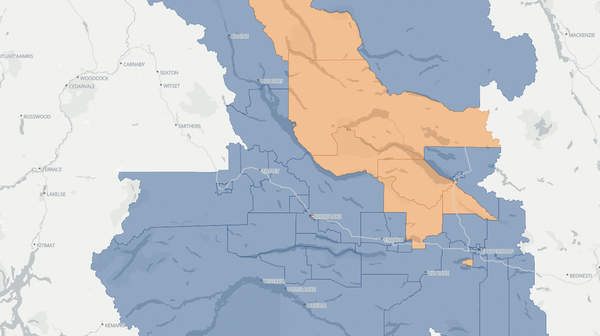
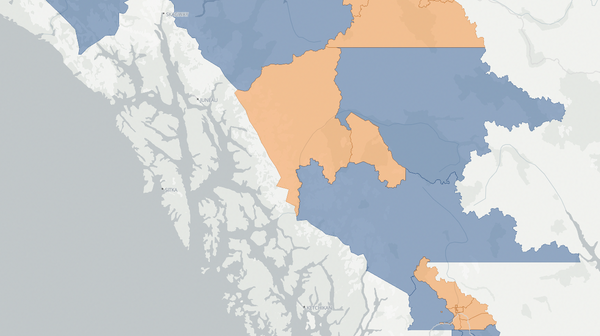
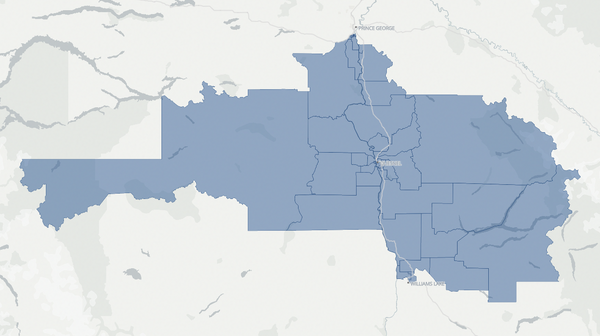
Poll-by-poll results for Skeena in the 2024 British Columbia election. The Conservative Party candidate won this riding. Explore detailed voting data, candidate results, and turnout statistics at the poll level.
Riding information
Auto generated. Flag an issue.Skeena
The Skeena riding follows the river of the same name through the rugged Coast Mountains of British Columbia's northwest, encompassing the resource towns of Terrace and Kitimat and the Indigenous communities that have inhabited the region for millennia. Kitimat, originally built in the 1950s as a planned community for the Alcan aluminum smelter, had been transformed by the LNG Canada export facility — one of the largest private-sector capital projects in Canadian history — which was under construction throughout the 2020–2024 term. Terrace, sixty kilometres upriver, served as the commercial hub of the northwest and the site of the new Mills Memorial Hospital replacement project.
The riding had flipped to the BC Liberals in 2017 when Ellis Ross, a Haisla Nation chief councillor, won the seat. Ross did not seek re-election in 2024, and the former riding boundaries were adjusted through redistribution. The Conservative Party of BC, which had absorbed much of the former Liberal coalition, nominated Claire Rattée, a former Kitimat councillor, while the NDP fielded Terrace city councillor Sarah Zimmerman.
Candidates
Claire Rattée (Conservative Party) — Rattée, originally from Delta, moved to Kitimat in 2011 and was elected to Kitimat District Council in 2014, becoming the youngest woman ever elected to that body. She co-owned Arcane Arts Inc., a small business in Kitimat, and had run twice as the federal Conservative candidate in Skeena—Bulkley Valley, in 2019 and 2021, finishing second both times to NDP MP Taylor Bachrach.
Sarah Zimmerman (BC NDP) — Zimmerman was a Terrace city councillor, elected in 2022 after topping the polls in the municipal election. She had served as the Executive Director of Communications for Coast Mountain College and later ran her own communications consulting business. She also worked at Rio Tinto Alcan and was active in local arts, sports, and tourism organizations.
Teri Young (BC Green Party) and Irwin Jeffrey (Christian Heritage Party of B.C.) also contested the riding.
Local Issues
The LNG Canada project's impact on housing and community services in Kitimat and Terrace dominated the riding's politics throughout the 2020–2024 term. Housing costs in both communities had surged since the project's 2018 final investment decision, with rental vacancy rates remaining extremely low. LNG Canada held more than a hundred housing leases in Kitimat, and as the construction workforce peaked, landlords in Terrace charged rents that were unaffordable for many local workers in service, education, and health care roles. The Cedar Valley Lodge worker camp in Kitimat was designed to house non-resident workers on-site, but the ripple effects on the broader housing market persisted. Both candidates identified housing as a top priority, though they differed on whether the solution lay in provincial regulation or market-based incentives.
Health care access in the northwest remained strained. The Mills Memorial Hospital in Terrace, the region's primary acute care facility, had been the subject of a long-planned replacement project. The NDP government committed to building a new hospital, and the project had advanced through planning and design by the time of the 2024 election. However, physician and specialist shortages meant that many residents of both Terrace and Kitimat continued to travel to Prince George or Vancouver for care that could not be provided locally. The opioid crisis, which had devastated communities across northern BC, was an acute concern. Rattée, who was open about her own past experience with addiction and homelessness, advocated for increased treatment and recovery supports rather than the NDP's emphasis on harm reduction.
The Coastal GasLink pipeline, running from northeast BC to the LNG Canada facility in Kitimat, had been a flashpoint for tensions between Indigenous hereditary governance systems and the provincial and federal approvals process. The confrontations at the Wet'suwet'en territory in 2019 and 2020 had national repercussions, and although the pipeline was nearing completion by the time of the 2024 election, the broader questions it raised about consent, reconciliation, and the relationship between elected band councils and hereditary chiefs continued to shape political discourse in the riding.