Bulkley Valley-Stikine — 2024 British Columbia Provincial Election Results Map
Bulkley Valley-Stikine — 2024 Election Results
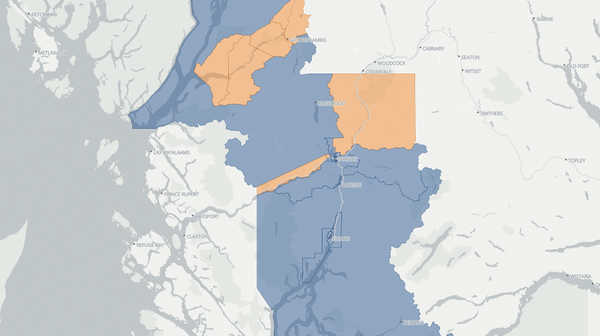
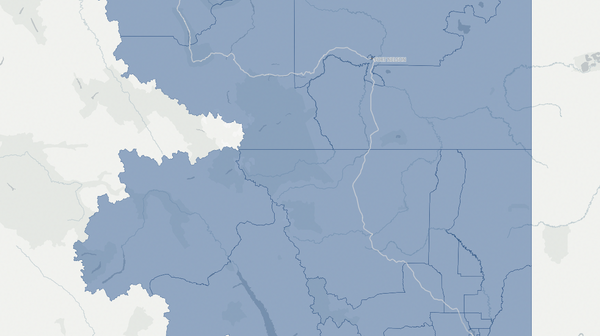
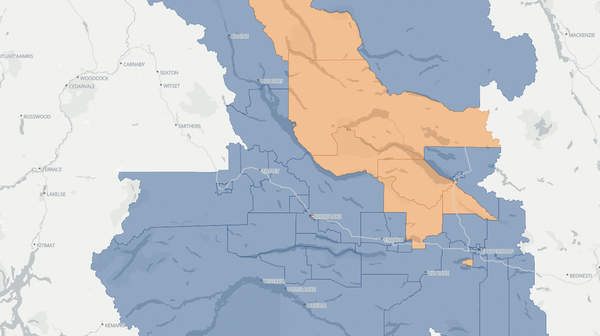
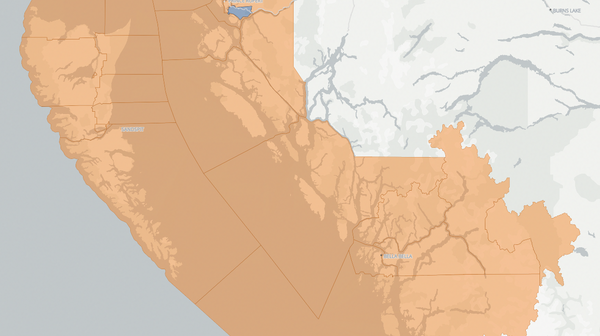
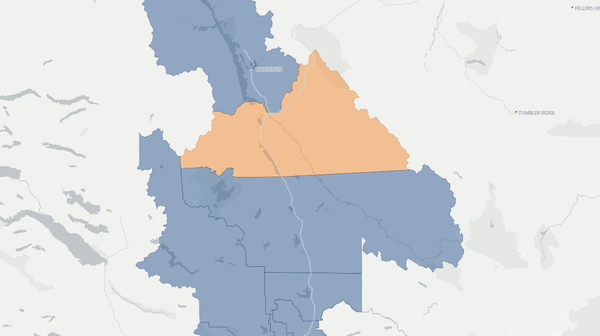
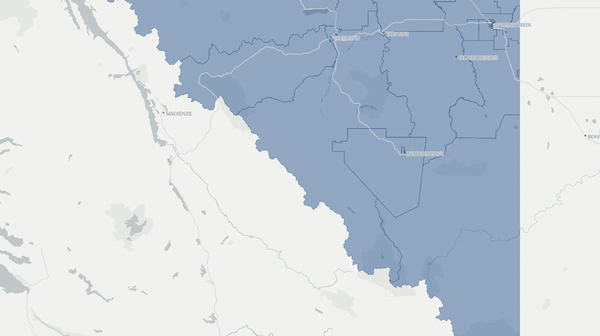
Poll-by-poll results for Bulkley Valley-Stikine in the 2024 British Columbia election. The Conservative Party candidate won this riding. Explore detailed voting data, candidate results, and turnout statistics at the poll level.
Riding information
Auto generated. Flag an issue.Bulkley Valley-Stikine
Bulkley Valley-Stikine is one of British Columbia's largest electoral districts by area, encompassing roughly 200,000 square kilometres of the province's northwest. The riding takes in the communities of Smithers, Telkwa, Houston, Burns Lake, and extends north through the Stikine region toward the Yukon border. Its economy is anchored by forestry, mining, liquefied natural gas infrastructure, and wilderness tourism, with the Bulkley Timber Supply Area covering approximately 736,000 hectares. Indigenous communities — including the Wet'suwet'en, Gitxsan, Gitanyow, and Tahltan Nations — make up a significant share of the population and play a central role in land-use decisions and resource governance.
The riding was held by the NDP's Nathan Cullen, a former federal MP who had served fifteen years in Ottawa representing Skeena–Bulkley Valley before winning the provincial seat of Stikine in 2020. Cullen served as Minister of Water, Land and Resource Stewardship in the NDP cabinet, making this another cabinet seat the party needed to defend. Redistribution merged portions of the former Stikine riding with additional territory to create the new Bulkley Valley-Stikine district, but the political dynamics of the northwest — resource extraction, Indigenous rights, and rural service delivery — remained its defining features.
Candidates
Sharon L. Hartwell (Conservative Party) — Hartwell has deep roots in the Bulkley Valley, where she raised her family in and around Telkwa. She began her municipal career as a village councillor before serving twelve years as mayor of Telkwa, during which she became an advocate for the needs of small and rural communities. In that capacity, she chaired the North West Regional Hospital District, represented small communities at the Union of BC Municipalities, and served on the Federation of Canadian Municipalities, where she was vice-chair of Transportation and Infrastructure. She is also credited with initiating the Northern Health Connections Bus service.
Nathan Cullen (BC NDP) — Cullen was the incumbent MLA and cabinet minister, having entered provincial politics in 2020 after a lengthy career in federal politics. He represented Skeena–Bulkley Valley in the House of Commons from 2004 to 2019, winning five consecutive elections and finishing third in the 2012 federal NDP leadership contest. Appointed Minister of Water, Land and Resource Stewardship under Premier Eby, he oversaw files at the intersection of resource development and environmental protection in one of the province's most contested policy areas.
Gamlakyeltxw Wilhelm Marsden (BC Green Party) — Marsden is a hereditary chief of the Kitwancool Ganeda clan and serves as Director of Green Energy for the Gitanyow Chiefs' office, where he works on bridging traditional Indigenous knowledge with renewable energy solutions. He is an advocate for ending fossil fuel subsidies and protecting old-growth forests.
Rod Taylor ran for the Christian Heritage Party of B.C., receiving a minor share of the vote.
Local Issues
Healthcare access was the dominant concern across the riding's scattered communities. Smithers faced a severe physician shortage, with no family doctors accepting new patients and the Broadway Medical Clinic warning in 2022 that it would stop functioning in its current form after a retiring doctor could not be replaced despite five years of recruitment efforts. The town advertised for three family practitioners, a pediatrician, and emergency room locums, but the remote location and demanding workload made recruitment exceedingly difficult. Burns Lake's healthcare facility operated at roughly 45 per cent staffing capacity under Northern Health. Residents in communities like Houston and Telkwa, where the nearest hospital might be an hour's drive away, pressed candidates on whether the province's team-based primary care model could realistically serve a region this vast.
The forestry sector, long the economic backbone of the Bulkley Valley, continued to contract. The mountain pine beetle epidemic had devastated vast tracts of timber across the BC Interior in preceding decades, reducing the allowable annual cut and threatening the viability of mills that employed hundreds of workers. The Bulkley Timber Supply Area faced competing demands from environmental protection, Indigenous land-use plans, and commercial harvesting, and the NDP government's old-growth deferral policies added uncertainty for operators who depended on access to Crown timber. Workers in Smithers and Houston watched as mill curtailments and closures rippled through other Interior communities, wondering whether their operations would be next.
Indigenous governance and resource development were deeply intertwined in the riding. The Wet'suwet'en Nation's opposition to the Coastal GasLink pipeline, which traverses their traditional territory to carry natural gas to the LNG Canada facility in Kitimat, had generated national attention and RCMP enforcement actions. The NDP government's passage of the Declaration on the Rights of Indigenous Peoples Act in 2019 committed the province to aligning its laws with the United Nations Declaration on the Rights of Indigenous Peoples, but tensions over how consent and consultation would work in practice persisted throughout the term.
Wildfire risk was a constant presence in the riding. The 2023 fire season — British Columbia's worst on record — brought dozens of active fires to the region, with evacuation orders and alerts issued across the Interior. Communities like Houston and Burns Lake, surrounded by beetle-killed timber that served as fuel for wildfires, pressed for expanded fuel management and FireSmart programs. The NDP government had increased wildfire preparedness funding, but residents questioned whether rural and northern communities received their fair share relative to the south.