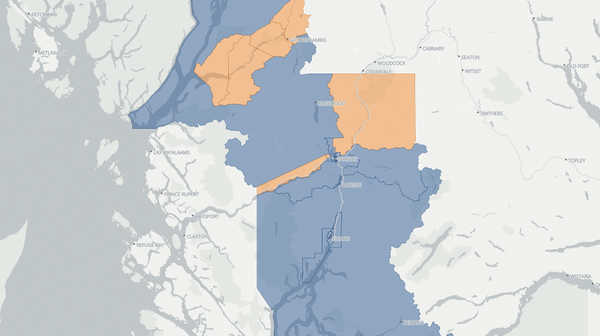
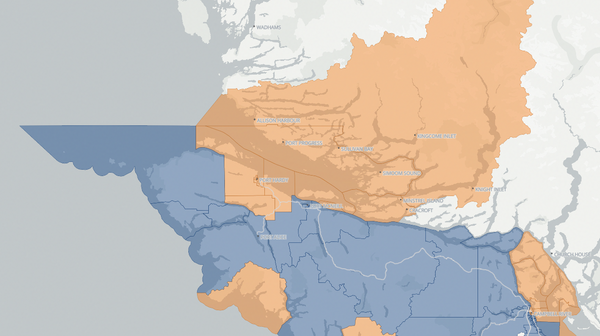
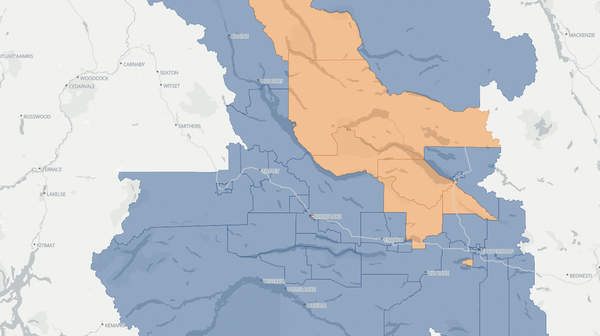
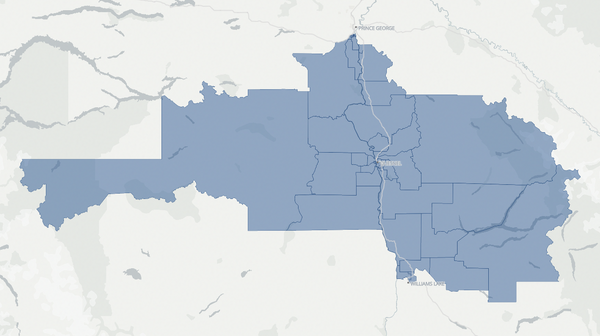
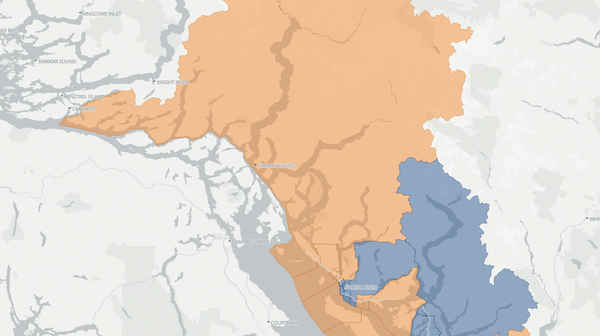
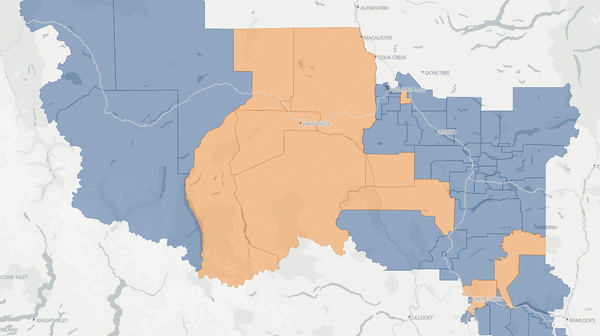
North Coast-Haida Gwaii — 2024 British Columbia Provincial Election Results Map
North Coast-Haida Gwaii — 2024 Election Results
Poll-by-poll results for North Coast-Haida Gwaii in the 2024 British Columbia election. The BC NDP candidate won this riding. Explore detailed voting data, candidate results, and turnout statistics at the poll level.
Riding information
Auto generated. Flag an issue.North Coast—Haida Gwaii
North Coast—Haida Gwaii is one of British Columbia's most geographically immense ridings, stretching from the port city of Prince Rupert and the city of Terrace across hundreds of kilometres of coastal rainforest, fjords, and open ocean to the archipelago of Haida Gwaii. Indigenous communities — including the Haida, Tsimshian, Nisga'a, and Haisla nations — make up a substantial share of the riding's population and play a central role in its governance, economy, and cultural life. The riding's economy has historically rested on fishing, forestry, and the port, but by 2024 the transformative impact of the LNG Canada project in Kitimat and the expansion of the Port of Prince Rupert had fundamentally reshaped the region's economic trajectory.
Candidates
Tamara Davidson (BC NDP) — Davidson is a proud member of the Haida Nation with more than twenty-five years of experience in public service, working in land management, strategic planning, conservation, and tourism for the federal government. She has worked with more than one hundred and fifty First Nations communities in British Columbia and served as a negotiator for the Haida Nation in talks that led to the signing of the Haida Title Lands Agreement. She received the NDP nomination after three-term MLA Jennifer Rice decided not to seek re-election.
Christopher Jason Sankey (Conservative Party of BC) — Sankey is a member of the Tsimshian community of Lax Kw'alaams near Prince Rupert. He is the principal owner and president of Blackfish Enterprises, where he provides strategic advice and planning to Indigenous communities and industry stakeholders in the energy sector, both domestically and internationally.
Local Issues
The Haida Title Lands Agreement, signed in 2024, marked a historic milestone for the riding and for Indigenous rights in Canada. The Haida Nation Recognition Amendment Act, 2024, which received royal assent on May 16, 2024 and took effect on July 5, recognized Haida Aboriginal title throughout Haida Gwaii — the first such recognition in Canadian history. The legislation provided for a staged transition to Haida jurisdiction over land and resource management, beginning with protected areas and forestry, while maintaining private property rights and existing government services. For residents of Haida Gwaii, the agreement represented the culmination of decades of legal and political advocacy, while raising practical questions about how the transition would unfold in areas like forestry tenure, park management, and development permitting.
The LNG Canada project in Kitimat continued to reshape the economic and social fabric of the riding's interior communities. The $40-billion facility, the largest private-sector investment in Canadian history, employed thousands of construction workers, and its ripple effects extended to Terrace, sixty kilometres to the north, where housing costs had surged and rental vacancy rates had fallen below one per cent. The strain on municipal services, policing, and community infrastructure in Terrace had prompted the city's leaders to publicly express frustration with the pace of provincial and corporate support for managing the social impacts of the construction boom.
Declining wild salmon stocks remained the riding's most emotionally resonant issue, touching economic, cultural, and environmental dimensions simultaneously. Commercial fishers, Indigenous communities whose food security and cultural practices depended on healthy runs, and sport fishing operators all pointed to declining returns on the Skeena and other northern rivers. The federal government's decision to close salmon farms in the Discovery Islands and announce a broader phase-out of open-net pen aquaculture by 2029 was welcomed by many in the riding, but the tension between industrial development — LNG pipelines crossing salmon-bearing watersheds, port expansion near marine habitat — and ecosystem protection continued to define the riding's political fault lines.
Health care access in the riding's dispersed communities remained a persistent challenge. Prince Rupert's hospital served as the primary facility for a vast region, and smaller communities along Highway 16 and on Haida Gwaii had limited health services. Physician recruitment in remote postings was chronically difficult, and the opioid crisis had reached northern communities where harm reduction infrastructure was sparse.