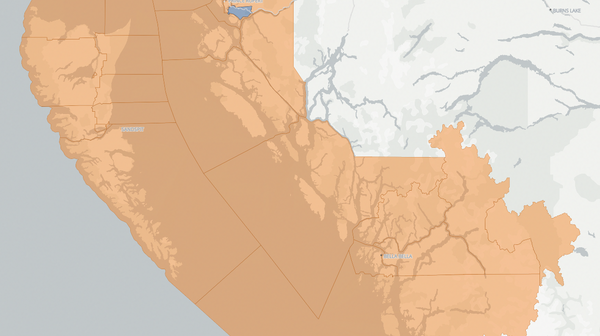
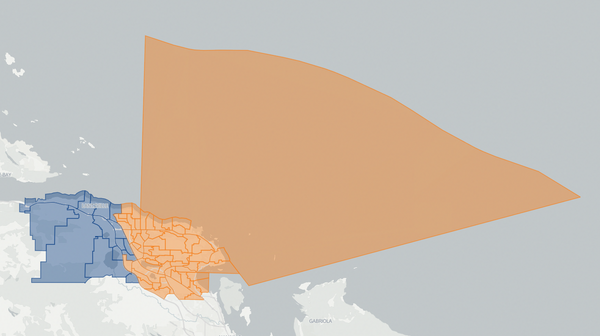
North Island — 2024 British Columbia Provincial Election Results Map
North Island — 2024 Election Results
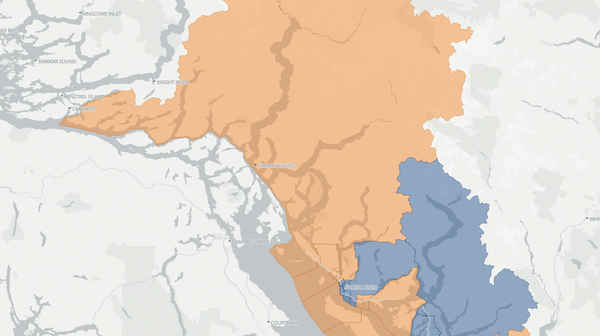
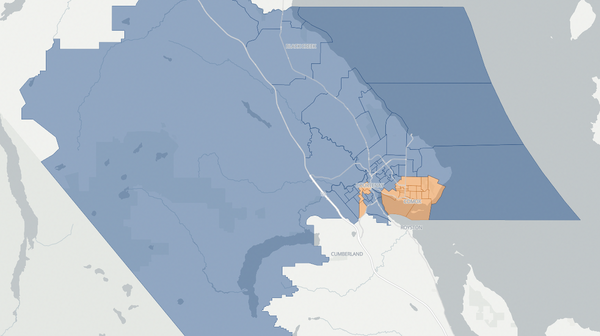
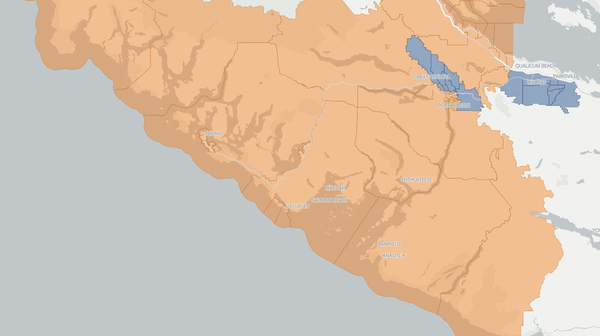
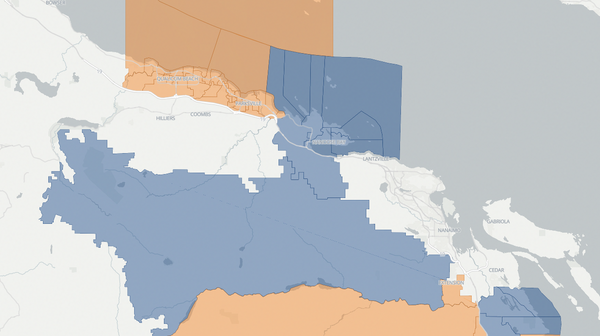
Poll-by-poll results for North Island in the 2024 British Columbia election. The Conservative Party candidate won this riding. Explore detailed voting data, candidate results, and turnout statistics at the poll level.
Riding information
Auto generated. Flag an issue.North Island
North Island spans the upper half of Vancouver Island, from the city of Campbell River in the south to the remote communities of Port Hardy, Port McNeill, and Alert Bay in the north. The riding takes in vast tracts of coastal temperate rainforest, a rugged shoreline dotted with salmon-bearing rivers, and small communities whose economies have historically rested on forestry, fishing, and aquaculture. Campbell River, the riding's population centre and self-proclaimed salmon capital of the world, serves as the gateway to the northern half of the Island, while the remoter towns of Port Hardy and Port McNeill lie hours further up the highway, among the most isolated communities on Vancouver Island.
Candidates
Anna Kindy (Conservative Party of BC) — Kindy is a physician who graduated from the University of Alberta's medical school in 1986. She practised as a family doctor in Port Hardy before moving to Campbell River in 1998, where she held hospital privileges at Campbell River Hospital and focused on addiction medicine. Between 1989 and 1992 she balanced her medical practice with competitive freestyle skiing, representing Canada in the women's moguls event at the 1992 Winter Olympics in Albertville. She was nominated as the Conservative candidate in November 2023.
Michele Babchuk (BC NDP) — Babchuk was the incumbent MLA, first elected in 2020. She had lived in Campbell River since 2000, serving as a city councillor, school trustee, and chair of the Strathcona Regional District before entering provincial politics. Her professional background included work as NDP caucus staff, in federal constituency offices, and in the private sector in legal conveyancing, banking, and business administration.
Nic Dedeluk (BC Green Party) — Dedeluk is a marine biologist with more than twenty-four years of experience who has lived in the North Island region since 2000. She works as a marine coordinator for the 'Namgis First Nation in Alert Bay. She co-founded the Cetus Research and Conservation Society and led the development of the Straitwatch Program, a pioneering initiative to reduce human impacts on whales.
Local Issues
The future of the salmon farming industry remained a defining issue for the riding. The federal government's December 2020 decision to phase out open-net pen salmon farms in the Discovery Islands had been upheld through multiple legal challenges, and by 2024 the broader plan to transition all of British Columbia's open-net pen aquaculture to closed containment or land-based systems by 2029 was taking shape. For communities in the North Island, the issue cut sharply: environmental advocates and many First Nations argued that the farms had contributed to the decline of wild salmon stocks, while aquaculture workers in communities like Port Hardy and Campbell River pointed to the hundreds of jobs and economic activity the industry provided. The question of whether adequate alternative employment would materialize during the transition was a central campaign concern.
Health care access in the riding's remote northern communities had deteriorated over the course of the NDP's government. Emergency room closures at the hospitals in Port Hardy and Port McNeill due to physician shortages and nursing staff unavailability left residents uncertain whether emergency care would be available when needed. The forty-five-kilometre drive between Port Hardy and Port McNeill on a winding highway made closures at either facility a genuine safety concern, and Campbell River's hospital, while larger and better equipped, was more than three hours away from the riding's northern tip. The province had introduced shuttle services and telehealth initiatives to partially address the gap, but residents argued these measures were inadequate substitutes for reliable, on-site emergency care.
Forestry remained the riding's largest employer, but the sector's trajectory raised difficult questions about its future. Old-growth logging deferrals announced by the NDP government had restricted access to some of the most commercially valuable timber, and the ongoing shift toward raw log exports rather than value-added manufacturing on the Island left communities with fewer processing jobs per cubic metre of wood harvested. Mill curtailments and closures across northern Vancouver Island compounded the anxiety, and candidates debated whether the path forward lay in diversification, renewed investment in the forest sector, or both.
BC Ferries service was a perennial source of frustration for residents in remote coastal communities who depended on ferry connections as their primary transportation link. Route scheduling, fare levels, and vessel reliability affected communities from Alert Bay to the Discovery Islands, and the riding's geographic isolation made reliable marine transportation not merely a convenience but a lifeline for access to medical appointments, supplies, and connection to larger centres.