Nechako Lakes — 2024 British Columbia Provincial Election Results Map
Nechako Lakes — 2024 Election Results
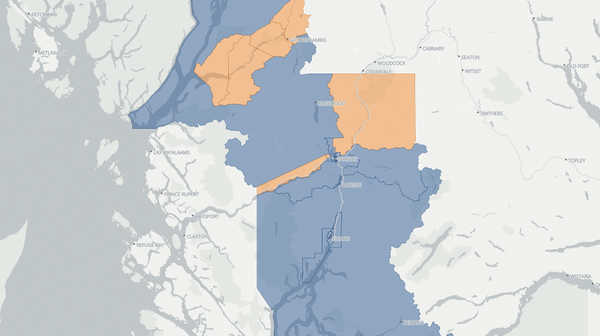
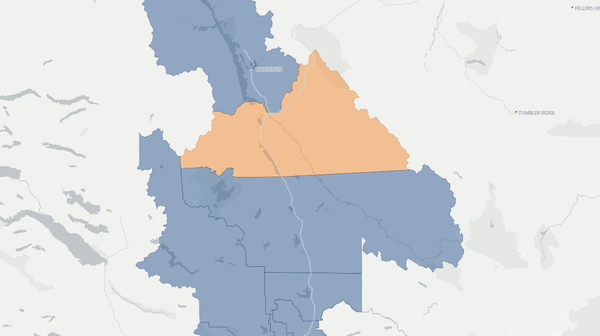
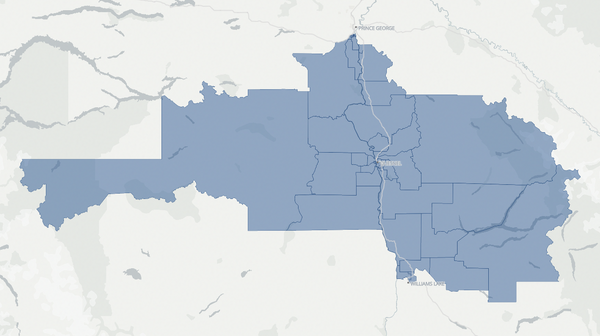
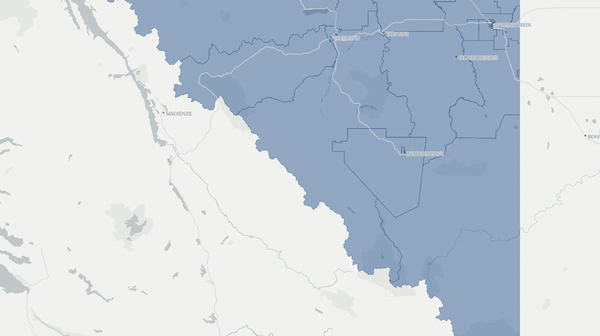
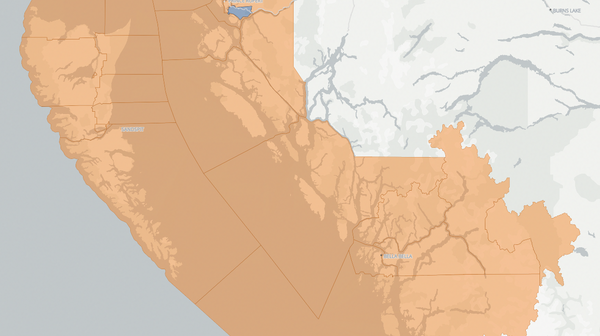
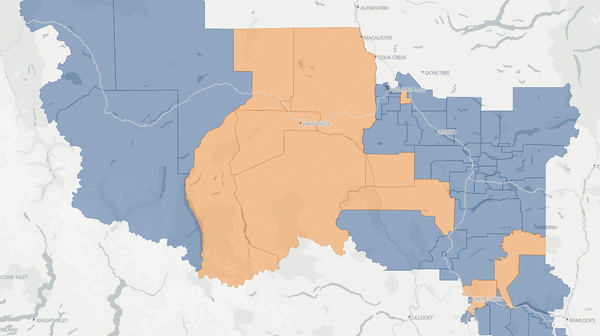
Poll-by-poll results for Nechako Lakes in the 2024 British Columbia election. The Conservative Party candidate won this riding. Explore detailed voting data, candidate results, and turnout statistics at the poll level.
Riding information
Auto generated. Flag an issue.Nechako Lakes
Nechako Lakes stretches across a vast territory of the northern interior plateau, taking in the resource communities of Vanderhoof, Fort St. James, Burns Lake, Houston, and Fraser Lake. The riding is larger than many European countries, a landscape of spruce forests, cattle ranches, and lake systems drained by the Nechako and Stuart Rivers. The Trans-Canada Highway corridor connects the riding's scattered towns, but distances between communities are measured in hours, not minutes, and the nearest major centre — Prince George — lies outside the riding's boundaries. The mountain pine beetle epidemic that peaked in the mid-2000s permanently altered the region's timber supply, and its legacy — vast tracts of dead forest, reduced annual allowable cuts, and heightened wildfire risk — continued to define the economic reality of the riding heading into 2024.
Candidates
John Rustad (Conservative Party of BC) — Rustad has represented the riding and its predecessor since 2005, first winning the former Prince George—Omineca seat before transitioning to the newly drawn Nechako Lakes riding in 2009. He served as Minister of Aboriginal Relations and Reconciliation in Christy Clark's cabinet from 2013 to 2017. Originally elected as a BC Liberal, he was removed from the party caucus in August 2022 over his public questioning of climate change science. He sat briefly as an independent before becoming leader of the Conservative Party of BC in March 2023, transforming the party from a marginal force into the province's principal opposition following BC United's decision to suspend its campaign and endorse the Conservatives.
Murphy Abraham (BC NDP) — Abraham is a former chief of the Lake Babine Nation. During his time in office, he secured fifty million dollars in federal funding for community infrastructure, including cultural centres in the remote communities of Wit'at and Tachet, and oversaw a 20,000-hectare land transfer to return territory to the Lake Babine Nation.
Douglas Gook (BC Green Party) — Gook is a third-generation settler who has lived and worked in the Cariboo and Nechako Lakes region for nearly sixty-four years. He is a self-directed student of ecological commerce with post-secondary studies from the EcoForestry Institute and works through Silvequus Selection Systems with First Nations and environmental organizations to promote natural selection forestry. He serves as a director of the BC Environmental Network.
Local Issues
The forestry sector's contraction reached a critical threshold during the NDP's second term. Canfor announced the indefinite closure of its Houston sawmill — one of the largest in the province — in January 2023, devastating a community that had depended on the facility as its primary employer for decades. The company initially announced plans for a two-hundred-million-dollar replacement mill, but suspended that reinvestment in May 2024, leaving the community's economic future uncertain. The closure followed a pattern of curtailments and shutdowns across northern British Columbia as the post-beetle timber supply contracted and annual allowable cuts were reduced. Industry estimates suggested the region's harvestable timber would remain depressed for roughly forty years before the next generation of trees reached merchantable size, confronting communities with the prospect of permanent economic restructuring rather than a cyclical downturn.
The 2023 wildfire season brought devastation to the Nechako Lakes region on a scale that rivalled or exceeded the catastrophic 2017 and 2018 seasons. Wildfires burned through vast areas of the interior, forcing evacuations from Burns Lake, Fort St. James, and surrounding communities and blanketing the region in hazardous smoke for weeks. The enormous fuel loads created by millions of hectares of beetle-killed pine made the landscape uniquely vulnerable to fire, and residents lived with the knowledge that each summer could bring another existential threat. The NDP government had increased funding for the BC Wildfire Service and the Community Resiliency Investment Program, but volunteer fire departments in the riding's smaller communities questioned whether the resources matched the scale of the risk.
Health care access in the riding's remote communities was a structural challenge that the pandemic had exposed and the years since had not resolved. Residents in Burns Lake or Fort St. James faced drives of two hours or more to reach the hospital in Prince George for specialist care, and recruiting family physicians willing to practise in communities with populations of a few thousand remained extraordinarily difficult. Broadband internet access, while improved through provincial and federal investments, still left many households on the outskirts of towns and in rural stretches without reliable high-speed connections — a gap that limited access to telehealth, remote education, and the economic diversification the region needed.
The Conservative Party's surge under Rustad's leadership made the riding a focal point of provincial attention. As party leader, Rustad campaigned on eliminating the carbon tax, supporting resource-sector jobs, and reversing what he characterized as the NDP government's overreach on environmental regulation. In a riding where the resource economy was the dominant employer and climate policy was viewed through the lens of its impact on jobs and heating costs, Rustad's message found a receptive audience.