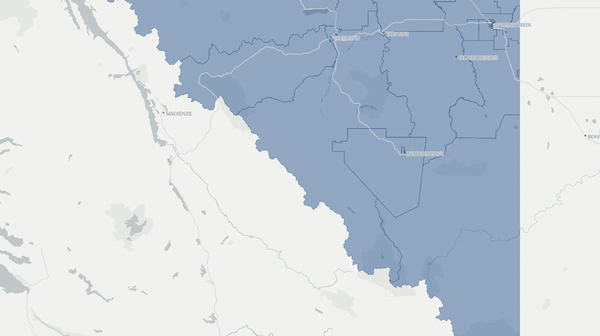
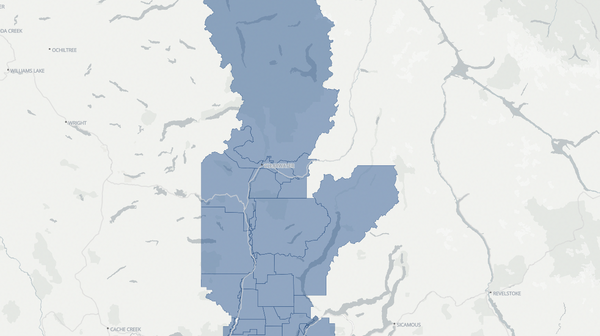
Prince George-North Cariboo — 2024 British Columbia Provincial Election Results Map
Prince George-North Cariboo — 2024 Election Results
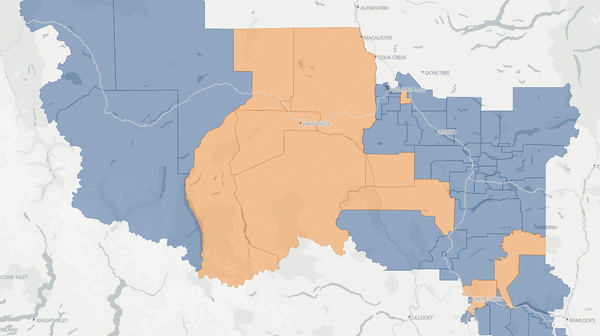
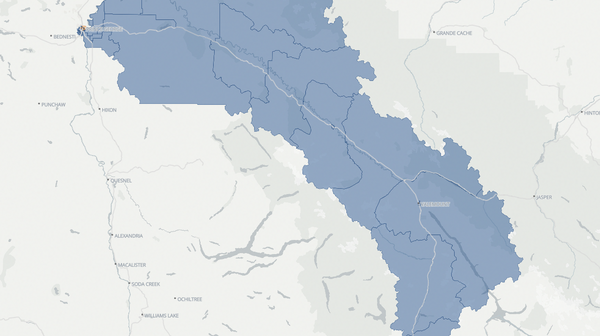
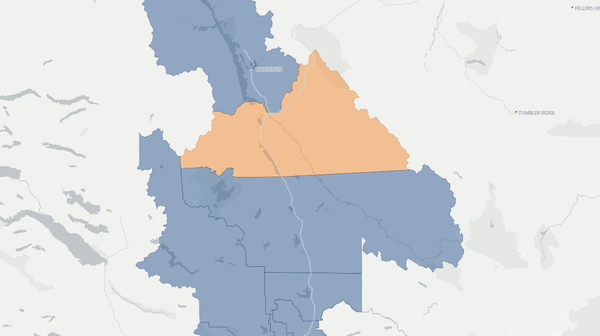
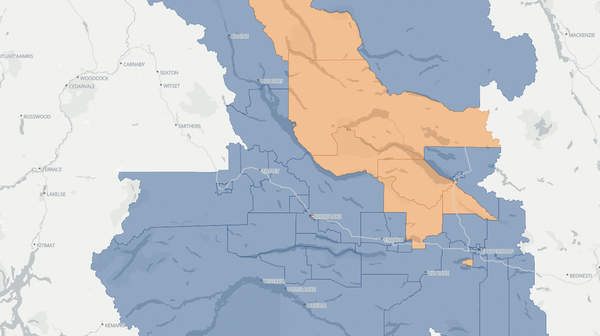
Poll-by-poll results for Prince George-North Cariboo in the 2024 British Columbia election. The Conservative Party candidate won this riding. Explore detailed voting data, candidate results, and turnout statistics at the poll level.
Riding information
Auto generated. Flag an issue.Prince George—North Cariboo
Prince George—North Cariboo is a new riding created in the 2024 redistribution, combining the western portions of Prince George with a large rural territory stretching south and west into the Cariboo. The riding takes in communities including Quesnel — a forestry and ranching town of roughly 10,000 on the banks of the Fraser and Quesnel Rivers — as well as Wells, Barkerville, and the scattered settlements along Highway 97 between Prince George and Williams Lake. The Cariboo Wagon Road, the historic route that brought gold rush prospectors into the interior in the 1860s, runs through the heart of the riding, and the landscape shifts from the spruce and pine forests of the central plateau to the ranching country of the Cariboo.
The riding's territory was drawn largely from the former Prince George—Valemount and Cariboo North seats. Coralee Oakes, who had held Cariboo North for the BC Liberals since 2013 and served in cabinet under Christy Clark, chose to run as an Independent after BC United collapsed, setting up a contest that also featured a firearms advocate running for the Conservatives and a union member carrying the NDP banner.
Candidates
Sheldon Clare (Conservative Party) — Clare was born and raised in Prince George and had spent his career as a history instructor at the College of New Caledonia. He held a Bachelor of Arts in International Relations from UBC and a Master of Arts cum laude from Norwich University, a military college in Vermont. He was the former national president of the National Firearms Association and had been campaigning for the seat since late 2023.
Coralee Oakes (Independent) — Oakes was a three-term MLA first elected in 2013 as a BC Liberal in the former Cariboo North riding, having previously served two terms on Quesnel city council and fourteen years as executive director of the Quesnel and District Chamber of Commerce. In the Christy Clark government, she held the portfolios of Community, Sport and Cultural Development, Small Business and Red Tape Reduction, and was Minister Responsible for the Liquor Distribution Branch. She chose to run as an Independent after BC United suspended its campaign.
Denice Bardua (BC NDP) — Bardua worked in education in the Quesnel area and served as a payroll assistant with School District 28. She had lived in the Bouchie Lake community near Quesnel for more than twenty-five years and was an active member of her union.
Randy Thompson (BC Green Party) also contested the riding, receiving a minor share of the vote.
Local Issues
The forestry crisis was the defining economic issue across the riding's rural communities. Quesnel's economy had long depended on the forest products industry, and the mountain pine beetle epidemic's legacy — decades of timber mortality across the central interior — had left mills operating with diminished fibre supply and reduced allowable annual cuts. West Fraser's plywood plant in Quesnel and the surviving sawmills in the region faced ongoing uncertainty about wood supply, and the broader pattern of mill closures and curtailments across the BC interior had eroded the employment base that sustained small communities. The NDP government's engagement with forestry communities through timber supply area coalitions and worker transition programs was viewed by many as insufficient for the scale of the structural change underway.
Wildfires had become an annual existential threat across the Cariboo. The 2023 fire season was among the worst in British Columbia's history, burning roughly 2.8 million hectares across the province, and communities throughout the riding — including Quesnel and the smaller settlements along Highway 97 — spent weeks under evacuation alerts or orders. The 2021 heat dome, which killed hundreds of British Columbians and set temperature records across the province, and the atmospheric rivers that followed later that year, had already underscored the region's vulnerability to extreme weather. Residents questioned whether provincial investment in fire prevention, fuel management, and community protection planning matched the scale and frequency of the threat.
Health care access in the rural portions of the riding was severely limited. Quesnel's GR Baker Memorial Hospital served a large geographic area, but physician recruitment remained difficult, and specialist care required travel to Prince George or further. The NDP government's investment in primary care networks was slowly expanding coverage, but communities like Wells and the scattered settlements along the Cariboo corridor had little access to routine medical services. The opioid crisis was present in Quesnel and across the smaller communities, adding another layer of strain on already stretched health and social services.