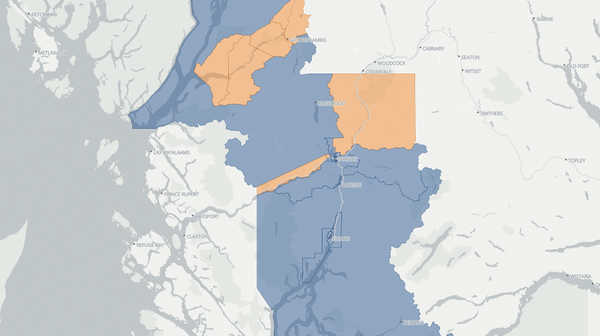
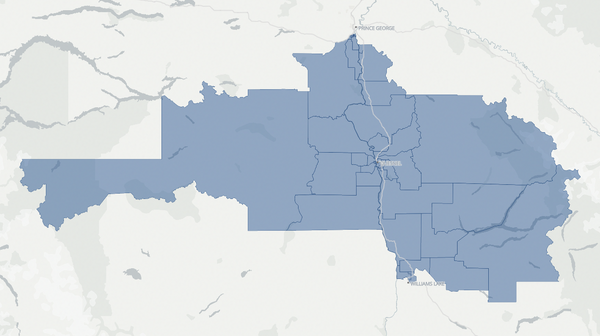
Peace River North — 2024 British Columbia Provincial Election Results Map
Peace River North — 2024 Election Results
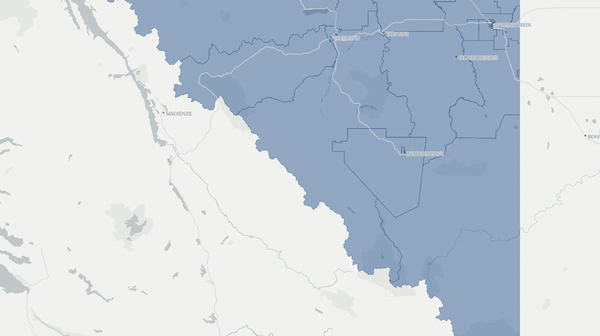
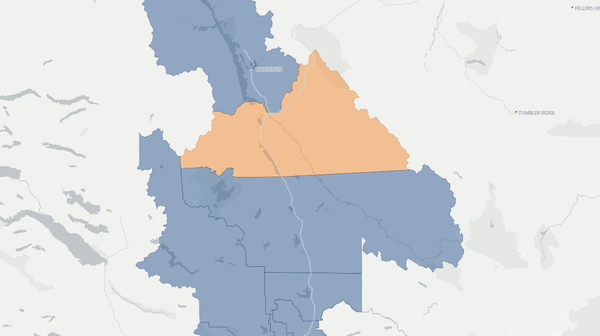
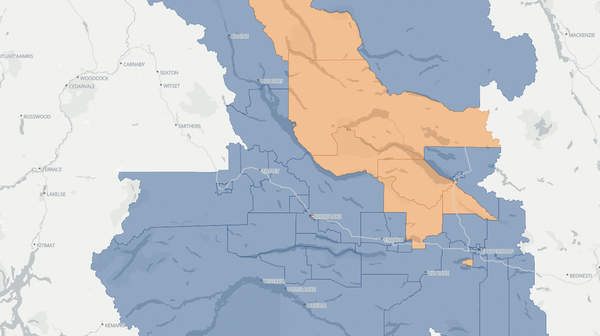
Poll-by-poll results for Peace River North in the 2024 British Columbia election. The Conservative Party candidate won this riding. Explore detailed voting data, candidate results, and turnout statistics at the poll level.
Riding information
Auto generated. Flag an issue.Peace River North
Peace River North anchors on Fort St. John, the largest city in British Columbia's northeast and the service hub for the surrounding oil and gas fields, agricultural operations, and the massive Site C hydroelectric dam on the Peace River roughly one hundred kilometres to the southwest. The Alaska Highway bisects the riding on its way north toward the Yukon, and the flat, boreal terrain stretching out from the city gives way to farmland, well pads, and pipeline corridors that define the region's resource-driven economy. The riding extends north and west to encompass smaller communities including Charlie Lake and the rural settlements along the upper Peace.
The political landscape had shifted dramatically since 2020. Dan Davies won the seat as a BC Liberal in 2017 and held it through 2020, but the collapse of BC United — formerly the BC Liberals — in August 2024, when leader Kevin Falcon suspended the party's campaign and endorsed the Conservative Party of BC, left Davies without a party banner. He chose to run as an Independent rather than join the Conservatives, setting up a three-way contest in a riding that had never elected an NDP or centre-left candidate.
Candidates
Jordan Kealy (Conservative Party) — Kealy was a farmer and heavy-duty mechanic who had served as a regional director on the Peace River Regional District board since 2022. He secured the Conservative nomination in November 2023 and campaigned on streamlining regulatory approvals for resource development and improving rural infrastructure in the northeast.
Dan Davies (Independent) — A former teacher with School District 60, Davies entered provincial politics in 2017 after spending twelve years on Fort St. John city council. He earned his Bachelor of Education at Simon Fraser University and later completed a Master of Arts in Leadership at Gonzaga University. He served as the MLA for Peace River North under the BC Liberal and subsequently BC United banners before choosing to run as an Independent when BC United suspended its campaign.
Ian McMahon (BC NDP) — McMahon had worked in various roles across Canada, including in the forestry industry in British Columbia, and had served as ministerial chief of staff to Minister of Forests Bruce Ralston.
Local Issues
The Site C dam on the Peace River dominated the regional economic conversation heading into 2024. The project's cost had ballooned from its original $8.3 billion estimate in 2014 to approximately $16 billion by 2021, making it the most expensive public infrastructure project in British Columbia's history. BC Hydro began filling the reservoir in August 2024, with the first generating unit expected to come online before the end of the year. For Fort St. John and surrounding communities, the dam's construction had sustained employment and service-sector demand for years, but the prospect of a post-construction employment decline weighed on local business owners. The flooding of agricultural land in the Peace River valley and the impacts on Treaty 8 First Nations territory remained sources of ongoing tension.
The natural gas sector's fortunes had improved since 2020 with the construction of the Coastal GasLink pipeline, which achieved mechanical completion in late 2023 and was undergoing commissioning in anticipation of delivering gas to the LNG Canada export terminal in Kitimat. The pipeline project had generated significant economic activity across the region, but the benefits were distributed unevenly, and many local service companies that had geared up for construction work faced uncertainty about the transition from construction to operations. Induced seismicity from hydraulic fracturing operations near Fort St. John continued to be a public safety concern, with thousands of measurable earthquakes recorded in the region over the preceding years. Residents questioned whether regulatory oversight kept pace with the intensity of drilling activity near critical infrastructure, including the Site C dam.
Health care access in the northeast lagged well behind urban centres, and the physician shortage affected communities throughout the riding. Fort St. John's hospital served as the regional referral centre, but specialist wait times remained long, and residents needing advanced care often had to travel to Prince George or Vancouver. The opioid crisis, while less visible than in larger cities, was taking a growing toll in northeastern communities, and the NDP government's decision to decriminalize possession of small amounts of illicit drugs in January 2023 — followed by a partial reversal restricting public consumption in May 2024 — had generated considerable debate in a region where public safety concerns ran high.