Powell River-Sunshine Coast — 2024 British Columbia Provincial Election Results Map
Powell River-Sunshine Coast — 2024 Election Results
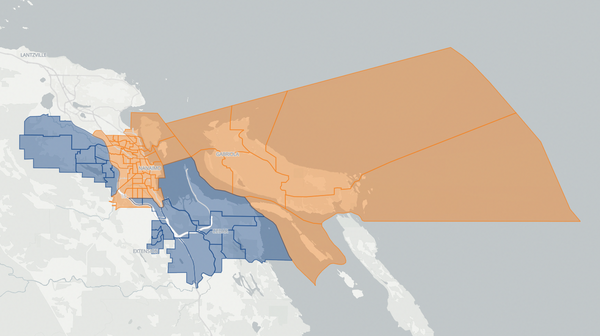
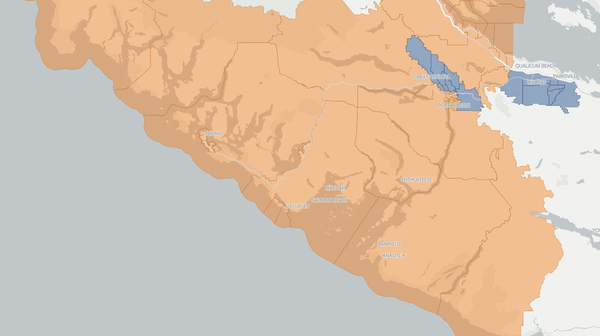
Poll-by-poll results for Powell River-Sunshine Coast in the 2024 British Columbia election. The BC NDP candidate won this riding. Explore detailed voting data, candidate results, and turnout statistics at the poll level.
Riding information
Auto generated. Flag an issue.Powell River—Sunshine Coast
Powell River—Sunshine Coast stretches along a remote and rugged coastline from the communities of Gibsons and Sechelt on the lower Sunshine Coast, northward through Pender Harbour and Halfmoon Bay, to the city of Powell River — a former pulp-and-paper town of roughly 14,000 on the upper coast. The riding's communities are linked by Highway 101 but separated by water and mountains, making BC Ferries the essential connection to the rest of the province. Ferry fares, service frequency, and vessel reliability are not abstract policy questions here — they shape daily commutes, business costs, grocery prices, and whether families can afford to stay.
Nicholas Simons held the seat for nineteen years and five consecutive elections before retiring in 2024, leaving an open NDP seat for the first time since 2005. The contest to replace him drew a former television journalist, a carpenter-turned-Conservative, and a Green Party community worker, and the race tested whether the NDP's long grip on this coastal constituency could survive the broader Conservative surge.
Candidates
Randene Neill (BC NDP) — Neill was an award-winning journalist who had worked as an anchor and reporter at Global BC for nearly two decades before transitioning to communications consulting, most recently for the BC Parks Foundation. A full-time resident of Pender Harbour since 2020, she won a closely contested NDP nomination in June 2024, prevailing over four other candidates on the fourth ballot count.
Chris Moore (Conservative Party) — Moore was a carpenter, firefighter, and real estate consultant who had lived in West Sechelt full-time since 2004. He initially ran as a BC United candidate before switching to the Conservatives when BC United suspended its campaign. He campaigned on reducing the cost of living and improving BC Ferries service.
Chris Hergesheimer (BC Green Party) — Hergesheimer was the lead food programmer at the Sunshine Coast Community Services Society and a researcher with a PhD in Integrated Studies in Land and Food Systems from UBC. Based in Halfmoon Bay, he had served on the board of the Sunshine Coast Regional Economic Development Organization.
Greg Reid ran as an Independent with limited support.
Local Issues
BC Ferries service and costs remained the overriding concern in a riding where ferry access functioned as the equivalent of a highway connection. Fares had roughly doubled since 2003, and residents argued that the cumulative cost of commuting, shipping goods, and sustaining tourism amounted to an unfair economic burden on ferry-dependent communities. The Conservative platform proposed a fleet overhaul and discounts for residents of ferry-dependent communities, including two vessels for the Route 3 service to the lower coast and reduced sailing times. The NDP government had introduced modest fare relief measures and invested in fleet renewal, including new Island Class vessels, but coastal communities continued to press for a fundamental restructuring that would treat ferry routes as extensions of the highway system rather than a user-pay service.
Housing affordability and availability had reached crisis levels along the coast. The Sunshine Coast Regional District's housing needs reports identified the need to build thousands of homes over the coming years, including deeply affordable units for seniors and workforce housing for nurses, teaching assistants, construction workers, and care aides. The limited land base — constrained by geography, the Agricultural Land Reserve, and environmental protections — complicated new construction. Rental vacancy rates were near zero in several communities, and the cost of ownership had pushed well beyond the reach of many working households. The tension between supporting growth and preserving the communities' character was a recurring theme, and proposals for a vacancy tax on the coast divided candidates.
Health care access in the riding's more remote communities remained a deep concern. Powell River and the smaller settlements along the coast faced physician shortages, limited specialist services, and sometimes required ferry crossings to reach care. The NDP government's investment in primary care networks and recruitment incentives had produced some results, but the pace lagged behind growing demand, particularly as the riding's retiree population expanded. Mental health and addiction services were scarce outside of the Sunshine Coast's larger centres, and the opioid crisis — while less statistically prominent than in urban areas — was a growing concern in communities with limited harm reduction infrastructure.