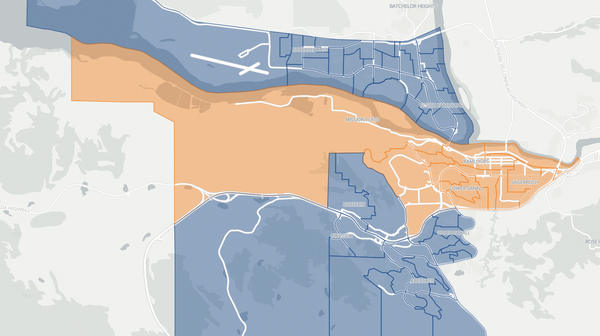
Cariboo-Chilcotin — 2024 British Columbia Provincial Election Results Map
Cariboo-Chilcotin — 2024 Election Results
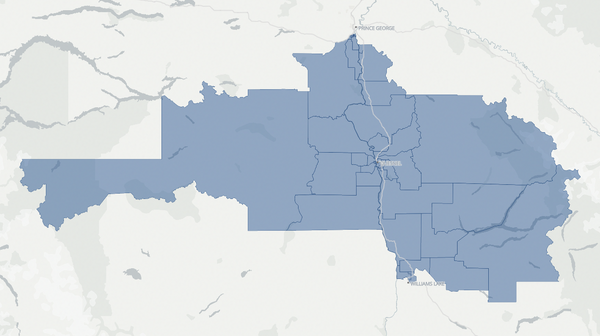
Poll-by-poll results for Cariboo-Chilcotin in the 2024 British Columbia election. The Conservative Party candidate won this riding. Explore detailed voting data, candidate results, and turnout statistics at the poll level.
Riding information
Auto generated. Flag an issue.Cariboo-Chilcotin
Cariboo-Chilcotin covers a vast expanse of British Columbia's central Interior, stretching from the ranching and forestry communities around Williams Lake and 100 Mile House through the remote Chilcotin plateau to the west. Williams Lake, the riding's largest centre with a population of approximately 11,000 in the city and 24,000 in the surrounding area, serves as the commercial and service hub for the region. The economy has historically rested on forestry, ranching, mining, and tourism, with the annual Williams Lake Stampede drawing visitors from across the province. The landscape is defined by rolling grasslands, dense boreal forest, and a network of lakes and rivers that support both resource extraction and outdoor recreation.
Lorne Doerkson won the seat for the BC Liberals in 2020 and served as the party's caucus chair as it rebranded to BC United. On May 31, 2024, he crossed the floor to the Conservative Party, becoming its third MLA. The riding has been a reliable centre-right seat for decades, and the Conservative brand — with its emphasis on resource development and rural service delivery — fit comfortably in a community where the resource economy is the primary employer.
Candidates
Lorne Doerkson (Conservative Party) — Doerkson has been a resident of the Cariboo-Chilcotin region for nearly three decades. He built a career in the newspaper industry, spending twenty years as a publisher with Black Press before moving into financial consulting with Investors Group. Active in community organizations including the Williams Lake Stampede, the local chamber of commerce, the BC Community Newspaper Association, and the Hough Memorial Cancer Society, he won the seat in 2020 and served as BC United's caucus chair before joining the Conservatives in May 2024.
Michael Moses (BC NDP) — Moses is a Williams Lake city councillor in his first term and a member of the Lower Nicola Indian Band. He holds a degree in digital innovation and leadership from Simon Fraser University's Beedie School of Business and comes from a long line of ranchers and cowboys. He has lived in the Cariboo-Chilcotin for more than thirty years and has served on the boards of the Canadian Mental Health Association, Cariboo Friendship Society, and the Cariboo Chilcotin Conservation Society.
Local Issues
The forestry sector's contraction was the economic story of the inter-election period in Cariboo-Chilcotin. The mountain pine beetle epidemic had devastated the Interior's timber supply in preceding decades, reducing the available fibre from approximately 60 million cubic metres in 2018 to roughly 35 million cubic metres of actual harvest by 2023, according to the BC Council of Forest Industries. Mill curtailments and closures in neighbouring communities sent shockwaves through the region, and Williams Lake's remaining forestry operations faced uncertainty about long-term timber access. The NDP government's old-growth deferral policies and conservation commitments added a layer of anxiety for workers and families whose livelihoods depended on the sector. Doerkson had been vocal in criticizing what he described as insufficient provincial attention to the rural resource economy.
Wildfire risk dominated the riding's relationship with the natural environment. The 2023 fire season was British Columbia's worst on record, and the Cariboo Fire Centre fought dozens of active fires throughout the summer. During July 2023, there were 35 active fires in the region, with evacuation orders and alerts issued in multiple communities including areas around 100 Mile House. The 2021 fire season had also brought significant fire activity, with 56 active fires in the Cariboo at one point, burning nearly 20,000 hectares. Communities that had lived through the catastrophic 2017 fire season — when Williams Lake itself was evacuated — were acutely aware that the threat was intensifying with each passing year. Candidates debated whether the NDP's investments in wildfire preparedness, fuel management, and community protection were adequate for a region surrounded by beetle-killed timber.
Healthcare access was a crisis across the riding's rural communities. Cariboo Memorial Hospital in Williams Lake was staffed by only two and a half emergency physicians, well below the eight or nine that Interior Health considered a full complement. Emergency room closures had become a recurring event in the region, with one facility closing its ER for the fifteenth time in a single year. Residents in 100 Mile House, Quesnel, and the smaller communities scattered across the Chilcotin plateau faced long drives for basic medical care, and the recruitment of physicians to remote postings remained stubbornly difficult despite provincial incentives.
Reconciliation and Indigenous governance were woven into the riding's politics. The Cariboo-Chilcotin is home to multiple Indigenous communities, including the Tsilhqot'in Nation, which won a landmark Supreme Court of Canada decision in 2014 recognizing Aboriginal title over a portion of its traditional territory. The NDP government's implementation of the Declaration on the Rights of Indigenous Peoples Act shaped land-use decisions and resource management across the riding, and the relationship between Indigenous governance, Crown land access, and the resource economy remained a complex and sometimes contentious element of regional politics.