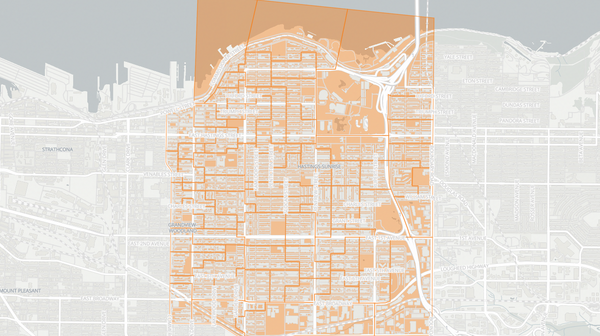
Vancouver-West End — 2020 British Columbia Provincial Election Results Map
Vancouver-West End — 2020 Election Results
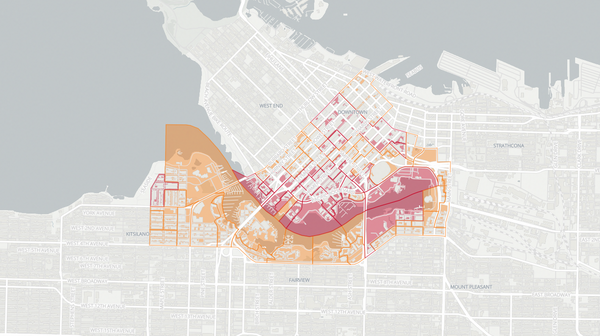
Poll-by-poll results for Vancouver-West End in the 2020 British Columbia election. The BC NDP candidate won this riding. Explore detailed voting data, candidate results, and turnout statistics at the poll level.
Riding information
Auto generated. Flag an issue.Vancouver-West End
Vancouver-West End is one of the most densely populated ridings in British Columbia, covering the compact West End peninsula between Stanley Park, English Bay, and the downtown core. Close to 45,000 people live in a tight grid of apartment towers and low-rise buildings, with renters making up the overwhelming majority of residents. The riding is home to Davie Village, the heart of Western Canada's largest LGBTQ community, and its commercial life revolves around the busy restaurant and retail strips along Davie Street and Denman Street. Demographically, it skews young, with nearly half the population between 20 and 39, and its workforce is heavily concentrated in the service and hospitality sectors that depend on foot traffic and tourism from the adjacent downtown.
The NDP has held Vancouver-West End consistently, and the riding was considered safe heading into 2020. The snap election, called during the COVID-19 pandemic, put the riding's service-sector economy and renter-heavy population squarely in the spotlight, as provincial health orders had shuttered restaurants and bars along the riding's commercial corridors and left many residents relying on federal and provincial income supports.
Candidates
Spencer Chandra Herbert (BC NDP) — First elected in a 2008 by-election in the predecessor riding of Vancouver-Burrard, Chandra Herbert was formerly an award-winning performing arts producer and elected Vancouver Park Board Commissioner with the Coalition of Progressive Electors from 2005 to 2008. As MLA, he led the successful campaign to explicitly protect transgender people under the BC Human Rights Code and founded Vancouver's Rent Bank to assist tenants facing eviction. During the 2017–2020 term, he chaired the provincial Rental Housing Task Force and served as the premier's advisor on rental housing during the pandemic, helping shape the emergency measures that included a temporary rental supplement and a moratorium on evictions.
Jon Ellacott (BC Liberal Party) — Ellacott was a construction site superintendent who had spent his career building social, industrial, and commercial infrastructure in British Columbia. He campaigned on eliminating regulatory barriers to housing construction and advocated for modular, prefabricated construction methods to deliver affordable housing units more quickly.
James Marshall (BC Green Party) — Marshall had worked in Vancouver's video game development sector for a decade as an artist and developer. Originally from Coquitlam, he moved to the West End and ran for the BC Greens in the riding for the second consecutive election, having also been the party's candidate in 2017.
Kim McCann ran for the Libertarian Party.
Local Issues
The Rental Housing Task Force chaired by Chandra Herbert delivered its 23 recommendations in December 2018 after consulting with tenant and landlord organizations across British Columbia. The legislative changes that followed had particular resonance in a riding where renters comprised the overwhelming majority of residents. The government capped annual rent increases at the rate of inflation — replacing the previous formula of inflation plus two per cent — effective January 2019, setting the maximum allowable increase at 2.5 per cent. It also eliminated the fixed-term lease loophole that landlords had used to end tenancies and reset rents to market rates, and introduced new penalties for landlords who evicted tenants under false pretences of personal use or renovation. Despite these measures, vacancy rates in the West End remained extremely tight and average rents for a one-bedroom apartment continued to climb, driven by the neighbourhood's desirability and the limited stock of new purpose-built rental construction.
COVID-19 struck the West End's service-sector economy with particular force beginning in March 2020. The neighbourhood's dense concentration of restaurants, bars, cafes, and personal service businesses along Davie Street and Denman Street depended heavily on foot traffic, tourism, and patronage from office workers in the adjacent downtown core. Provincial health orders resulted in widespread temporary closures and layoffs, and the federal Canada Emergency Response Benefit and provincial temporary rental supplement of up to $500 per month — later extended through August 2020 — provided a financial bridge for displaced workers. The pandemic also prompted the City of Vancouver to authorize expanded outdoor seating on sidewalks and parking lanes, temporarily transforming Denman Street's commercial strip and Davie Village into al fresco dining corridors. While these adaptations helped some establishments survive, many small business owners expressed uncertainty about long-term viability, particularly given the steep commercial rents that predated the pandemic.
The LGBTQ community centred on Davie Village continued to advocate for expanded health and social services during the NDP's term. While Chandra Herbert's successful effort to include transgender protections in the BC Human Rights Code remained a landmark achievement, advocates pushed for increased provincial funding for mental health services tailored to LGBTQ individuals, supervised consumption services accessible to queer and transgender people who faced stigma in mainstream facilities, and supportive housing designed for LGBTQ youth experiencing disproportionate rates of homelessness. The opioid crisis, which disproportionately affected marginalized populations, added urgency to these calls as overdose deaths continued to rise across the capital region and Metro Vancouver throughout the NDP's term.
The intersection of tourism, density, and residential livability remained a source of tension in the West End. Short-term vacation rentals through platforms like Airbnb had drawn thousands of units out of the long-term rental pool before the City of Vancouver introduced licensing requirements in 2018, and enforcement of these rules was an ongoing concern for tenants' advocates who argued that units continued to be diverted from the permanent housing stock. The pandemic temporarily reduced short-term rental activity as tourism collapsed, but residents questioned whether the units would return to the long-term market or revert to tourist accommodation once travel restrictions lifted.