Vancouver-Hastings — 2020 British Columbia Provincial Election Results Map
Vancouver-Hastings — 2020 Election Results
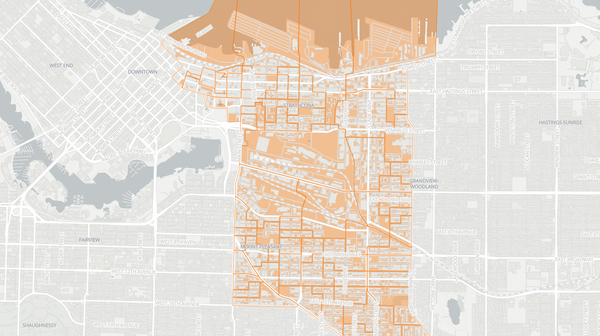
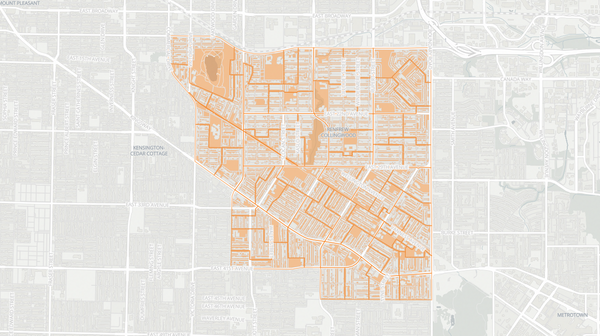
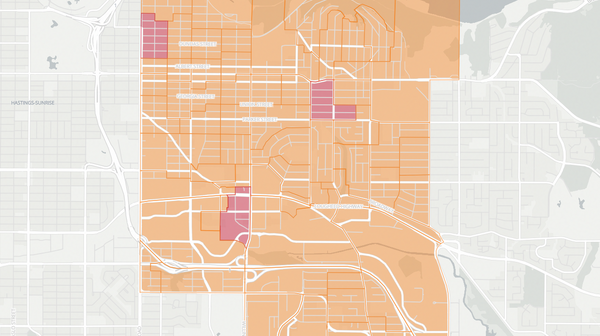
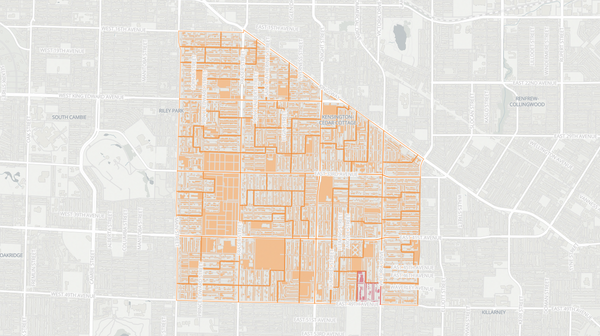
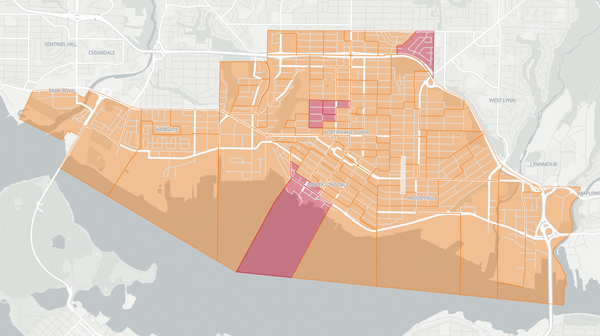
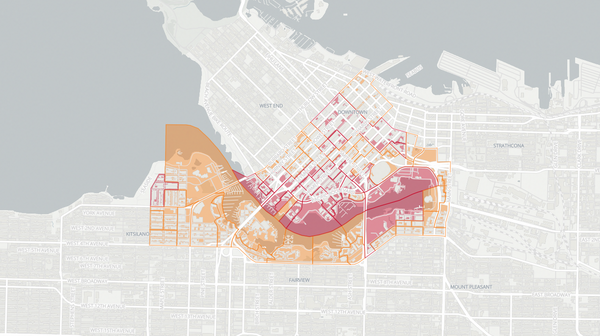
Poll-by-poll results for Vancouver-Hastings in the 2020 British Columbia election. The BC NDP candidate won this riding. Explore detailed voting data, candidate results, and turnout statistics at the poll level.
Riding information
Auto generated. Flag an issue.Vancouver-Hastings
Vancouver-Hastings stretches across a wide swath of East Vancouver, from the bohemian cafes and independent shops of Commercial Drive through the dense, multilingual neighbourhoods of Renfrew-Collingwood, and includes a portion of the Downtown Eastside — the epicentre of British Columbia's overlapping crises of addiction, homelessness, and mental illness. The riding is one of the most socioeconomically varied in Vancouver, encompassing both gentrifying streets where property values have climbed sharply and blocks where tent encampments and street-level disorder define daily life. Its population includes young professionals, longtime working-class families, and some of the province's most vulnerable residents.
The NDP had held Vancouver-Hastings continuously since 1991, making it one of the party's safest seats in the province. The 2020 election brought an open seat for the first time in 15 years after the incumbent announced he would not seek re-election, creating an opportunity for a new generation of NDP candidates. With the riding considered safely NDP, the campaign focused less on partisan competition and more on the urgent local crises — the opioid emergency, homelessness, and housing affordability — that the next MLA would inherit.
Candidates
Niki Sharma (BC NDP) — Born in Lethbridge, Alberta, and raised in Sparwood, British Columbia, Sharma graduated from the University of Alberta Faculty of Law and joined the Vancouver firm Donovan & Company in 2005, specializing in Indigenous law. Her practice focused on representing residential school survivors and advancing Aboriginal rights and title. She served as a Vancouver Park Board commissioner from 2011, including a term as chair. She also worked with NDP Minister of State for Child Care Katrina Chen on expanding the $10-a-day childcare program.
Bridget Burns (BC Green Party) — Burns was a community organizer and one of the founders of the Vancouver Vegan Festival and Vegan Night Market. She had 20 years of experience in the hospitality industry and more recently became a farm worker. In the 2019 federal election, she ran as the Green candidate in Vancouver East.
Alex Read (BC Liberal Party) — Read was an entrepreneur who had received Business in Vancouver's "40 Under 40" award. He served as CEO and later COO of WELL Health Technologies Corp., a TSX-listed company that became the largest owner and operator of primary health care facilities in British Columbia.
Golok Z Buday ran for the Libertarian Party and Kimball Cariou for the Communist Party of BC.
Local Issues
The opioid overdose crisis reached record severity during the NDP's term, with the Downtown Eastside portion of the riding at the epicentre. Monthly fatality counts had dipped modestly in 2019 but then surged to record levels in the spring and summer of 2020: in May 2020, 171 British Columbians died of illicit drug overdoses, followed by 175 in June — both shattering the previous monthly record of 161 set in December 2016. Post-mortem toxicology showed increasing concentrations of extreme-level fentanyl in the street supply, a trend that accelerated after COVID-19 disrupted cross-border drug trafficking. On June 26, 2020, BC paramedics responded to 131 suspected overdoses in a single day — the highest daily count ever recorded. Harm reduction advocates pushed for expanded supervised consumption sites, safe supply prescribing, and decriminalization of personal possession, while some business owners and residents along the Hastings corridor expressed growing frustration with the visible disorder that accompanied the crisis.
Homelessness and encampments became an increasingly visible feature of the riding during the NDP's term. The tent city at Oppenheimer Park, which had grown through 2018 and 2019 to house several hundred people, was cleared in May 2020 after the provincial government enacted an order to move encampment residents into more permanent spaces during the COVID-19 pandemic. Close to 300 people were relocated from the park. But the displacement pattern continued: within weeks, a new encampment formed at CRAB Park, which was cleared by court injunction on June 15, 2020, after which a much larger camp emerged at Strathcona Park — growing to several hundred tents by the fall of 2020. The NDP government had invested in modular supportive housing, opening hundreds of units in Vancouver during its term, but the scale of the crisis far exceeded the available supply.
In the riding's more stable residential neighbourhoods around Commercial Drive and Renfrew-Collingwood, housing affordability and the displacement of renters from older apartment buildings remained key concerns. Retail gentrification along Hastings Street and Commercial Drive — with long-established businesses giving way to upscale food and specialty shops — reflected broader demographic shifts in East Vancouver's traditionally working-class neighbourhoods. The NDP's pandemic-era eviction moratorium provided temporary relief for tenants, but many residents worried about long-term affordability as property values continued to climb. The Grandview-Woodland Community Plan, adopted by Vancouver Council before the NDP took office, had approved increased density in parts of the neighbourhood, and some longtime residents viewed the planned changes as an acceleration of displacement pressures.
The NDP's poverty reduction efforts under outgoing MLA Simpson had produced measurable but modest gains. The government's TogetherBC poverty reduction strategy, released in 2019, set targets for reducing the overall poverty rate by 25 per cent and child poverty by 50 per cent by 2024. Increases to income assistance and disability rates, the new BC Child Opportunity Benefit, and the childcare fee reduction initiatives were designed to address the needs of the riding's most vulnerable residents. But advocates in the Downtown Eastside argued that the increases to social assistance — welfare rates had been raised by $150 per month to $760 for a single person — still fell far short of what was needed to secure stable housing in a city where even a single room in an SRO hotel could cost $500 or more per month.