Vancouver-Fairview — 2020 British Columbia Provincial Election Results Map
Vancouver-Fairview — 2020 Election Results
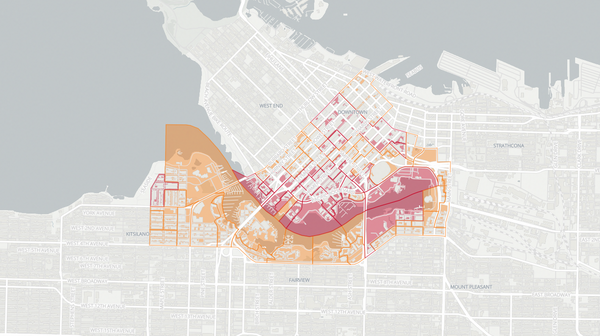
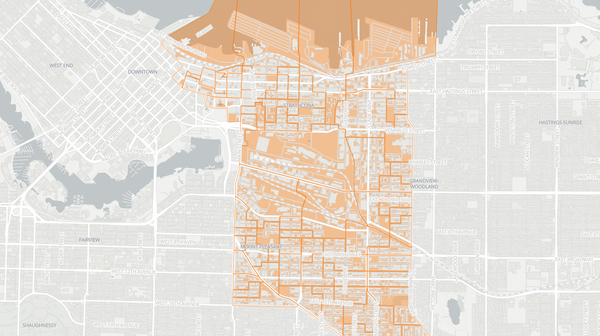
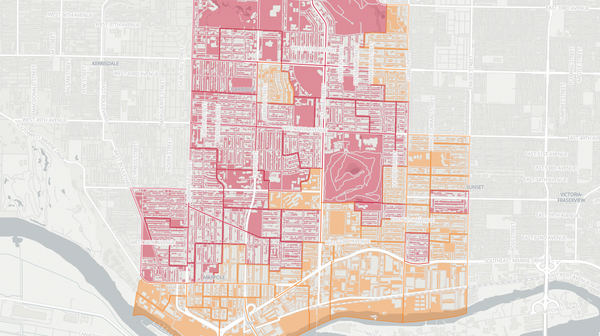
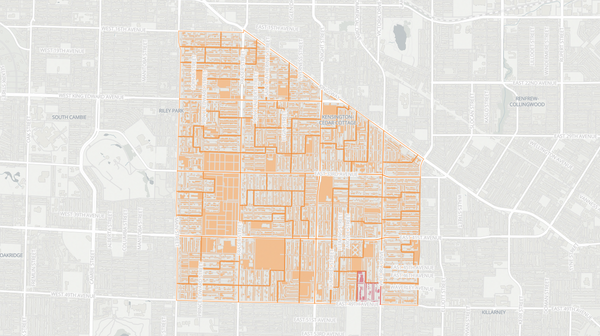
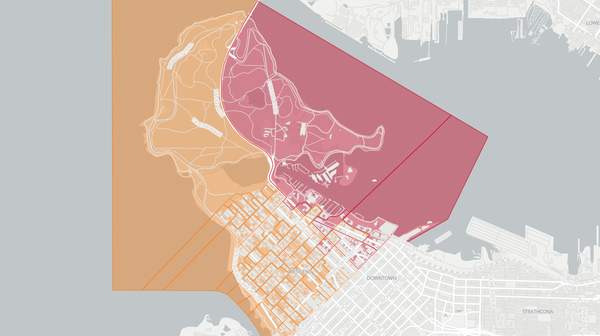
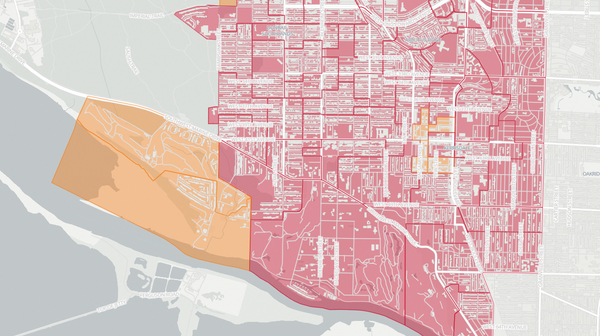
Poll-by-poll results for Vancouver-Fairview in the 2020 British Columbia election. The BC NDP candidate won this riding. Explore detailed voting data, candidate results, and turnout statistics at the poll level.
Riding information
Auto generated. Flag an issue.Vancouver-Fairview
Vancouver-Fairview spans a diverse slice of Vancouver's west side, from the affluent mansions of Shaughnessy through the densifying Cambie corridor to the older rental apartments and commercial strips along Broadway. The riding includes Granville Island and the South Granville gallery district, and is anchored by a major health and institutional employment cluster around Vancouver General Hospital and the BC Cancer Agency. The planned Broadway Subway extension — set to tunnel directly beneath the riding's main commercial artery — was poised to reshape the constituency's transit, development, and business landscape.
The NDP had held Vancouver-Fairview since 2013, when George Heyman first won the seat. The riding had swung between the NDP and BC Liberals over the previous two decades, but the NDP's growing strength across Vancouver made it a relatively safe seat heading into 2020. Heyman sought a third term as the incumbent, while the Liberals ran a former Vancouver city councillor in a contest that the NDP's broad province-wide momentum rendered less competitive than it might have been in other cycles.
Candidates
George Heyman (BC NDP) — The son of Polish-Jewish refugees who escaped occupied Poland during the Second World War, Heyman grew up in Vancouver and worked as a log scaler for the BC Ministry of Forests before rising through the labour movement to become president of the BCGEU from 1999 to 2008. He subsequently served as executive director of the Sierra Club BC from 2009 to 2012. Elected to the Legislature in 2013, he was appointed Minister of Environment and Climate Change Strategy when the NDP took power in 2017.
George Affleck (BC Liberal Party) — Affleck worked in broadcast journalism at CBC in Vancouver before founding Curve Communications, a marketing and communications firm. He was elected to Vancouver City Council as an NPA councillor in 2011 and re-elected in 2014, topping all NPA candidates with over 68,000 votes. He chose not to seek re-election municipally in 2018 and later became a political commentator on CTV.
Ian Goldman (BC Green Party) — Goldman moved to British Columbia to attend law school at UBC, where he also earned a master's degree. He had practised immigration law in private practice since 1993.
Sandra Filosof-Schipper ran for the Libertarian Party.
Local Issues
The Broadway Subway Project reached a pivotal milestone during the NDP's term and was the single most significant infrastructure development affecting the riding. In September 2020, just weeks before the election, the province awarded a $1.728-billion contract to the Broadway Subway Project Corporation to design, construct, and partially finance the 5.7-kilometre extension of the Millennium Line from VCC-Clark Station to Arbutus Street. The total project cost was pegged at $2.954 billion, with funding shared among the federal, provincial, and municipal governments. Construction was set to begin in the fall of 2020, running beneath Broadway through the heart of the constituency. After years of advocacy for rapid transit along one of North America's busiest bus corridors — the 99 B-Line carried tens of thousands of riders daily — the project's approval was a landmark achievement. But local businesses along Broadway braced for years of construction disruption, and some commercial tenants in older buildings worried that the completed subway would accelerate redevelopment pressures that could displace them long before they benefitted from improved transit access.
Heyman's environmental portfolio brought provincial policy debates directly into the riding. The CleanBC plan, released in December 2018, committed British Columbia to reducing greenhouse gas emissions to 40 per cent below 2007 levels by 2030, with specific targets for transportation, buildings, and industry. The plan drew praise from environmental groups but also criticism from those who argued it did not go far enough — particularly on old-growth logging. In 2019, the government appointed an independent panel to conduct a strategic review of old-growth management, and the panel's report, received by the minister's office in April 2020, contained fourteen recommendations including an immediate halt to logging in the province's most at-risk ancient forests. The report's release in the weeks before the election — and questions about how quickly the NDP would implement its recommendations — made old-growth protection a live campaign issue for Heyman in a riding with a strong environmentalist constituency.
The riding's stark economic divide sharpened during the NDP's term. Shaughnessy, which had the highest rate of empty homes in Vancouver according to a 2017 city report, also experienced a 53 per cent increase in break-and-enter reports between 2010 and 2018 — the largest jump of any Vancouver neighbourhood — as vacant mansions became targets for property crime. The provincial speculation and vacancy tax, introduced in 2018, and Vancouver's own empty homes tax were designed in part to bring these properties back into productive use, and by 2020 the number of vacant homes across the city had begun to decline. Meanwhile, renters in the aging low-rise apartment buildings along Broadway faced a different set of pressures: vacancy rates remained extremely low, and while the NDP's pandemic-era eviction moratorium and rent freeze provided temporary relief, many tenants worried about long-term displacement as the Broadway Subway's construction raised land values and redevelopment interest along the corridor.
The COVID-19 pandemic created particular challenges for the riding's renters and small businesses. Provincial emergency orders temporarily banned evictions and froze rent increases, but the protections were understood to be temporary measures. Along the Cambie and Broadway commercial strips, restaurants, retail shops, and service businesses faced months of restrictions, reduced foot traffic, and economic uncertainty. The NDP's $10-a-day childcare pilot program, which included participating sites in Vancouver, addressed one of the riding's persistent concerns — childcare affordability for young professionals and families — but the pace of expansion was slower than many advocates had hoped, with only 53 pilot sites and approximately 2,500 spaces created province-wide by 2020.