Vancouver-Kensington — 2020 British Columbia Provincial Election Results Map
Vancouver-Kensington — 2020 Election Results
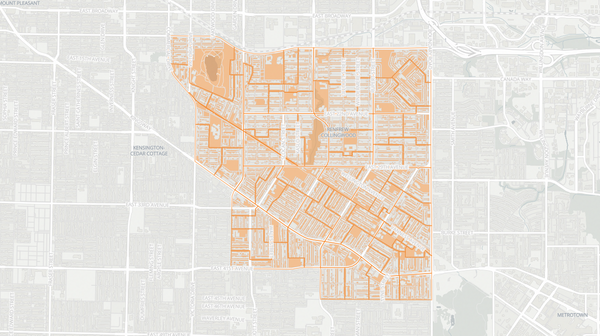
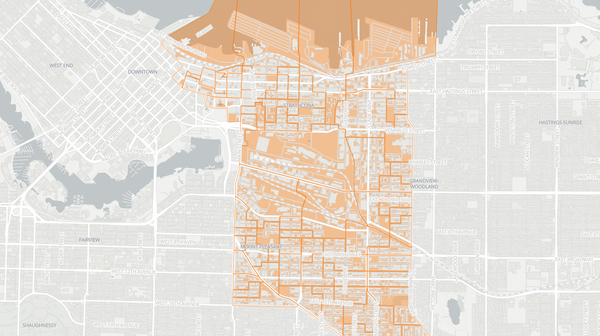
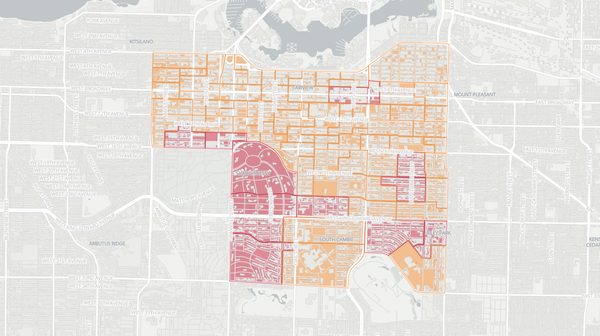
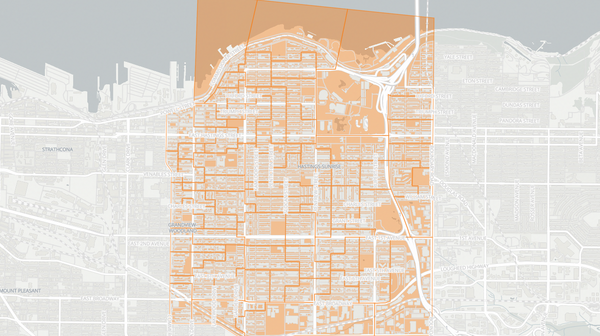
Poll-by-poll results for Vancouver-Kensington in the 2020 British Columbia election. The BC NDP candidate won this riding. Explore detailed voting data, candidate results, and turnout statistics at the poll level.
Riding information
Auto generated. Flag an issue.Vancouver-Kensington
Vancouver-Kensington covers a broad section of central East Vancouver, including the Kensington-Cedar Cottage, Renfrew-Collingwood, and Sunset neighbourhoods along the Kingsway commercial corridor. It is one of the most linguistically diverse constituencies in British Columbia, with the majority of residents reporting a mother tongue other than English. The riding is home to large Filipino, Chinese, South Asian, and Iranian communities, and its neighbourhood houses and community centres serve as essential hubs for settlement services, language classes, and culturally specific programming. The local economy is anchored by the small businesses, restaurants, and shops lining Kingsway and the surrounding commercial streets.
The NDP had held Vancouver-Kensington since 2005, and incumbent Mable Elmore — the first Filipino Canadian elected to the BC Legislature — sought a fourth consecutive term in 2020. The riding was considered a safe NDP seat, with Elmore's deep roots in the constituency's Filipino and Chinese-Canadian communities giving her a formidable advantage. The NDP's province-wide strength heading into the snap election reinforced the party's hold on this diverse East Vancouver riding.
Candidates
Mable Elmore (BC NDP) — Born in Langley, British Columbia, and raised in Manitoba, Elmore attended UBC and worked for a decade as a transit operator for Coast Mountain Bus Company. She was active in the labour movement through CAW Local 111, the Vancouver and District Labour Council, and the BC Federation of Labour. As MLA, she was the first Filipino Canadian elected to the BC Legislature and the second openly lesbian member of the house.
Paul Lepage (BC Liberal Party) — Lepage was described by the BC Liberals as an Indigenous project-management expert. He was one of five new candidates announced by Liberal leader Andrew Wilkinson during the 2020 campaign.
Nazanin Moghadami (BC Green Party) — Moghadami moved to Canada from Iran in 2005 and was voting in her first provincial election as a Canadian citizen. She held a bachelor's degree from UBC and a master's degree from Adler University and worked as a registered clinical counsellor specializing in trauma and gender-based violence.
Salvatore Vetro ran as an independent candidate.
Local Issues
The COVID-19 pandemic's devastating impact on long-term care became the defining issue of Elmore's portfolio and the riding's campaign. Outbreaks at care facilities across Vancouver exposed systemic problems that had accumulated over decades: chronic understaffing, low wages for care aides, and the widespread practice of part-time workers taking shifts at multiple homes — a pattern that turned staff into vectors for viral transmission. The province responded with a single-site staffing order requiring care workers to choose one facility, and temporarily boosted wages to compensate for lost second jobs. But the order exacerbated existing recruitment challenges, and some facilities serving the riding's multilingual seniors struggled to maintain adequate staffing levels. Elmore's appointment as Parliamentary Secretary for Seniors Services placed her at the centre of the government's response, and the pandemic underscored demands for permanent full-time positions, improved infection control, and higher baseline wages for care workers.
The Cedar Cottage Neighbourhood House — a community institution that had served the Kensington-Cedar Cottage area since 1950 — was undergoing planning for a major redevelopment during this period. The existing facility, which provided programming for food security, literacy, childcare, cultural celebration, and social services, was slated for replacement with a new three-storey hybrid concrete and mass-timber building designed to accommodate the growing and increasingly diverse population. The new facility would include a full-time childcare centre, addressing one of the neighbourhood's persistent gaps. Community organizations in the riding, including the Collingwood Neighbourhood House and the Frog Hollow Neighbourhood House, also expanded their programming during the NDP's term to meet rising demand for settlement services, language classes, and culturally appropriate family supports.
Housing affordability continued to reshape what had historically been one of Vancouver's more accessible neighbourhoods for working-class families. Property values in Kensington-Cedar Cottage and Sunset climbed during the 2017-2020 term despite the cooling effects of the provincial speculation tax and the strengthened foreign buyers tax. Renters in the older apartment buildings lining the side streets off Kingsway — many of them low-rise wood-frame structures built in the 1960s and 1970s — faced mounting displacement pressures as owners eyed redevelopment. The NDP's pandemic-era eviction moratorium and rent freeze provided temporary protection, but advocates warned that the underlying economics of redevelopment would resume once the emergency orders were lifted. The phased minimum wage increases, reaching $14.60 per hour by June 2020, and the elimination of MSP premiums on January 1, 2020, provided some financial relief to low-income households, but rents along the Kingsway corridor continued to outpace wage growth for many of the riding's service-sector workers.
Access to services in multiple languages remained a practical challenge throughout the term. The riding's Filipino, Chinese, South Asian, and Iranian communities needed translated health information, immigration support, and culturally appropriate social services — needs that became urgent when pandemic health directives, testing protocols, and eventually vaccination information needed to reach households where English was not the primary language. Elmore's constituency office, which employed staff who could communicate in Cantonese, Mandarin, and Tagalog, served as a critical link between government services and the riding's diverse population. Community organizations reported that the pandemic had deepened social isolation among non-English-speaking seniors, many of whom lost access to in-person programming at neighbourhood houses and community centres when facilities closed or shifted to virtual formats that were inaccessible to those without reliable internet or digital literacy.