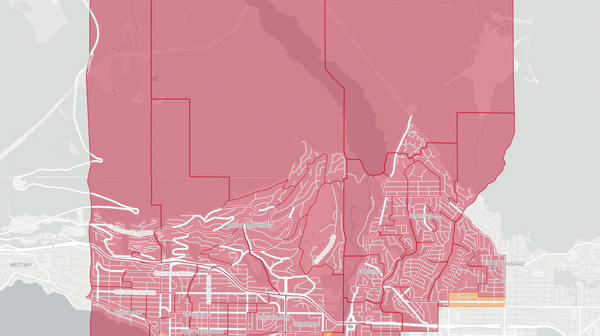
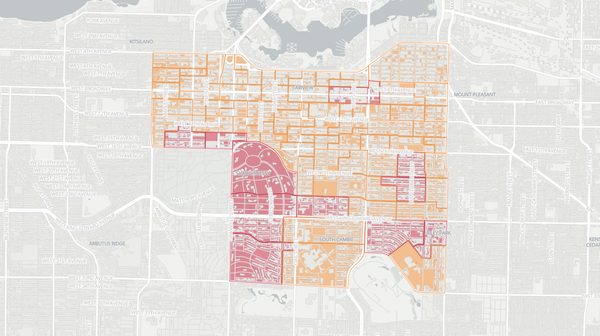
North Vancouver-Lonsdale — 2020 British Columbia Provincial Election Results Map
North Vancouver-Lonsdale — 2020 Election Results
Poll-by-poll results for North Vancouver-Lonsdale in the 2020 British Columbia election. The BC NDP candidate won this riding. Explore detailed voting data, candidate results, and turnout statistics at the poll level.
Riding information
Auto generated. Flag an issue.North Vancouver—Lonsdale
North Vancouver—Lonsdale covers the City of North Vancouver and part of the District of North Vancouver, centred on the Lower Lonsdale waterfront area with its busy SeaBus terminal connecting the North Shore to downtown Vancouver. The riding is one of Metro Vancouver's most urban North Shore constituencies, with a rapidly densifying core around the Lonsdale Quay and a mix of established residential neighbourhoods climbing the hillside. The local economy is tied to the port, shipyards, the film industry, and the service sector, with many residents commuting across Burrard Inlet to jobs in Vancouver. The riding had been a Liberal stronghold for a generation before the NDP flipped it in 2017, the party's first win on the North Shore since 1991.
The 2020 election tested whether the NDP's 2017 breakthrough represented a durable political realignment on the urban North Shore or a one-time result. The NDP incumbent sought re-election in a riding where transportation congestion, housing affordability, and the Trans Mountain pipeline expansion's impact on Burrard Inlet tanker traffic were the dominant issues.
Candidates
Bowinn Ma (BC NDP) — Ma was a licensed professional engineer and certified project management professional who graduated from the University of British Columbia's engineering program. Before entering politics, she worked as a project manager at Vancouver International Airport. Appointed Parliamentary Secretary for TransLink during the NDP government's term, she focused on transportation improvements across Metro Vancouver, including advancing the Burrard Inlet rapid transit study and advocating for improved connections to the North Shore.
Lyn Anglin (BC Liberal Party) — Anglin was the founding president and CEO of Geoscience BC, a non-profit organization that generates earth science data for the province's resource sector. She received the Canadian Institute of Mining, Metallurgy and Petroleum's Distinguished Lecturer award for her work overseeing the Mount Polley mine remediation effort. A Lonsdale resident for nearly 20 years, she also held a private pilot's licence and was active in community life on the North Shore.
Christopher Hakes (BC Green Party) — Hakes was the Green Party candidate for the riding, running as a political newcomer.
Local Issues
The Burrard Inlet rapid transit study had progressed from aspiration to concrete analysis during Ma's term, giving the riding's defining infrastructure issue new momentum. The provincial government commissioned a technical feasibility study in 2019, and by October 2020 it had identified five potential crossing options — using either bridges or tunnels at the First Narrows, Second Narrows, or a direct route from Waterfront Station to Lonsdale — to connect the North Shore to the existing rapid transit network. The study confirmed that a high-capacity crossing was technically feasible, and subsequent analysis by North Shore municipal governments estimated that a SkyTrain connection could remove 50,000 vehicles per day from the bridges. For the 120,000 commuters who crossed the inlet daily, the study represented the first serious evidence that a solution to the North Shore's chronic congestion was within reach. But residents were wary of promises without timelines or funding commitments, and the gap between feasibility study and construction remained vast.
The $198-million Lower Lynn Corridor Improvement Project on Highway 1 reached a significant milestone during the campaign period. A new Mountain Highway interchange had been completed, featuring a new eastbound off-ramp, westbound on-ramp, five-lane Mountain Highway underpass, and the widening and realignment of Mountain Highway. In August 2020, the contract for the project's final phase — a new overpass and on-ramps connecting Main Street and Dollarton Highway to the Ironworkers Memorial Second Narrows Crossing — was awarded, with construction beginning in mid-September. The project, jointly funded by the Province, the Government of Canada, and the District of North Vancouver, aimed to reduce peak-hour travel times by at least nine minutes eastbound, a meaningful improvement for daily commuters but one that residents acknowledged would not solve the fundamental bottleneck created by only two bridge crossings serving the entire North Shore.
Housing affordability had become more acute as Lower Lonsdale's transformation from industrial waterfront to residential neighbourhood accelerated. New condominium towers continued to rise near the Lonsdale Quay and SeaBus terminal, and the Lynn Creek Town Centre area in the district was advancing major developments including a two-tower project with 683 strata and rental units, childcare space, and below-market rental units. But the question of whether new supply was genuinely affordable for the workers, families, and younger residents who needed it most remained contested. The North Shore's property values were among the highest in Metro Vancouver, and the NDP government's speculation and vacancy tax had prompted some conversion of investment properties to long-term rentals in the area, though its impact was difficult to isolate from broader market forces.
The Trans Mountain pipeline expansion, approved by the federal government in June 2019, continued to generate concern among North Shore residents. The project's completion would increase tanker traffic through Burrard Inlet from roughly 60 vessels per year to more than 400, with oil tankers passing within sight of the riding's waterfront. Environmental groups and residents who valued the inlet's marine ecology and recreational amenity worried about the risks of a spill in the confined waters between the North Shore and Vancouver, and the issue cut across partisan lines in a community with strong environmental sensibilities.