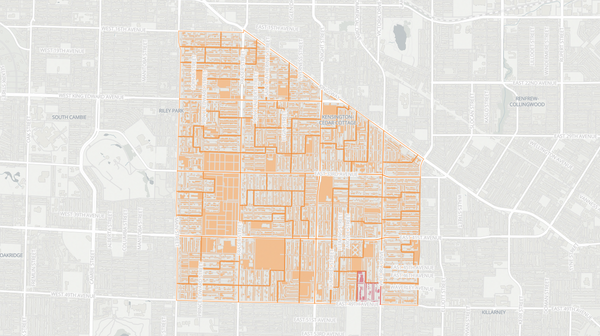
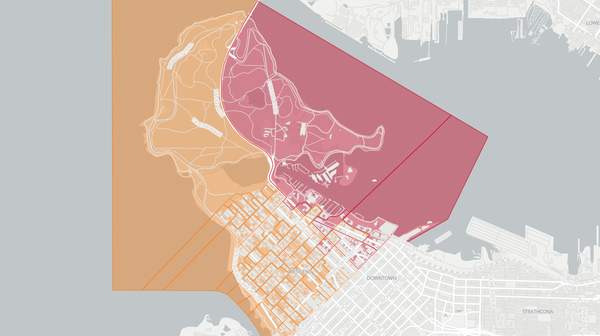
Vancouver-Quilchena — 2020 British Columbia Provincial Election Results Map
Vancouver-Quilchena — 2020 Election Results
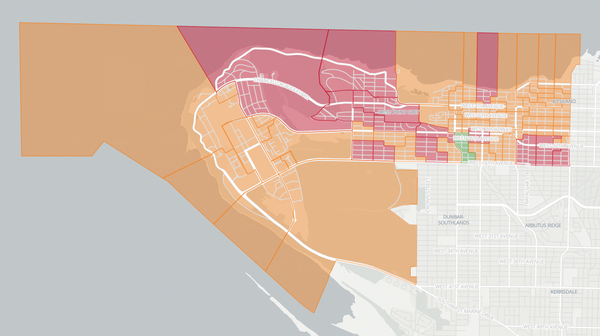
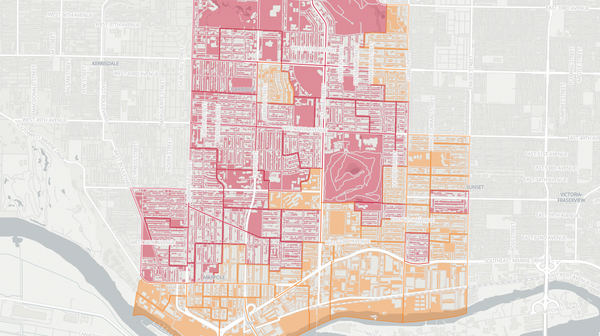
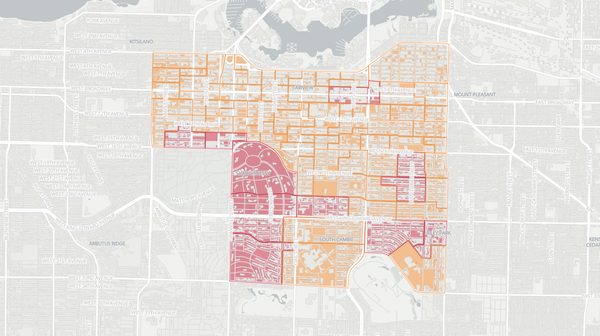
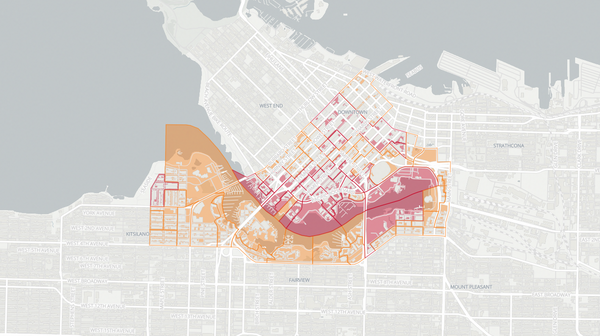
Poll-by-poll results for Vancouver-Quilchena in the 2020 British Columbia election. The BC Liberal Party candidate won this riding. Explore detailed voting data, candidate results, and turnout statistics at the poll level.
Riding information
Auto generated. Flag an issue.Vancouver-Quilchena
Vancouver-Quilchena covers some of Vancouver's most affluent west-side neighbourhoods, including Kerrisdale, Quilchena, Arbutus Ridge, and parts of Shaughnessy. With high median household incomes, some of the most expensive residential real estate in the country, and a significant Chinese-Canadian population comprising roughly 40 per cent of residents, the riding has a distinctly established, homeowner-dominated demographic profile. Its commercial life centres on the boutique retail strips along West 41st Avenue in Kerrisdale and West Boulevard in the Arbutus area, while the Arbutus Greenway — a linear park on a former railway corridor — runs through the riding's core.
Vancouver-Quilchena has been one of British Columbia's safest centre-right seats, returning BC Liberal candidates by wide margins in every election since the riding's creation. The NDP has never been competitive here. In 2020, the riding was held by BC Liberal leader Andrew Wilkinson, meaning the contest was less about the local race — which was never seriously in doubt — than about whether Wilkinson could use his platform as party leader to present a credible alternative to the NDP government's handling of the pandemic.
Candidates
Andrew Wilkinson (BC Liberal Party) — A Rhodes Scholar with degrees from the University of Alberta, Dalhousie University, and Oxford University, Wilkinson is trained and licensed as both a physician and a lawyer. He practised medicine in rural British Columbia communities including Campbell River, Lillooet, and Dease Lake before being called to the bar and becoming a litigation partner at McCarthy Tétrault in Vancouver. He won the BC Liberal leadership in 2018 and led the party into the 2020 election as Leader of the Official Opposition.
Heather McQuillan (BC NDP) — McQuillan worked as a technician in the film industry and was an active member of her union, where she focused on protecting workers' rights and strengthening opportunities for young workers. She had previously run as the federal NDP candidate in Chilliwack–Hope in the 2019 federal election.
Michael Barkusky (BC Green Party) — Barkusky is an economist, professional accountant, and financial executive. He served as a director, treasurer, and economics spokesperson for the Board of Change, a progressive business group in Vancouver. This was his second consecutive campaign in the riding, having also run for the BC Greens in Vancouver-Quilchena in 2017. He previously ran for the federal Green Party in Vancouver-Granville in 2015.
Local Issues
The question of leadership dominated the campaign in Vancouver-Quilchena more than in most ridings, given that Wilkinson's performance as party leader was itself an issue. Several BC Liberal candidates across the province had generated controversy during the campaign — including one who had shared anti-Muslim social media posts and another who had promoted COVID-19 conspiracy theories — and Wilkinson's responses to these incidents drew criticism for being slow and insufficiently decisive. The contrast with Premier Horgan's pandemic management, which had earned strong approval ratings, shaped the broader political context in which even a safe riding like Quilchena was contested. Wilkinson's decision to oppose the snap election while simultaneously having to fight it placed him in an awkward position that compounded questions about the party's strategic direction.
The NDP government's speculation and vacancy tax, introduced in 2018, was a persistent source of local debate in a riding where property values ranked among the highest in the country. The tax was designed to discourage foreign and domestic owners from leaving properties empty, and by 2020 the province reported it had helped return more than 20,000 units to the long-term rental market across Metro Vancouver, with 81 per cent of revenue coming from foreign owners, untaxed worldwide earners, and Canadians living outside British Columbia. Some homeowners in Shaughnessy and Kerrisdale supported the tax as a necessary measure to address the housing crisis, while others — particularly those with secondary properties or connections to international buyers — viewed it as government overreach that unfairly penalized legitimate owners. The City of Vancouver's separate Empty Homes Tax, operating alongside the provincial levy, added a further layer of regulatory burden that residents in the riding felt acutely.
The Arbutus Greenway, a linear park built on the former Canadian Pacific Railway corridor running through the riding, had opened as an interim pathway and was undergoing public consultation for its permanent design during the 2017–2020 term. The future of the 8.5-kilometre corridor — whether it would include a streetcar line, a dedicated cycling path, or remain a mixed-use greenway — generated active community debate. Residents along the route in Kerrisdale and Arbutus Ridge expressed competing visions: some championed a car-free greenway that would enhance neighbourhood livability and property values, while others worried about the loss of on-street parking, increased foot traffic near their homes, and the potential for the corridor to become a vehicle for densification through transit-oriented development.
COVID-19's impact on the riding's commercial districts, while less severe than in denser urban neighbourhoods, was nonetheless significant. The retail strips along West 41st Avenue in Kerrisdale and West Boulevard in the Arbutus area experienced reduced foot traffic as residents limited shopping trips and worked from home. Several independent retailers and restaurants that had served the community for decades faced an uncertain future, and the pandemic accelerated a pre-existing trend of commercial vacancies along these corridors as e-commerce reshaped local shopping habits.