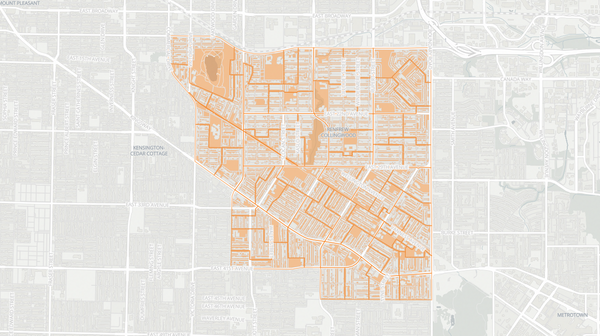
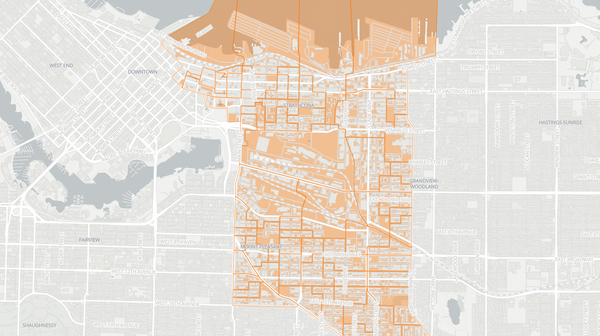
Vancouver-Langara — 2020 British Columbia Provincial Election Results Map
Vancouver-Langara — 2020 Election Results
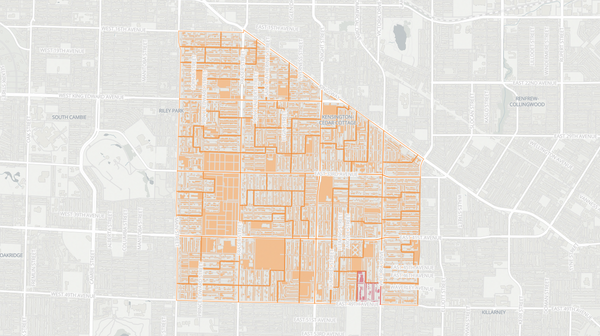
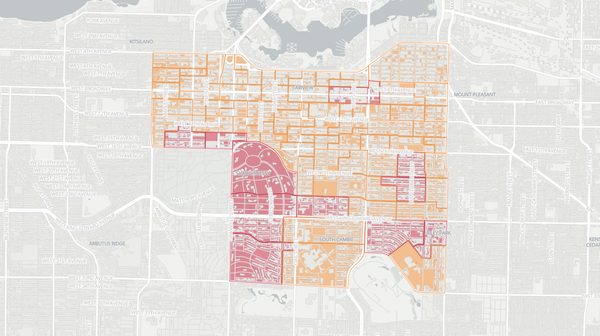
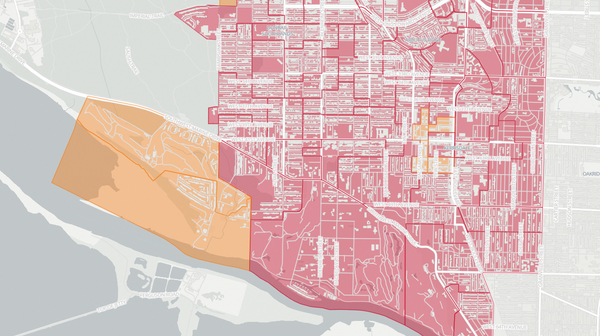
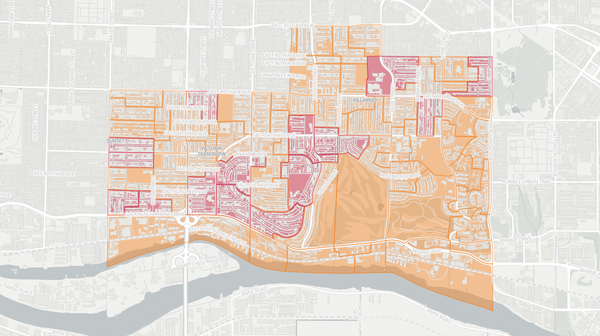
Poll-by-poll results for Vancouver-Langara in the 2020 British Columbia election. The BC Liberal Party candidate won this riding. Explore detailed voting data, candidate results, and turnout statistics at the poll level.
Riding information
Auto generated. Flag an issue.Vancouver-Langara
Vancouver-Langara stretches across south-central Vancouver, taking in the neighbourhoods of Marpole, Oakridge, and Sunset between Granville Street and Main Street. It is one of the most ethnically diverse provincial ridings in the city, with visible minorities comprising roughly four-fifths of the population — including large Chinese, South Asian, and Filipino communities. The riding is anchored by Langara College and shaped by the Cambie Corridor, where rapid transit-oriented development along the Canada Line was transforming the area's residential character. Economically, it mixes the established commercial strips along Cambie and Main with the working-class rental housing of Marpole and the higher-value properties near Oakridge.
Politically, Vancouver-Langara had been one of the few urban Vancouver seats to consistently return centre-right candidates, electing BC Liberals in every election since the riding's creation in 1991. The NDP had never won here, though the party's vote share had been climbing steadily in recent cycles. Heading into 2020, the BC Liberals held the seat, making it a key test of whether the NDP's strong pandemic-era approval ratings could breach one of the party's last urban Vancouver strongholds.
Candidates
Michael Lee (BC Liberal Party) — A business lawyer and partner at Lawson Lundell LLP, Lee holds a Bachelor of Science in biology, a Bachelor of Arts (Honours) in political science, and a Master of Arts in political science from the University of British Columbia, as well as a law degree from the University of Victoria. He had been active with the BC Liberals since 2002 and ran for the party leadership in 2018, finishing third. During his first term as MLA, he served as the Official Opposition critic for transportation, infrastructure, and TransLink.
Tesicca Chi-Ying Truong (BC NDP) — Truong was the co-founder of CityHive, a Vancouver-based non-profit focused on engaging young people in urban decision-making. She had served on Vancouver's Engaged City Task Force, the SFU Senate, and as the youth representative on BC's Climate Solutions and Clean Growth Advisory Council, advising the Minister of Environment and Climate Change Strategy. She held a background in housing and climate policy.
Stephanie Hendy (BC Green Party) — Hendy grew up in Vancouver and completed a Bachelor of Science in biomedical physiology and kinesiology at Simon Fraser University in 2013. Her platform centred on health equity and accessibility, informed in part by her experience living with a chronic illness.
Paul Matthews ran for the Libertarian Party.
Local Issues
The approval of Phase 3 of the Cambie Corridor Plan by Vancouver City Council in May 2018 represented the most significant planning decision affecting the riding during the NDP's term. The plan authorized up to 32,000 new housing units along the corridor, with the most dramatic density increases concentrated within a two-kilometre radius of the Oakridge–41st Avenue Canada Line station, where towers reaching 30 storeys would now be permitted. Major redevelopment sites within the riding included the 28-acre Oakridge Centre — set to become a mixed-use precinct with thousands of residential units, a nine-acre public park, and a new community centre — the 14-acre former Oakridge Transit Centre lands, and the 21-acre Langara Gardens site at Cambie Street south of 49th Avenue, whose policy statement was approved by council in February 2018. The scale of these projects raised concerns among long-time residents about construction disruption, the loss of neighbourhood character, and whether infrastructure such as schools and community services could keep pace with the anticipated population growth of 50,000 additional residents.
The Marpole neighbourhood became a flashpoint for competing visions of Vancouver's housing policy during the 2017–2020 term. In late 2017, the City of Vancouver and BC Housing announced plans to build 78 units of temporary modular housing for homeless residents at the Pearson Dogwood site on Heather Street. The announcement triggered sustained community opposition — approximately 250 residents marched in street protests, and a 5,000-signature petition was delivered to city hall. Opponents objected to the site's proximity to three schools and argued the community had not been adequately consulted. After protesters attempted to physically block construction, the BC Supreme Court granted an injunction in December 2017 allowing work to proceed. The Reiderman Residences opened in spring 2018, and within a year the initial fears had largely subsided, with neighbours acknowledging the project had integrated more smoothly than anticipated. Nevertheless, the episode illustrated the political tensions surrounding densification and social housing in the riding's residential neighbourhoods.
COVID-19 compounded pre-existing economic pressures across the riding during the campaign period. Small businesses along Cambie Street and Main Street faced reduced foot traffic and temporary closures under provincial health orders, while Langara College — a major neighbourhood institution serving approximately 19,000 students annually — shifted to remote learning in March 2020. The loss of in-person students, including a significant international student population from over 100 countries, rippled through the local economy as restaurants, convenience stores, and rental housing providers that depended on the college community saw sharply diminished demand. The provincial government's temporary rental supplement of up to $500 per month and its moratorium on evictions for non-payment provided some relief to the riding's substantial renter population, but uncertainty about the duration of the pandemic and the long-term fate of small commercial tenants weighed on the community as voters headed to the polls.