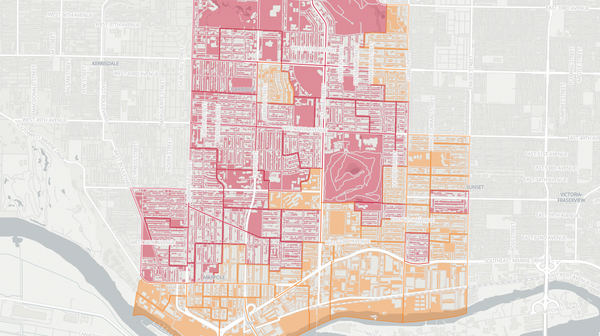
Vancouver-Point Grey — 2020 British Columbia Provincial Election Results Map
Vancouver-Point Grey — 2020 Election Results
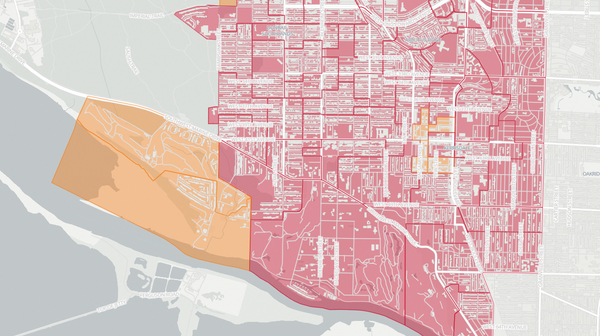
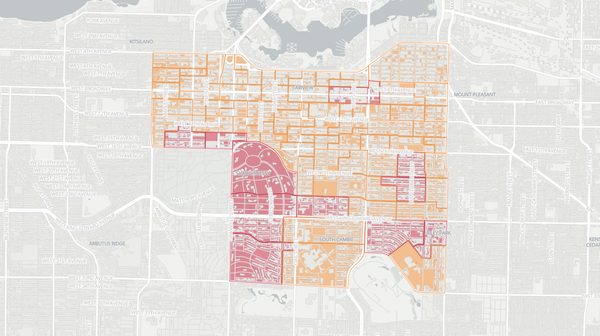
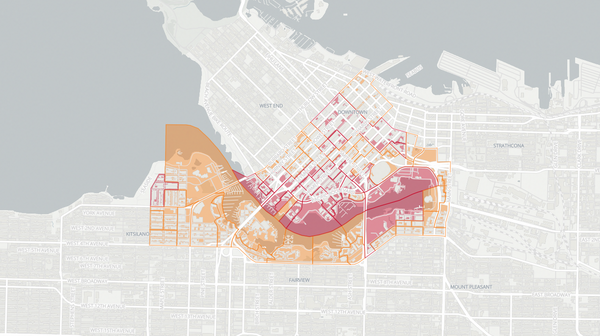
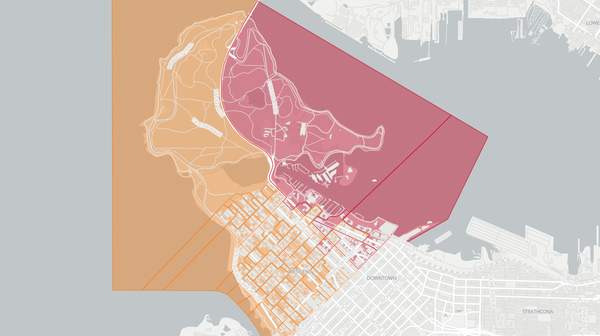
Poll-by-poll results for Vancouver-Point Grey in the 2020 British Columbia election. The BC NDP candidate won this riding. Explore detailed voting data, candidate results, and turnout statistics at the poll level.
Riding information
Auto generated. Flag an issue.Vancouver-Point Grey
Vancouver-Point Grey encompasses the University of British Columbia campus, the University Endowment Lands, and the residential neighbourhoods of West Point Grey and western Kitsilano. It is an unusual riding demographically, split between a large transient student population centred on UBC and the established, affluent homeowners of Point Grey and the leafy streets west of Arbutus. The university is a major economic anchor, employing thousands and drawing a substantial international student population, while the Kitsilano portion of the riding features a mix of young professionals, families, and aging rental stock alongside high-value single-family homes.
The riding had long been a centre-right stronghold — Premier Christy Clark represented it before David Eby unseated her in 2013 by just over 300 votes. Eby held the seat comfortably in 2017, and heading into 2020 Vancouver-Point Grey was considered safe NDP territory. The snap election, called during the pandemic at a time when UBC had shifted to remote instruction and campus life was largely suspended, raised questions about turnout among the riding's student voters.
Candidates
David Eby (BC NDP) — A lawyer and former executive director of the British Columbia Civil Liberties Association, Eby holds a law degree from Dalhousie University. Appointed Attorney General in July 2017, he commissioned former RCMP deputy commissioner Peter German to investigate suspicious transactions at BC casinos. German's two reports — released in 2018 and 2019 — documented how hundreds of millions of dollars in suspected proceeds of crime had flowed through Lower Mainland casinos and into the real estate market through what became known as the "Vancouver model." Eby also led reforms to ICBC, transitioning the public auto insurer to an enhanced care model designed to reduce premiums and address its billion-dollar deficit, and established the Cullen Commission on Money Laundering in May 2019.
Mark Bowen (BC Liberal Party) — Bowen was a magazine publishing professional who spent 20 years in media sales, serving as president of two national magazine publishing companies. Nominated in September 2020, he campaigned on safe communities and reducing what he described as unchecked criminal activity and open drug dealing in the riding.
Devyani Singh (BC Green Party) — Singh held a PhD from the UBC Faculty of Forestry, where her research focused on energy and climate policy. She described herself as a scientist motivated by the urgency of the climate crisis and campaigned on evidence-based decision-making, affordable housing, and expanded health care coverage.
Local Issues
The Cullen Commission on Money Laundering, established in May 2019 and chaired by BC Supreme Court Justice Austin Cullen, was underway during the campaign period. The commission examined how lax regulatory oversight — detailed in Peter German's two Dirty Money reports — had allowed an estimated $7.4 billion to be laundered annually in British Columbia, with $5.3 billion flowing through real estate transactions according to a 2019 expert panel. For residents of Vancouver-Point Grey, where property values ranked among the highest in Metro Vancouver, the connection between illicit capital flows and housing unaffordability was a matter of direct concern. Eby's decision to pursue both an independent review and a public inquiry distinguished him from the previous government, which had dismissed concerns about casino money laundering for years, but the commission's work was ongoing and its recommendations would not arrive until after the election.
The ICBC crisis was another file with immediate constituency impact. The public auto insurer had accumulated a deficit exceeding $1.3 billion under the previous government — a situation Eby publicly described as a "financial dumpster fire." His reforms culminated in the Enhanced Care model, which received Royal Assent in August 2020 and was scheduled to take effect in May 2021. The new model capped pain and suffering payouts for minor injuries, replacing the tort-based system with care-based benefits of up to $7.5 million per claimant, and was projected to save the average driver approximately $400 per year. The changes were contentious — trial lawyers mounted a constitutional challenge and some injured claimants opposed the new model — but the government argued the reforms were necessary to stabilize an insurer that had been losing hundreds of millions of dollars annually.
COVID-19 transformed UBC, the riding's largest institution and a major economic anchor. The university shifted to remote instruction in March 2020, and international student enrollment — a significant driver of the local rental economy — faced uncertainty. UBC had been in the midst of a major student housing expansion, with the 650-bed Exchange Residence at Gage South opening in August 2019 and construction underway on the five-building Pacific Residence project, which broke ground in June 2019 to add approximately 1,000 beds. Despite these investments, the pandemic-driven drop in campus activity rippled through the surrounding neighbourhoods, reducing demand at restaurants, cafes, and rental properties in Point Grey and Kitsilano.
The Broadway Subway project, a 5.7-kilometre extension of the Millennium Line from VCC–Clark Station to an interim terminus at Arbutus Street, had received federal and provincial funding commitments totalling $2.83 billion. While the design-build contract was awarded in September 2020, major construction had not yet begun, and the question of a future extension to UBC remained unresolved. For residents of the riding, the project promised improved rapid transit connectivity but also raised concerns about construction disruption along the Broadway corridor and the potential for transit-oriented densification to reshape the character of Kitsilano.