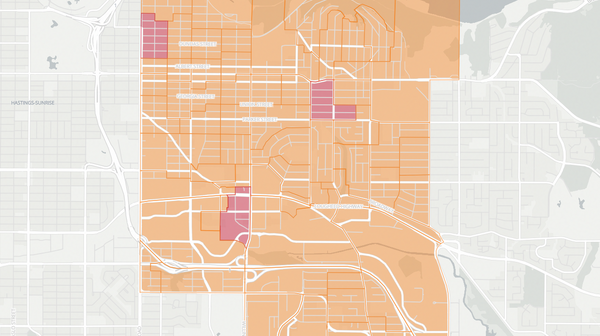
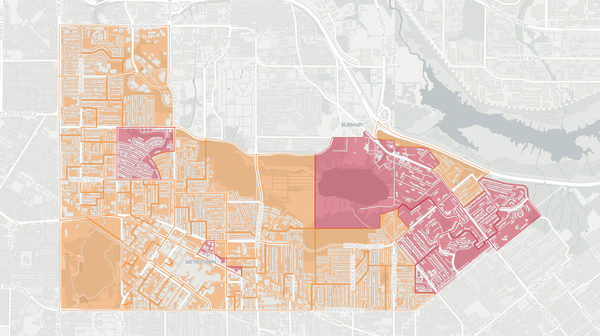
Vancouver-Kingsway — 2020 British Columbia Provincial Election Results Map
Vancouver-Kingsway — 2020 Election Results
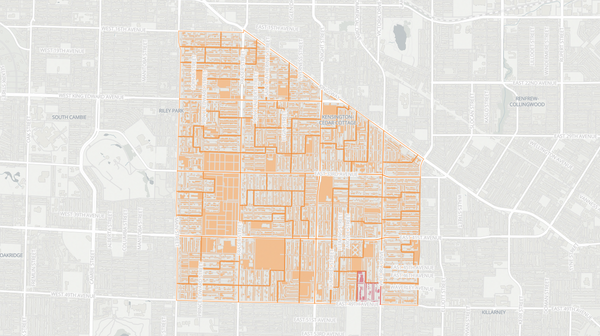
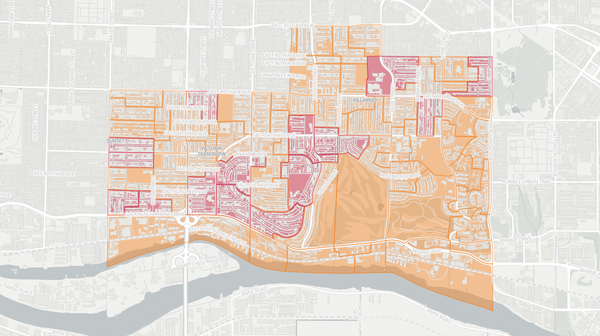
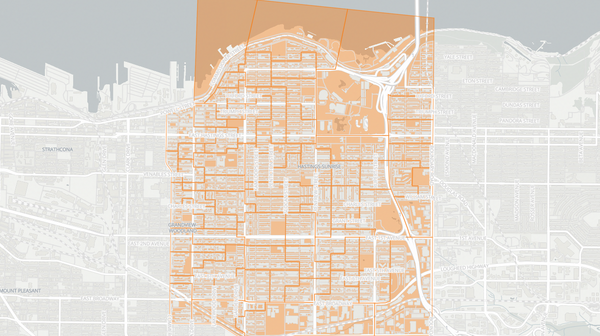
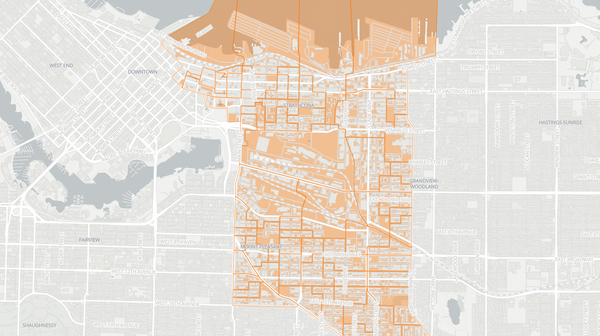
Poll-by-poll results for Vancouver-Kingsway in the 2020 British Columbia election. The BC NDP candidate won this riding. Explore detailed voting data, candidate results, and turnout statistics at the poll level.
Riding information
Auto generated. Flag an issue.Vancouver-Kingsway
Vancouver-Kingsway stretches along the Kingsway corridor through the neighbourhoods of Kensington-Cedar Cottage, Renfrew-Collingwood, and Sunset in East Vancouver. It is one of the most ethnically diverse constituencies in British Columbia, with over half its residents born outside Canada. The riding's large Chinese, Vietnamese, Filipino, and South Asian communities sustain a vibrant commercial strip of restaurants, grocery stores, and small businesses along Kingsway, while the residential streets are lined with older apartment buildings and single-family homes that have come under increasing development pressure.
The NDP had held Vancouver-Kingsway since 2005, and incumbent Adrian Dix sought a fifth consecutive term in 2020. The riding was among the party's safest seats in the province. The snap election placed Dix in an unusual position: campaigning for re-election in his constituency while simultaneously serving as the public face of British Columbia's COVID-19 pandemic response alongside Provincial Health Officer Dr. Bonnie Henry, whose near-daily joint press conferences had made him one of the most recognized politicians in the province.
Candidates
Adrian Dix (BC NDP) — Born in Vancouver to Irish and British immigrant parents, Dix studied political science at UBC before working as an aide to federal NDP MP Ian Waddell and then as chief of staff to Premier Glen Clark. He later served as executive director of Canadian Parents for French in BC and the Yukon. Elected to the Legislature in 2005, he led the BC NDP from 2011 to 2014. As Minister of Health from 2017 onward, he co-led the province's pandemic response and oversaw investments in primary care networks, surgical capacity, and mental health services.
Cole Anderson (BC Liberal Party) — Anderson was 26 years old at the time of the election and among the youngest BC Liberal candidates in the province. He had just 48 hours to decide whether to accept the nomination after the snap election was called.
Scott Bernstein (BC Green Party) — Bernstein was the director of policy at the Canadian Drug Policy Coalition, where he led work on drug decriminalization and legal regulation. Through his legal practice and the non-profit Pivot Legal Society, he had participated in strategic litigation advancing the rights of people who use drugs, including cases defending Insite, North America's first sanctioned supervised injection site, before the Supreme Court of Canada. He previously worked as a program officer with the Open Society Foundations' Global Drug Policy Program in New York.
Karin Litzcke ran for the Libertarian Party.
Local Issues
Dix's record as health minister was inseparable from the riding's politics. During the NDP's term, he had overseen the establishment of a network of urgent and primary care centres across the province — including Vancouver's first, which opened in November 2018 between St. Paul's Hospital and Vancouver General Hospital, offering same-day or next-day treatment for non-life-threatening conditions and connecting unattached patients to family physicians. The initiative addressed the longstanding problem of hundreds of thousands of British Columbians without a regular doctor, but the challenge remained acute in the riding's dense, diverse neighbourhoods, where heavy demand on walk-in clinics and hospital emergency departments persisted. The elimination of MSP premiums on January 1, 2020 — replacing the individual premium with the Employer Health Tax on businesses with payrolls above $500,000 — removed a significant financial burden from low-income households in the riding, many of whom worked in service-sector jobs where out-of-pocket health costs had been a persistent strain.
The opioid crisis remained a critical concern even as the pandemic consumed political attention. British Columbia's dual public health emergencies — the overdose crisis declared in April 2016 and the COVID-19 pandemic declared in March 2020 — converged with devastating force in 2020. Monthly overdose fatality counts across the province reached 171 in May and 175 in June, shattering previous records, and the toxic drug supply claimed more British Columbian lives than COVID-19 did throughout 2020. The riding's eastern reaches bordered the areas most affected by overdose deaths, and Bernstein's candidacy brought decriminalization and safe supply policies into the local campaign in a way that connected the provincial debate directly to the constituency. Bernstein argued that criminalization of drug possession was driving users away from health services and toward an increasingly lethal unregulated supply; Dix pointed to the government's investments in treatment beds, overdose prevention sites, and the expansion of pharmaceutical alternatives through programs prescribing safer opioids to people at risk.
The COVID-19 pandemic dominated public discourse in the riding, but the crisis had a particular local dimension shaped by demographics. Many residents worked in frontline service-sector jobs — in restaurants along the Kingsway commercial strip, in grocery stores, and in health care facilities — that could not be performed remotely, placing them at higher risk of exposure. The riding's large immigrant population, with significant Chinese, Vietnamese, Filipino, and South Asian communities, faced barriers in accessing pandemic health information. Community organizations including the Collingwood Neighbourhood House and Renfrew-Collingwood Community Policing Centre worked to provide translated materials and culturally appropriate outreach, but the pace and volume of changing public health directives made it difficult to keep multilingual information current.
The NDP's broader policy record on poverty reduction and labour standards also shaped the local contest. The TogetherBC poverty reduction strategy, released in 2019, set targets for reducing overall poverty by 25 per cent by 2024. The phased minimum wage increases — from $11.35 per hour in 2017 to $14.60 by June 2020 — benefitted a significant portion of the riding's workforce, particularly in the restaurant, retail, and personal services sectors that lined the Kingsway corridor. The $10-a-day childcare pilot, though limited in scale with only 53 sites and approximately 2,500 spaces province-wide by 2020, offered a model for the kind of affordable childcare that families in the riding's dense apartment neighbourhoods had long demanded. But critics argued that the pace of the NDP's reforms — incremental minimum wage increases stretched over four years, a childcare expansion that remained a pilot program rather than a universal system — fell short of the transformative change the party had promised.