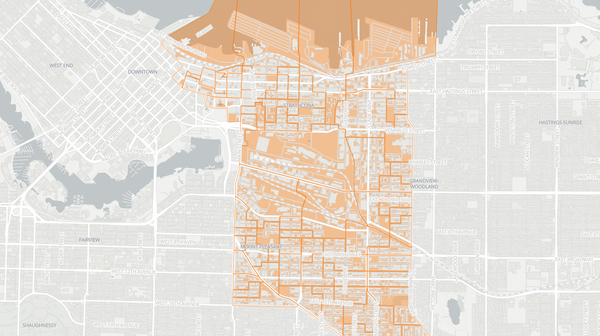
Burnaby North — 2020 British Columbia Provincial Election Results Map
Burnaby North — 2020 Election Results
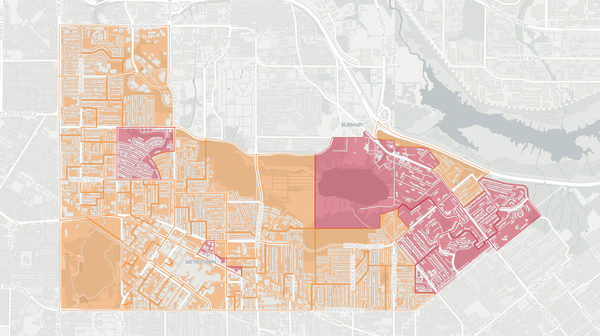
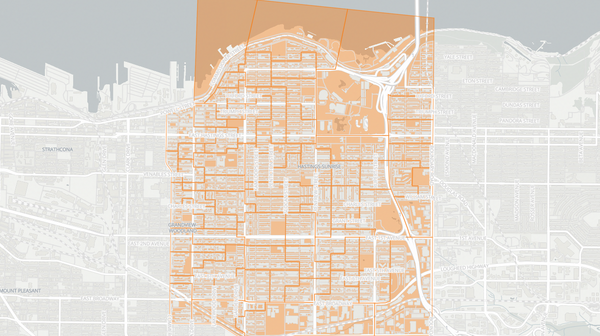
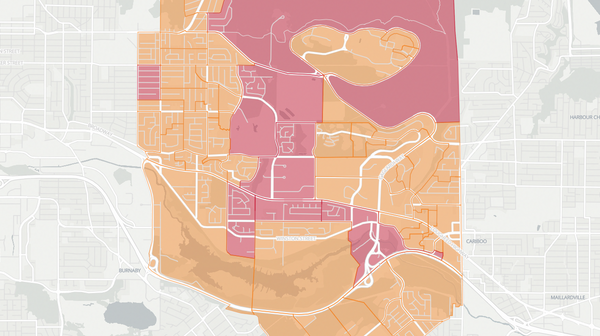
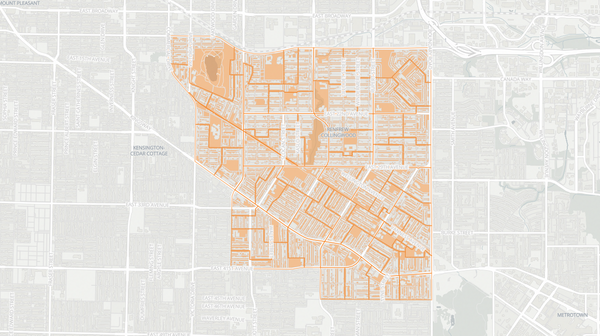
Poll-by-poll results for Burnaby North in the 2020 British Columbia election. The BC NDP candidate won this riding. Explore detailed voting data, candidate results, and turnout statistics at the poll level.
Riding information
Auto generated. Flag an issue.Burnaby North
Burnaby North stretches from the Hastings Street commercial corridor up through Capitol Hill and the Heights neighbourhoods to Burnaby's northern boundary with the District of North Vancouver. The riding includes the BCIT campus, whose student and commuter population supports surrounding businesses, along with established working-class and middle-class residential areas. The Trans Mountain pipeline expansion, with its terminal and tunnel route through Burnaby Mountain nearby, had been a prominent issue in the riding since the project's federal approval. The neighbourhood mix of trades workers, public servants, small business operators, and service-sector employees gives the riding a distinctly working- and middle-class character.
The NDP won the seat in 2017 after it had been held by the BC Liberals, and the first-term incumbent sought re-election in 2020. A three-candidate race tested whether the NDP could hold the riding as the party sought a majority mandate during a pandemic-era snap election.
Candidates
Janet Routledge (BC NDP) — Routledge was the incumbent MLA who had served as Parliamentary Secretary for Labour during the 2017–2020 term. Over a career spanning more than 30 years with the Public Service Alliance of Canada, she had represented federal public service workers and played a pivotal role in winning pay equity settlements from the federal government. She was also granted commenter status in the National Energy Board hearings on the Trans Mountain pipeline expansion.
Raymond Dong (BC Liberal Party) — Dong was a cardiologist who had been practising in the Vancouver and Lower Mainland area since 1988. Born in Vancouver and raised in the city's Chinatown, he studied medicine at UBC and the University of Toronto before returning to British Columbia. He served as Board Chair for the Vancouver Academy of Music.
Norine Shim (BC Green Party) — Shim was a small business owner and former executive assistant who had worked at the City of Vancouver and at First Capital Realty. She identified housing affordability and gaps in the mental health system as the riding's most pressing issues.
Local Issues
The Trans Mountain pipeline expansion had moved from the protest phase into active construction in Burnaby North since the 2017 election. Following the federal government's $4.5-billion purchase of the project from Kinder Morgan in 2018 and the National Energy Board's reapproval in June 2019, work at the Burnaby Terminal and the Westridge Marine Terminal had resumed in earnest. The Kiewit Ledcor Trans Mountain Partnership held the construction contract for the Lower Mainland segment, which included a tunnel through Burnaby Mountain and the installation of fourteen new storage tanks at the Burnaby Terminal. Protesters had returned to Burnaby Mountain in the summer of 2019, and community groups continued to raise concerns about increased tanker traffic through Burrard Inlet and the risk of a marine spill affecting the southern resident killer whale population. The NDP government had exhausted its legal avenues to block the federally approved project, and the conversation had shifted to managing the construction's day-to-day impacts on traffic, noise, and neighbourhood disruption.
The NDP's labour policy record was a distinguishing feature of Routledge's campaign, given her role as Parliamentary Secretary for Labour. During the 2017–2020 term, the government had raised the minimum wage in annual increments toward $15.20 per hour by June 2021, restored provisions of the Employment Standards Act that had been weakened under the BC Liberals, and begun work on extending basic employment protections to gig-economy workers such as app-based delivery and ride-hail drivers. For a riding with a mix of service-sector workers, trades employees connected to the BCIT campus, and small business operators along Hastings Street, these changes had practical consequences that were debated from multiple perspectives.
Housing affordability remained a dominant concern. Home prices in Burnaby had continued to climb despite the NDP's demand-side interventions, and the rental vacancy rate hovered near historic lows. The speculation and vacancy tax and foreign buyers tax surcharge had been in effect for two years, and the government argued they had moderated speculative demand and brought thousands of previously vacant units onto the rental market. But residents in established neighbourhoods like Capitol Hill and the Heights questioned whether prices had moderated enough to keep the community accessible to working families and whether the pace of new rental construction was sufficient to ease the squeeze on tenants.
COVID-19 had disrupted the local economy, particularly for workers connected to the BCIT campus area and the small businesses along Hastings Street. BCIT's shift to remote instruction had reduced foot traffic in surrounding commercial corridors, and service-sector establishments that depended on the student and commuter population faced an uncertain recovery timeline. The NDP's proposed one-time $1,000 BC Recovery Benefit and its suite of pandemic support programs were debated as the party sought a majority mandate to guide the province through an ongoing public health crisis that showed no signs of a quick resolution.