Skeena — 2020 British Columbia Provincial Election Results Map
Skeena — 2020 Election Results
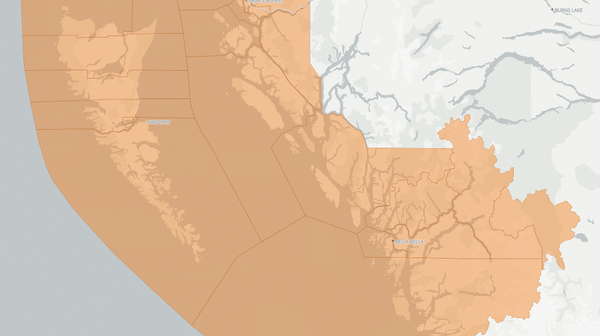
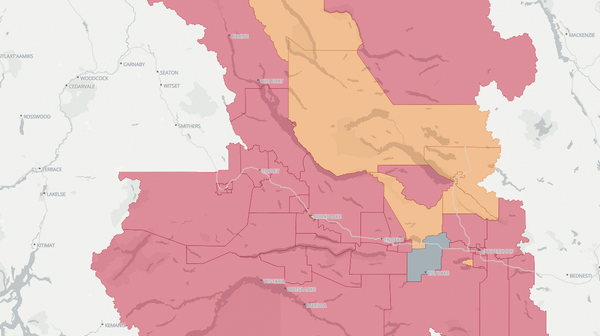
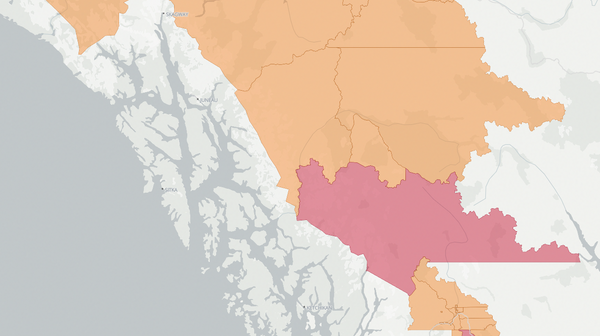
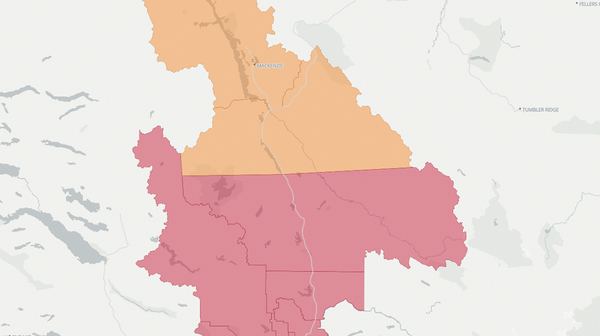
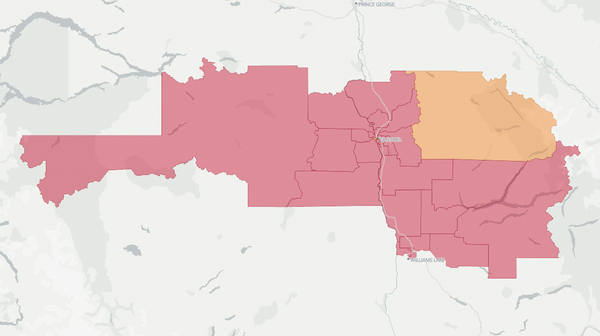
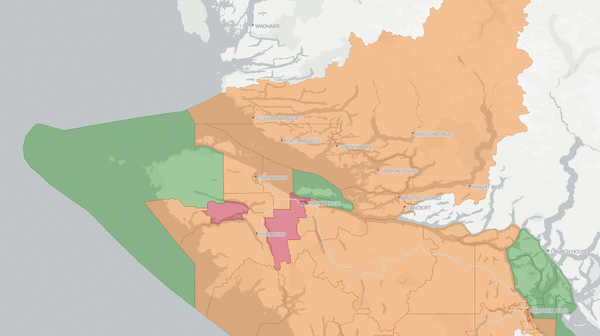
Poll-by-poll results for Skeena in the 2020 British Columbia election. The BC Liberal Party candidate won this riding. Explore detailed voting data, candidate results, and turnout statistics at the poll level.
Riding information
Auto generated. Flag an issue.Skeena
The Skeena riding encompasses the twin resource towns of Terrace and Kitimat, the Haisla and Kitsumkalum First Nations communities, and the surrounding rugged terrain of the Coast Mountains in British Columbia's northwest. The region's economy has historically depended on the Rio Tinto aluminum smelter in Kitimat, forestry operations, and the port facilities that connect northwest BC to Pacific trade routes. By 2020, the economic landscape was being transformed by the LNG Canada project, which had committed approximately forty billion dollars to construct an export facility in Kitimat following its final investment decision in October 2018.
Skeena had been a traditionally NDP riding, going orange in eight of the eleven elections before 2017, but the BC Liberals flipped the seat that year. Heading into 2020, the riding presented an unusual dynamic: the Liberal incumbent sought re-election in a constituency where the massive LNG construction project was simultaneously generating economic optimism and placing intense pressure on housing, health care, and municipal services.
Candidates
Ellis Ross (BC Liberal Party) — A member of the Haisla Nation born in Kitimat and raised in Kitamaat Village, Ross worked as a water-taxi driver before entering Haisla Nation governance, serving first as a councillor beginning in 2003 and then as Chief Councillor from 2011. He gained a province-wide profile for championing LNG development while simultaneously opposing the Enbridge Northern Gateway crude oil pipeline, a stance that positioned him as a pragmatic Indigenous voice on resource issues. During his first term as MLA, he served as the Official Opposition critic for LNG, Natural Gas, and Housing.
Nicole Halbauer (BC NDP) — A member of the Kitsumkalum First Nation of the Tsimshian people, Halbauer held a Master of Business Administration from the University of Northern British Columbia. She had extensive experience in health care, including work with the First Nations and Inuit Health Branch of Health Canada and roles with Northern Health and the First Nations Health Authority. She also served as an elected councillor for the Kitsumkalum First Nation and chaired the Board of Governors at Coast Mountain College.
Martin Holzbauer (Independent) — Originally from Germany, Holzbauer had lived in the Terrace area since 1990 and worked as a contractor specializing in painting and renovation. He built a net-zero home in Thornhill and campaigned on green energy initiatives, including a Property Assessed Clean Energy program to help homeowners retrofit their homes.
Local Issues
The LNG Canada construction project was transforming the riding's housing market and community infrastructure at a pace that local governments struggled to manage. Following the October 2018 investment decision, housing prices in Kitimat surged from an average of approximately $256,000 in mid-2018 to $392,000 by mid-2019, while Terrace home prices climbed from $322,000 to $386,000 over the same period. The Cedar Valley Lodge — a 4,500-room worker accommodation centre being built near the LNG Canada site — was designed to prevent the displacement of local residents by housing non-resident construction workers on-site rather than offering living-out allowances that would drive up rents. The first 1,500 beds were expected to open by spring 2020, with full completion in 2021. Despite these measures, rental units in both Kitimat and Terrace had become scarce, with some four- and five-bedroom homes commanding monthly rents of $5,000 to $6,000. The City of Terrace publicly expressed frustration with LNG Canada and the provincial government over what it described as inadequate support for the increased demand on municipal services — from policing to road maintenance — generated by the construction workforce.
Health care capacity in the riding remained strained under the combined pressures of a growing construction workforce and chronic physician shortages. Northern Health facilities in Terrace and Kitimat faced long wait times, and specialist care required travel to Prince George or Vancouver — journeys that could take an entire day each way for residents of the remote northwest. The opioid crisis was devastating communities across the region, with British Columbia recording a seventy-four per cent increase in illicit drug toxicity deaths in 2020 compared to the previous year. Halbauer's extensive experience in Indigenous and northern health care gave her particular credibility on these issues, and she argued that the province needed to invest in community-based health infrastructure in parallel with industrial development rather than treating social services as an afterthought.
The Coastal GasLink pipeline, running from northeast BC to the LNG Canada facility in Kitimat, had become a flashpoint for tensions between Indigenous hereditary governance and the provincial approvals process. In January 2019, RCMP officers enforced a BC Supreme Court injunction against Wet'suwet'en hereditary chiefs who had established a checkpoint at the Unist'ot'en camp to block pipeline access through their territory, arresting fourteen people. A year later, in early 2020, a renewed enforcement action against Wet'suwet'en land defenders triggered solidarity protests and rail blockades across Canada. While the pipeline corridor ran primarily through the neighbouring Stikine riding, the controversy was deeply felt in Skeena, where the project's export terminus was located and where Indigenous communities held divergent views on the appropriate balance between economic participation and territorial sovereignty.
The riding's forestry sector, once a major employer alongside the aluminum smelter, continued to contract during the NDP's term. The wave of mill closures and curtailments that swept the BC interior in 2019 reduced the available timber supply and eroded confidence in the long-term viability of wood processing in the northwest. For many residents, the LNG project represented the only significant new source of employment in a generation, intensifying the political stakes around pipeline approvals and construction timelines.