North Island — 2020 British Columbia Provincial Election Results Map
North Island — 2020 Election Results
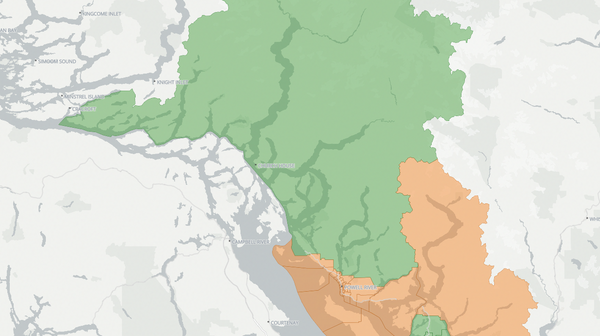
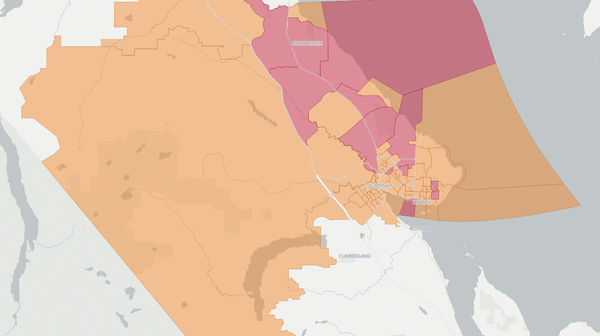
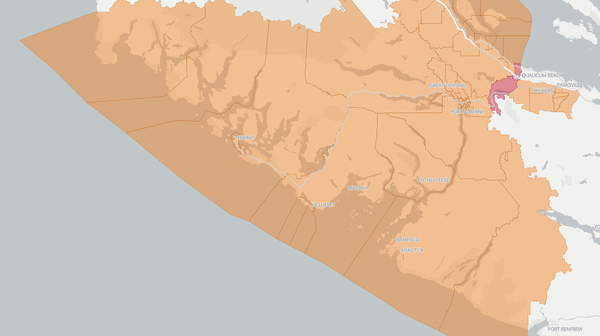
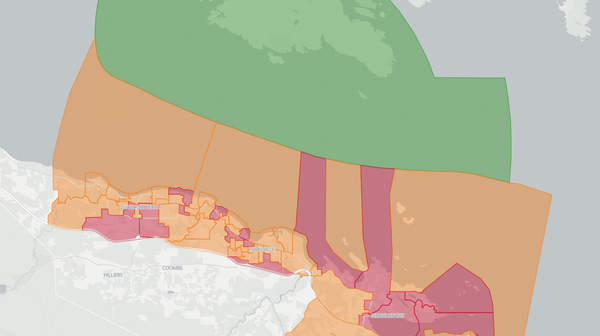
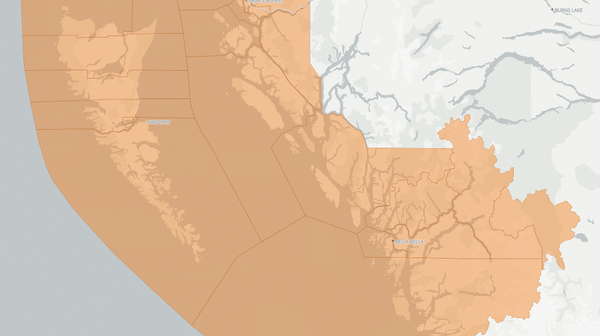
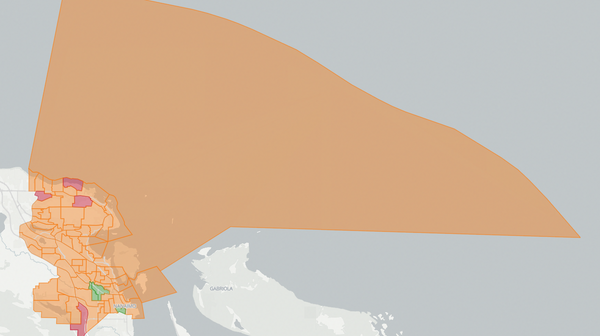
Poll-by-poll results for North Island in the 2020 British Columbia election. The BC NDP candidate won this riding. Explore detailed voting data, candidate results, and turnout statistics at the poll level.
Riding information
Auto generated. Flag an issue.North Island
North Island spans the upper half of Vancouver Island, from the city of Campbell River in the south to the remote communities of Port Hardy, Port McNeill, and Alert Bay in the north. The riding takes in vast tracts of forest, a rugged coastline dotted with salmon farms, and small communities whose economies have historically depended on forestry, fishing, and aquaculture. Campbell River, the riding's population centre, brands itself as the salmon capital of the world, while the northern towns of Port Hardy and Port McNeill are among the most isolated communities on the Island. The NDP had held the seat since 2005, winning four consecutive elections.
The 2020 snap election created an open-seat contest after the long-serving NDP incumbent, a cabinet minister, chose not to seek re-election — one of seven NDP ministers to step down when the election was called. The campaign attracted unusual attention because of a high-profile Green Party candidacy that elevated the salmon farming debate to the centre of the race, making it one of the most closely watched contests on Vancouver Island.
Candidates
Michele Babchuk (BC NDP) — Babchuk was a Campbell River city councillor and chair of the Strathcona Regional District. A former school trustee, she had lived in Campbell River since 2000 and raised her family there. She had previously worked as NDP caucus staff and in federal constituency offices, and also had experience in the private sector in legal conveyancing, banking, and business administration.
Norm Facey (BC Liberal Party) — Facey was born and raised in the province's forestry industry, working in mills, running boom boats and tugs before earning an engineering degree that led to management positions at large mills and forestry companies. He campaigned on revitalizing the forestry sector sustainably as part of a COVID-19 economic recovery strategy.
Alexandra Morton (BC Green Party) — Morton was a marine biologist best known for her study of wild killer whales in the Broughton Archipelago spanning more than 30 years. Since the 1990s, her research had shifted to studying the impact of open-net pen salmon farming on wild salmon populations. She decided to run after the federal Department of Fisheries and Oceans allowed salmon farms to remain operating in the Discovery Islands, a key migratory route for Fraser River sockeye.
John Twigg ran for the Conservative Party. Twigg had been active in BC politics and media for decades.
Local Issues
The salmon farming debate had reached a decisive moment by the time of the 2020 election. Nineteen open-net pen salmon farms operated in the Discovery Islands, which sit astride the key migratory corridor used by juvenile Fraser River sockeye and other wild salmon species travelling between the Strait of Georgia and the open Pacific. Environmental advocates, marine biologists including Morton, and several First Nations argued that sea lice and pathogens from the farms were contributing to the collapse of wild salmon runs that sustained both commercial fisheries and Indigenous food systems. The aquaculture industry countered that the farms provided hundreds of direct jobs and significant economic activity in small coastal communities where alternatives were scarce. Morton's candidacy elevated the issue to the centre of the campaign, and the question of whether the federal government would order the removal of the Discovery Islands farms became a defining test of the riding's political direction.
The Western Forest Products strike had hit the North Island's forestry-dependent communities with particular force. The eight-month walkout, from July 2019 to February 2020, left roughly 3,000 workers across Vancouver Island without income for an extended period. In Port Hardy and Port McNeill, where the local economies had fewer alternatives to absorb the shock, families reported depleting their savings, declaring bankruptcy, and selling equipment to make ends meet. Businesses that served forestry workers saw revenues collapse, and some were forced to close. The strike underscored the precariousness of communities that depended on a single industry and a single major employer, and the broader context of declining raw log processing on Vancouver Island — with an ongoing shift toward raw log exports rather than local milling — deepened anxieties about the sector's long-term trajectory. The Old Growth Strategic Review, released during the campaign period, added further uncertainty about how harvesting practices would change.
Health care access in the riding's remote northern communities had deteriorated during the NDP's term, a trend that predated the pandemic but was worsened by it. Port Hardy and Port McNeill relied on family physicians to staff their hospital emergency rooms on a rotational basis, and when doctors were unavailable or when nursing staff could not fill shifts, the ERs closed without warning. The Mount Waddington region — encompassing Port Hardy, Port McNeill, Port Alice, and Alert Bay — had been described as being in an evolving state of crisis since March 2020, with physician shortages leaving residents uncertain whether emergency care would be available when they needed it. The 45-kilometre drive between Port Hardy and Port McNeill on a dark, winding highway made closures at either facility a genuine safety concern, and the new Campbell River hospital, which opened in 2017, was still more than three hours away for residents at the riding's northern tip.
BC Ferries service remained a perennial source of frustration for residents in remote coastal communities who depended on ferry connections as their primary transportation link. Route scheduling, fare levels, and vessel reliability affected communities from Alert Bay to the Discovery Islands, and the pandemic had prompted service reductions that left some residents feeling further isolated from essential services on the mainland and in larger Vancouver Island centres.