Prince George-Mackenzie — 2020 British Columbia Provincial Election Results Map
Prince George-Mackenzie — 2020 Election Results
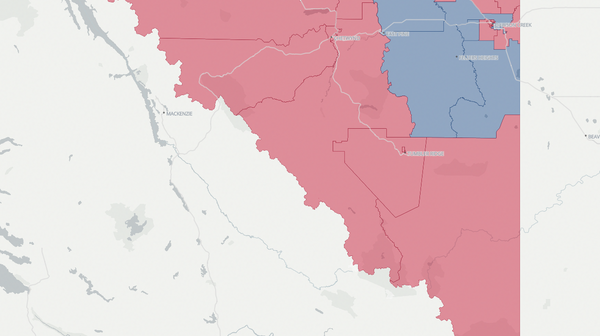
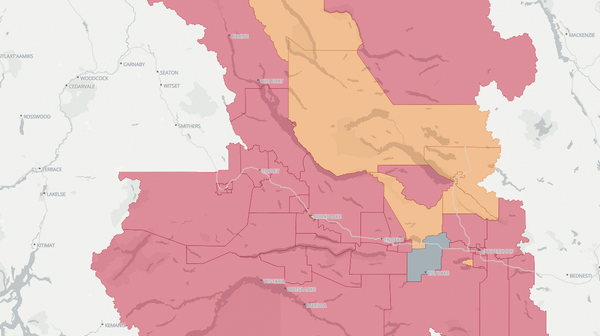
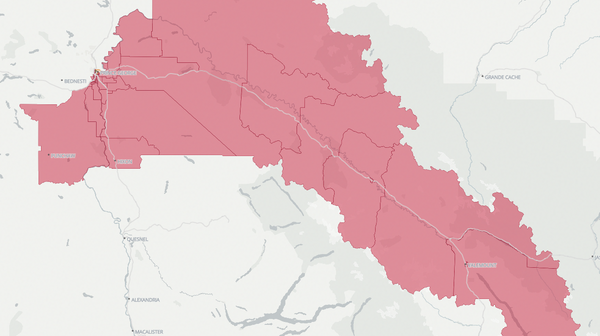
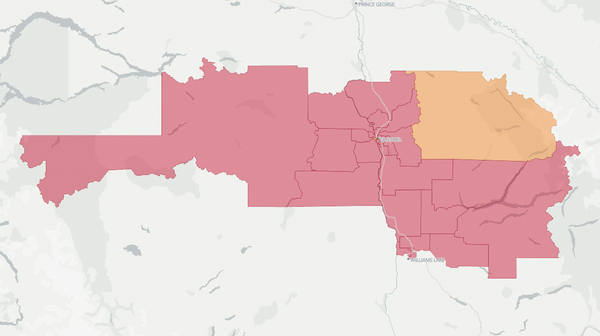
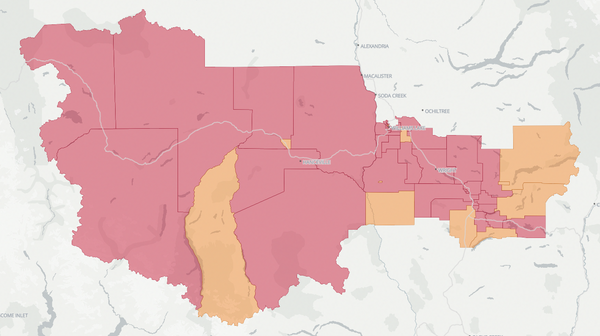
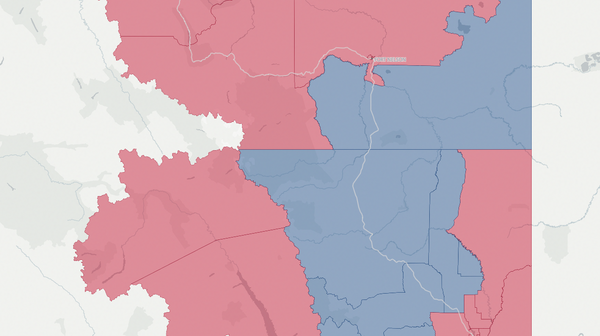
Poll-by-poll results for Prince George-Mackenzie in the 2020 British Columbia election. The BC Liberal Party candidate won this riding. Explore detailed voting data, candidate results, and turnout statistics at the poll level.
Riding information
Auto generated. Flag an issue.Prince George—Mackenzie
Prince George—Mackenzie covers a vast geography in the central interior, encompassing much of the city of Prince George—the province's largest city north of Kamloops—and the small forestry-dependent community of Mackenzie roughly two hundred kilometres to the north. The riding's economy has historically revolved around forestry, pulp and paper, and related industries, but the mountain pine beetle epidemic devastated the region's timber supply over two decades, and a series of mill closures and curtailments during the NDP's first term brought the crisis to a painful inflection point. The opioid epidemic was also exacting a disproportionate toll on Prince George, which recorded some of the highest overdose death rates in the province.
The BC Liberals had held the seat since 2013, and their incumbent sought a third term. The NDP aimed to capitalize on the forestry crisis and provincial momentum to make the race competitive, nominating a candidate with deep roots in the Mackenzie community. The contest tested whether economic anxiety in the resource sector could override the riding's traditionally right-of-centre leanings.
Candidates
Mike Morris (BC Liberal Party) — Morris had joined the RCMP in 1973 with his first posting in Prince George and spent thirty-two years in the force, rising to the rank of Superintendent as the commanding officer for the RCMP's North District, responsible for policing the northern three-quarters of the province. After retiring from the RCMP in 2005, he entered provincial politics and won the riding in 2013. He was appointed Minister of Public Safety and Solicitor General in December 2015.
Joan Atkinson (BC NDP) — Atkinson was the mayor of Mackenzie, having been acclaimed to the position in 2018 after serving on the district's council since 2007. She brought eighteen years of experience as a BC government employee and was active on several local and regional committees. Her candidacy was motivated in part by the forestry downturn and her involvement in Timber Supply Area coalitions that Premier Horgan had encouraged forestry companies to establish.
Catharine Kendall (BC Green Party) — Kendall was the executive director and co-founder of the Connaught Youth Centre Society in Prince George, which provided programs for vulnerable children, youth, and families. She had worked in the social sector for over twenty years and had run for the Green Party of Canada in Prince George–Peace River–Northern Rockies in the 2019 federal election.
Dee Kranz ran for the Christian Heritage Party of BC and Raymond Rodgers for the Libertarian Party, both with minimal support.
Local Issues
The forestry sector's contraction accelerated sharply during the NDP's first term, with a series of closures and curtailments that struck at the heart of the riding's economy. In July 2019, Canfor permanently eliminated one shift at its Isle Pierre sawmill, roughly fifty kilometres west of downtown Prince George, citing an insufficient timber supply resulting from the mountain pine beetle epidemic. The Mackenzie sawmill was indefinitely curtailed at the same time. Then in May 2020, Canfor announced the permanent closure of the Isle Pierre mill entirely, eliminating approximately ninety-four jobs, and curtailed production at its Prince George pulp facilities, affecting hundreds more workers. Canfor Pulp also reduced operations at both the Prince George Pulp and Paper mill and the Intercontinental Pulp mill in the summer of 2020, citing COVID-19's economic impact and a shortage of fibre. For Mackenzie—a community whose economy was almost entirely dependent on forest products—the curtailments raised existential questions about the town's future.
The NDP government's response to the forestry crisis included the establishment of Timber Supply Area coalitions, which Premier Horgan encouraged companies, communities, and First Nations to form in order to coordinate adjustment planning. Atkinson's involvement in these coalitions was a central motivation for her candidacy. However, residents and industry leaders questioned whether the provincial response matched the scale of the crisis, and the broader structural challenge—more than eighteen million hectares of BC forest devastated by the mountain pine beetle over two decades, producing a long-term depletion of merchantable timber—had no straightforward policy solution. The allowable annual cut reductions that followed the beetle's path through the interior were expected to continue for years, and the communities most dependent on forestry had few established alternative economic anchors.
The opioid epidemic continued to exact a devastating toll in Prince George and across the Northern Health authority region. The city recorded some of the highest rates of illicit drug overdose deaths in the province during the NDP's first term, and access to addiction treatment, harm reduction services, and mental health supports in the north lagged well behind what was available in the Lower Mainland. The COVID-19 pandemic compounded the crisis by disrupting service delivery, reducing the availability of supervised consumption sites, and isolating vulnerable individuals. The intersection of the drug crisis with homelessness, poverty, and mental illness placed enormous strain on the social service infrastructure of a northern city that was simultaneously grappling with economic contraction in its foundational industry.
Health care capacity at the University Hospital of Northern British Columbia was a recurring concern. Physician recruitment and retention in the north remained a persistent challenge, and the Northern Medical Program at UNBC—a partnership with the University of British Columbia that had been producing graduates since the mid-2000s—was helping to build an academic medical community in Prince George but had not fully closed the gap. Specialist wait times, emergency department pressures, and the working conditions facing health care staff were topics that cut across party lines, and the COVID-19 pandemic's strain on an already stretched northern health system amplified calls for greater provincial investment in northern health infrastructure.