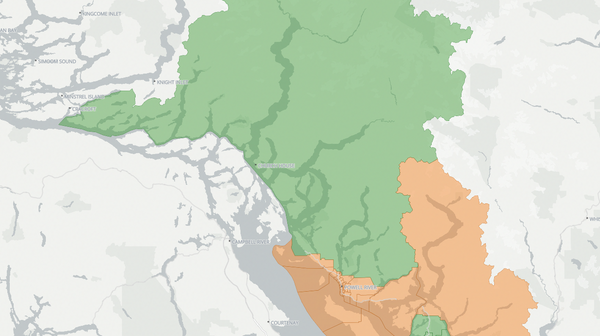
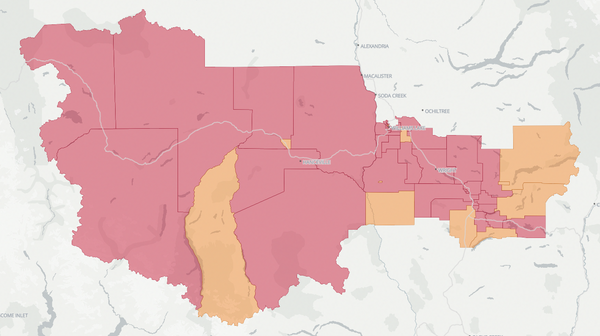
North Coast — 2020 British Columbia Provincial Election Results Map
North Coast — 2020 Election Results
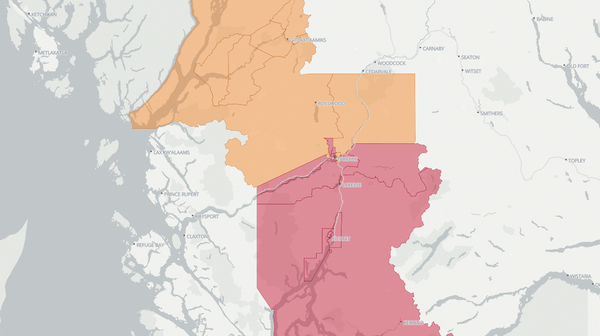
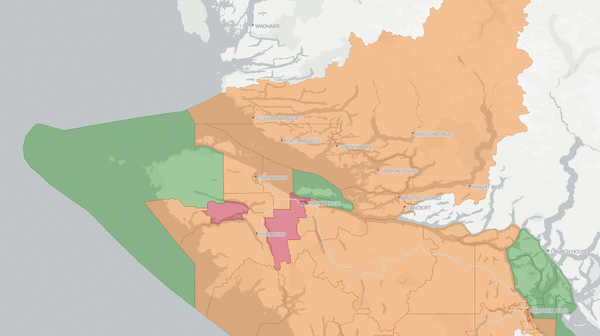
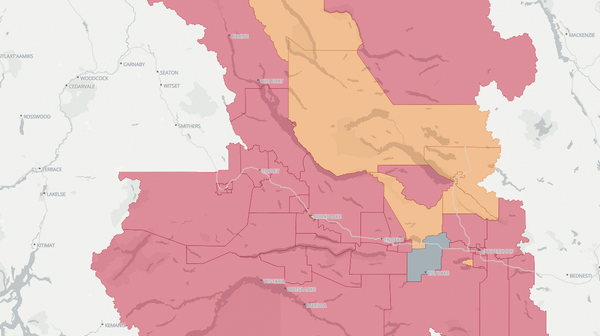
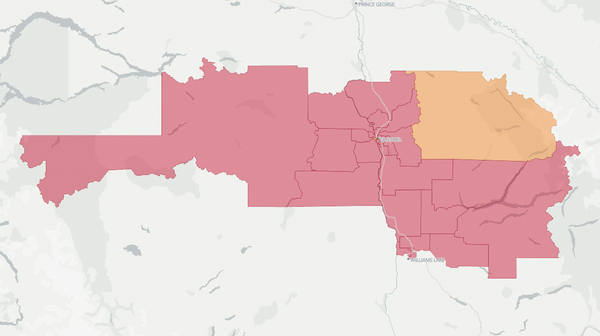
Poll-by-poll results for North Coast in the 2020 British Columbia election. The BC NDP candidate won this riding. Explore detailed voting data, candidate results, and turnout statistics at the poll level.
Riding information
Auto generated. Flag an issue.North Coast
North Coast is one of British Columbia's most geographically vast and culturally diverse ridings, stretching from the port city of Prince Rupert and the city of Terrace across the northern coast to the archipelago of Haida Gwaii. The riding's economy has historically been built on fishing, forestry, and the port, but by 2020 it was in the midst of a transformative economic shift driven by the LNG Canada project in Kitimat, the largest private-sector investment in Canadian history, which had entered full-scale construction. Indigenous communities — including the Haida, Tsimshian, Nisga'a, and Haisla nations — make up a significant share of the riding's population and play a central role in its political and economic life. The NDP had held the seat in every election since 1991, with the sole exception of the 2001 Liberal wave.
The 2020 snap election saw the NDP incumbent seeking a third term in a riding where the LNG boom was bringing jobs and investment but also surging housing costs and social disruption in Terrace, while Prince Rupert's port expansion and declining wild salmon stocks defined the other major fault lines of the campaign.
Candidates
Jennifer Rice (BC NDP) — Rice moved to Prince Rupert in 2003 to attend Northwest Community College's applied coastal ecology program. She built a career working with environmental non-profits and northern community groups, developing relationships with commercial and sport fishers, tourism operators, and First Nations who depend on a healthy marine environment. She served briefly as a municipal councillor in Prince Rupert before winning provincial office in 2013 and had represented the riding for seven years by the time of the snap election.
Roy S Jones Jr (BC Liberal Party) — Jones was a Haida hereditary chief from Skidegate on Haida Gwaii and a career commercial fisherman. He had been an advocate for economic opportunities in North Coast communities. His candidacy brought attention to differing perspectives within Indigenous communities about resource development on the north coast.
Jody Craven ran for the Libertarian Party.
Local Issues
The LNG Canada project had reshaped the economic and social fabric of the riding's interior communities in ways that were both welcome and deeply disruptive. The $40-billion facility in Kitimat, the largest private-sector investment in Canadian history, was employing thousands of construction workers, with the workforce expected to peak between 5,000 and 7,500 during the most intensive construction phase. LNG Canada planned to house at least 4,500 non-resident workers in Kitimat work camps, but the project's ripple effects extended far beyond the camp gates. In Terrace, 60 kilometres to the north, the influx of workers and contractors had driven housing prices to record levels — the average house price rose from roughly $322,000 in mid-2018 to over $386,000 by 2020, while the rental vacancy rate fell below one per cent. Landlords issued eviction notices to existing tenants so they could re-rent units at significantly higher prices, a practice local residents called renovictions. Terrace faced a seven-per-cent property tax increase in 2020 simply to keep up with the demand on municipal services, and the RCMP reported an 18-per-cent increase in calls in the third quarter of 2019, including a 37-per-cent rise in offences against people and property. The city's frustration with LNG Canada and the province over the management of social impacts was publicly expressed by municipal leaders.
The Port of Prince Rupert was in the midst of a major expansion that represented the riding's other transformative economic story. The Fairview Container Terminal, operated by DP World, was undergoing a capacity expansion to 1.8 million twenty-foot equivalent units, and construction had begun on the 5.5-kilometre Fairview-Ridley Connector Corridor linking the container terminal to Ridley Island. The port authority also advanced plans for the Ridley Island Export Logistics Park, a 107-hectare facility that would support the port's expanding container shipping business but required clearing rainforest and wetlands on the island. Prince Rupert's emergence as Canada's closest major port to Asia brought investment and employment, but it also raised questions about the environmental costs of industrial expansion on a coast where many communities depended on the marine ecosystem for their livelihoods.
Declining wild salmon stocks remained the riding's most emotionally charged issue, touching economic, cultural, and environmental dimensions simultaneously. Commercial fishers, Indigenous communities whose food security and cultural practices depended on healthy salmon runs, and sport fishing operators all pointed to declining returns on the Skeena and other northern rivers. The tension between the promise of industrial development — LNG pipelines crossing salmon-bearing watersheds, port expansion near marine habitat — and the protection of the ecosystems that sustained the fishery defined the riding's political fault lines. The federal government's management of fisheries was closely scrutinized, and the provincial government's approach to reconciliation with First Nations, including the adoption of the Declaration on the Rights of Indigenous Peoples Act in 2019, added a new framework through which resource decisions would be evaluated.
The Highway 16 corridor continued to carry a weight of significance that went beyond transportation infrastructure. The NDP government had introduced bus service along segments of the highway during its term, responding to decades of advocacy following the disappearances and murders of Indigenous women along the route. But service remained limited, and residents whose work schedules did not align with bus timetables continued to depend on hitchhiking or informal ride-sharing. Health care access in remote communities along the highway and on Haida Gwaii was constrained by distance, limited local capacity, and the challenges of recruiting health professionals to northern postings, pressures that the pandemic had intensified.