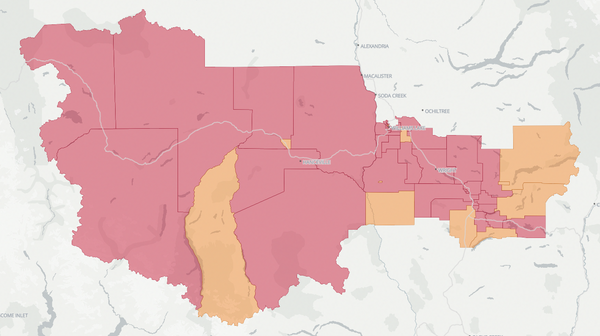
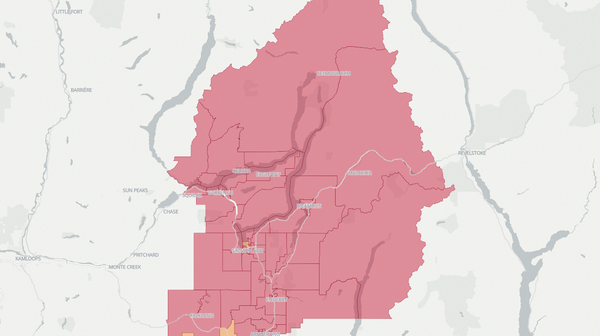
Prince George-Valemount — 2020 British Columbia Provincial Election Results Map
Prince George-Valemount — 2020 Election Results
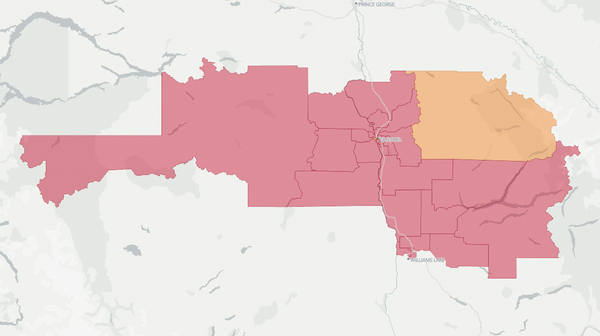
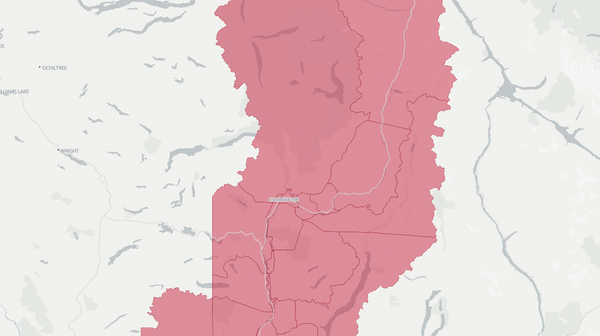
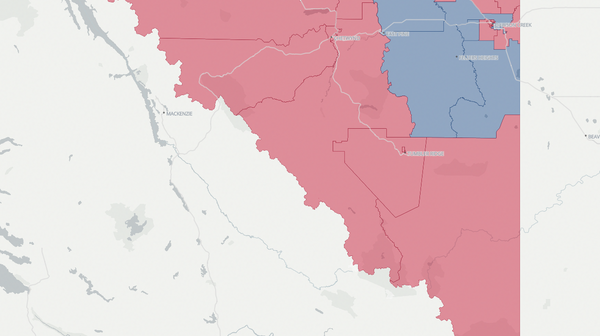
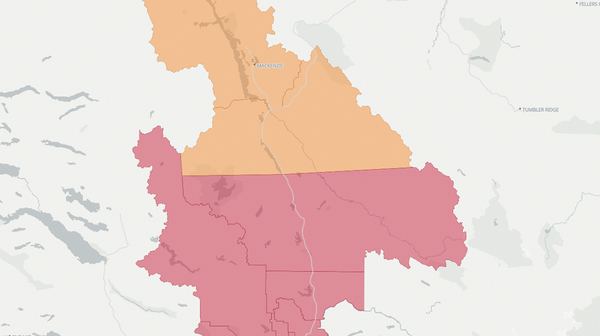
Poll-by-poll results for Prince George-Valemount in the 2020 British Columbia election. The BC Liberal Party candidate won this riding. Explore detailed voting data, candidate results, and turnout statistics at the poll level.
Riding information
Auto generated. Flag an issue.Prince George—Valemount
Prince George—Valemount extends from the eastern portion of Prince George through the Rocky Mountain Trench to the small communities of McBride and Valemount near the Yellowhead Pass. The riding combines the urban institutions of Prince George—including the University of Northern British Columbia and the University Hospital of Northern British Columbia—with remote mountain communities whose economies depend on forestry, tourism linked to Mount Robson Provincial Park, and the Yellowhead corridor. The mountain pine beetle epidemic and reduced allowable annual cuts had left the smaller communities with few economic alternatives, while the opioid crisis was devastating Prince George's downtown.
Politically, the seat was among the safest BC Liberal holdings in the province, held continuously since 2001. The incumbent was seeking a sixth term, and the NDP hoped that provincial momentum and the riding's acute exposure to the forestry crisis and opioid epidemic might at least narrow the gap in a contest that featured two young opposition challengers.
Candidates
Shirley Bond (BC Liberal Party) — Bond was a long-time Prince George resident who attended the College of New Caledonia and studied political science at the University of Northern British Columbia. She was elected to the Prince George School Board in 1993, serving three terms including a stint as chair, and also worked as business manager of the school district's Continuing Education Department. First elected to the Legislature in 2001, she accumulated more than fifteen years of cabinet experience across at least six portfolios—including Education, Advanced Education, Health Services, Transportation and Infrastructure, Jobs, Tourism and Skills Training, and Attorney General—becoming the first woman to hold the latter portfolio in BC history. She also served as Deputy Premier.
Laura Parent (BC NDP) — Parent was a twenty-one-year-old political science student at the University of Northern British Columbia and the vice-chair of the UNBC Senate. She had been active in the NDP for about three years, volunteering on provincial campaigns in 2017 and serving as campaign manager for the NDP candidate in the 2019 federal election in the local riding.
MacKenzie Kerr (BC Green Party) — Kerr was twenty-three years old and in her final term of forestry studies at UNBC. She had run for the Green Party of Canada in the 2019 federal election in Cariboo–Prince George, finishing fourth.
Sean Robson ran for the Libertarian Party with limited support.
Local Issues
The opioid crisis had intensified across the Northern Health region during the NDP's first term, and Prince George bore a disproportionate share of the province's overdose deaths. The crisis intersected with homelessness and mental illness in ways that were acutely visible in the city's downtown, and the availability of harm reduction services, supervised consumption sites, and residential treatment beds in the north remained far below what public health advocates said was needed. The NDP government had declared the opioid emergency a public health crisis in 2016 and expanded naloxone distribution and overdose prevention sites, but the death toll continued to climb. The COVID-19 pandemic further strained an already stretched northern health care system, disrupting addiction treatment services and isolating vulnerable populations. For residents of the smaller communities east along Highway 16—McBride, Valemount, and the scattered settlements in between—access to mental health and addiction services was even more limited, and the geography of the riding meant that any service expansion would need to address vast distances and sparse populations.
The forestry sector's troubles weighed heavily on the riding's eastern communities. While the Canfor closures and curtailments in Prince George itself dominated headlines, the smaller communities of McBride and Valemount had long depended on forestry and were vulnerable to the same mountain pine beetle legacy that was reshaping the central interior's timber economy. Reduced allowable annual cuts and the broader market downturn left these communities with few economic alternatives, and residents looked to the provincial government for investment in economic diversification—whether through tourism development linked to Mount Robson Provincial Park and the Yellowhead corridor, support for value-added wood products, or infrastructure spending that might attract new industries. The University of Northern British Columbia remained an important institution for the city and the broader north, and questions about post-secondary funding and UNBC's role in economic diversification were part of the campaign conversation.
Health care access in the north was a campaign issue that cut across party lines and extended well beyond the opioid crisis. Specialist wait times at the University Hospital of Northern British Columbia, persistent difficulty attracting and retaining physicians to northern practice, and the limited availability of diagnostic services in smaller communities were long-standing frustrations. The Northern Medical Program at UNBC was producing graduates—with roughly thirty percent of alumni settling into long-term practice in northern BC or the Yukon—but the pipeline of new physicians was not keeping pace with retirements and the growing health care needs of a dispersed northern population. The pandemic added acute urgency to these structural concerns, as northern hospitals operated with thinner margins of capacity than their southern counterparts and faced the prospect of being overwhelmed by even a moderate outbreak.
Bond's long tenure and deep experience gave her a formidable incumbency advantage that the two young opposition candidates—both in their early twenties and running their first provincial campaigns—could not readily overcome. Her accumulated relationships across the riding's communities, her record of cabinet experience, and her visibility as a senior opposition voice on health care and northern issues positioned her as the dominant figure in the contest. The NDP's broader provincial momentum and the genuine severity of the issues facing the riding narrowed the conversation, but the structural dynamics of the seat favoured the incumbent.