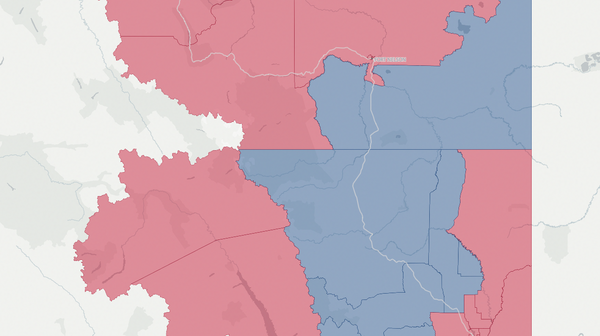
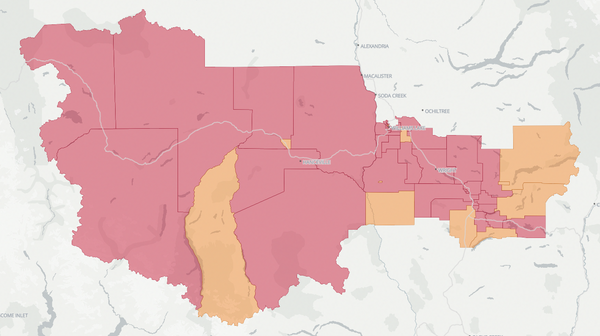
Peace River South — 2020 British Columbia Provincial Election Results Map
Peace River South — 2020 Election Results
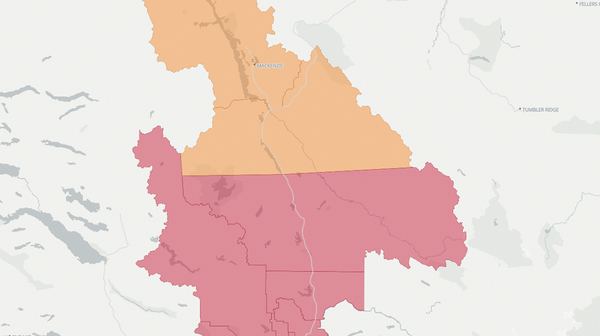
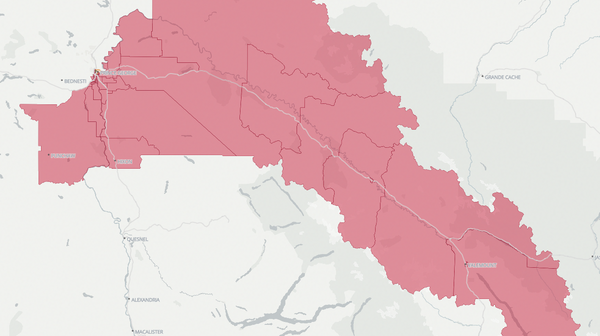
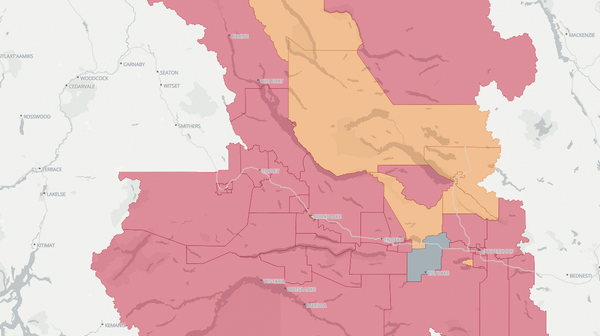
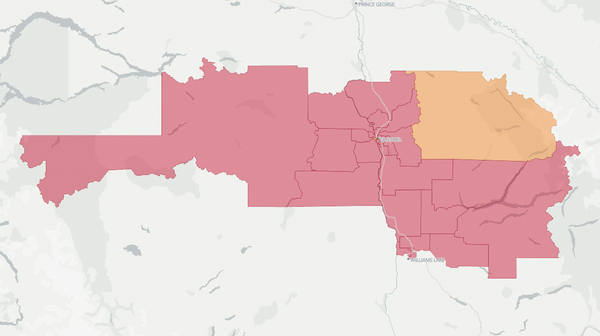
Poll-by-poll results for Peace River South in the 2020 British Columbia election. The BC Liberal Party candidate won this riding. Explore detailed voting data, candidate results, and turnout statistics at the poll level.
Riding information
Auto generated. Flag an issue.Peace River South
Peace River South encompasses the communities of Dawson Creek, Chetwynd, Tumbler Ridge, and Pouce Coupe in British Columbia's northeast—a resource-dependent region whose economy revolves around forestry, natural gas, and agriculture. The mountain pine beetle epidemic had devastated the local timber supply over two decades, and the natural gas sector's volatile commodity prices left the riding's economic outlook uncertain. Like its northern neighbour, the seat had never been won by the NDP or any centre-left party, and political frustration in the region ran deep.
The 2020 contest featured an unusually fragmented field for this part of the province. The BC Liberals held the seat, but the emergence of both a BC Conservative candidate and a Wexit BC candidate threatened to split the right-leaning vote, testing whether dissatisfaction with the two major parties would reshape the political landscape in the South Peace.
Candidates
Mike Bernier (BC Liberal Party) — Bernier served as Dawson Creek's mayor from 2008 to 2013 before winning the provincial seat. He was appointed Minister of Education in July 2015 and held the portfolio through the 2017 election. During his time in cabinet, he oversaw provincial education policy during a period of significant debate over school funding and class sizes. In opposition, he had taken on critic roles including transportation and infrastructure.
Kathleen Connolly (Conservative) — Connolly was the executive director of the Dawson Creek and District Chamber of Commerce and had led the Concerned Citizens for Caribou Recovery, an advocacy group that mobilized against provincial caribou habitat protection measures seen as threatening to the resource sector. She stepped down from her chamber role during the campaign.
Cory Grizz Longley (BC NDP) — Longley was a Red Seal plumber employed by the City of Dawson Creek and a former radio announcer known on air as Grizz Michaels. He served as president of CUPE Local 2403 and had lived in the South Peace region for twenty years.
Dorothy Sharon Smith ran for Wexit BC, receiving minimal support.
Local Issues
The caribou habitat protection controversy became the single most contentious local issue during the NDP's first term. In February 2020, the federal and provincial governments and the West Moberly and Saulteau First Nations signed a landmark thirty-year partnership agreement to protect and recover endangered southern mountain caribou herds—the Pine, Narraway, and Quintette herds—in Treaty 8 territory. The agreement established roughly 7,500 square kilometres of protected and managed habitat, including a new 2,000-square-kilometre Indigenous protected area that expanded the Klinse-Za Provincial Park west of Chetwynd and Hudson's Hope. The measures included habitat recovery, maternal penning programs, predator management, and restrictions on industrial activity in critical caribou zones. Ranchers, forestry operators, and oil and gas companies expressed alarm, and Chetwynd Mayor Allen Courtoreille warned that habitat protections could imperil the town's two mills, which generated roughly twenty percent of municipal revenue. Connolly's candidacy drew much of its energy from community opposition to the agreement, and the broader dynamic of federal environmental policy being implemented in resource-dependent communities fuelled resentment.
The forestry sector's accelerating decline compounded the caribou dispute. The mountain pine beetle epidemic had devastated the region's timber supply over the preceding two decades, and by 2020, reduced harvests and mill curtailments had become routine. In July 2019, Canfor permanently eliminated one shift at its Isle Pierre sawmill near Prince George and indefinitely curtailed operations at its Mackenzie sawmill, sending economic ripple effects through the broader interior forestry economy that communities like Chetwynd and Tumbler Ridge could not escape. The Dawson Creek Timber Supply Area's allowable annual cut had been steadily reduced as merchantable timber declined, and communities that had built their economies around forest products faced structural economic uncertainty with no clear path to diversification.
The natural gas sector offered a mixed outlook. While the LNG Canada final investment decision in October 2018 and the construction of the Coastal GasLink pipeline provided a measure of hope, the tangible economic benefits had yet to reach many South Peace communities. Dawson Creek's identity as an energy sector hub—reflected in local institutions like the Peace Energy Cooperative's renewable energy training programs at Northern Lights College—was evolving, but the transition was slow, and induced seismicity from fracking operations near Fort St. John raised broader questions about the long-term sustainability of unconventional gas extraction in the Peace region. The pervasive sense that northeastern British Columbia bore the costs of provincial environmental policy without receiving proportionate investment—in health care, infrastructure, or economic support—shaped the campaign's tenor and gave traction to both the Conservative and Wexit candidates.