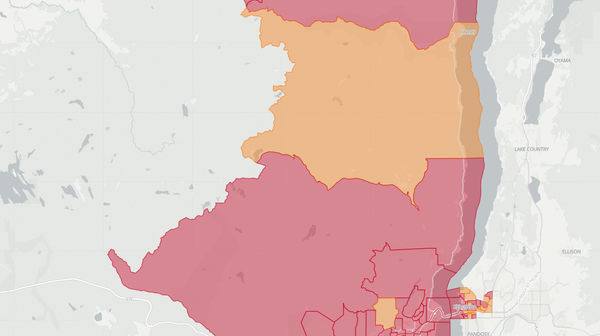
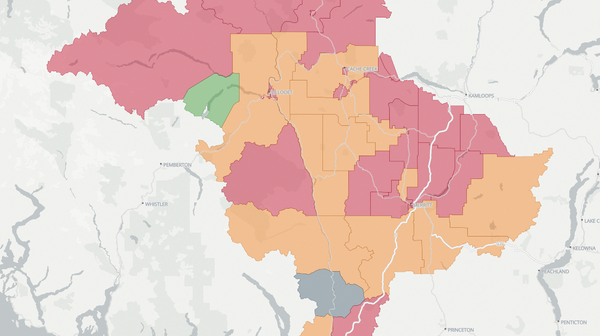
Kamloops-North Thompson — 2020 British Columbia Provincial Election Results Map
Kamloops-North Thompson — 2020 Election Results
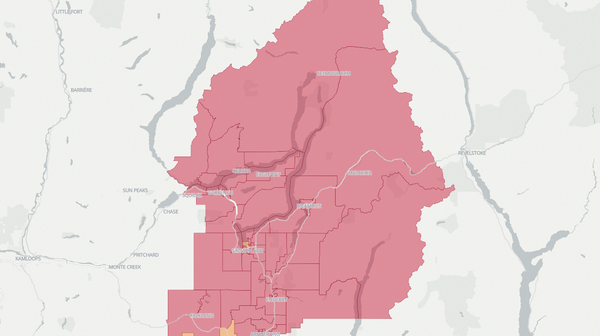
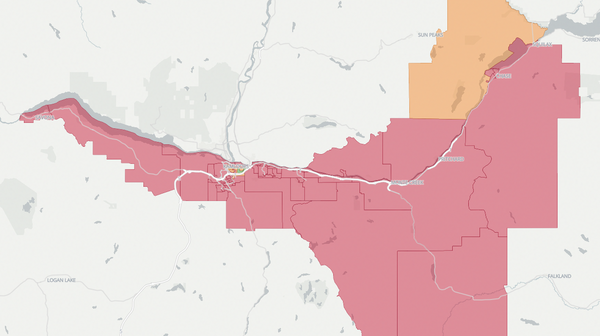
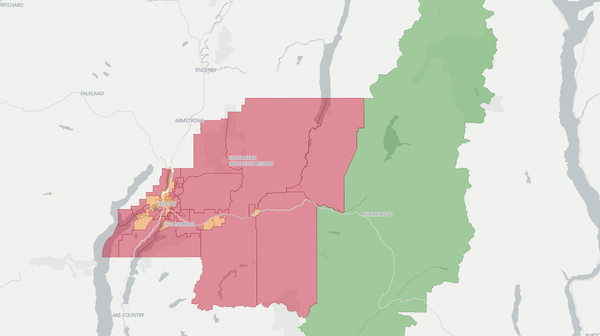
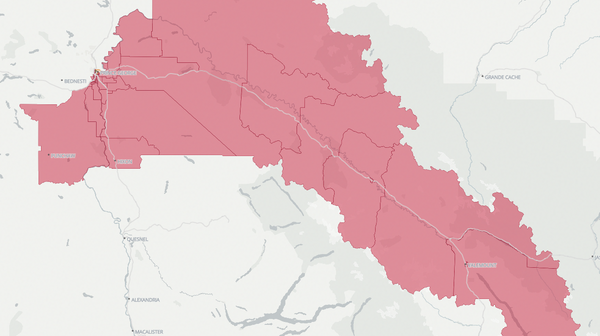
Poll-by-poll results for Kamloops-North Thompson in the 2020 British Columbia election. The BC Liberal Party candidate won this riding. Explore detailed voting data, candidate results, and turnout statistics at the poll level.
Riding information
Auto generated. Flag an issue.Kamloops-North Thompson
Kamloops-North Thompson stretches from the city of Kamloops north through Barriere, Clearwater, and Blue River along the Yellowhead Highway corridor, encompassing ranching communities, forestry-dependent towns, and a portion of the Thompson River watershed. Kamloops itself serves as a regional hub for the southern interior, with Thompson Rivers University, the Royal Inland Hospital, and a diversified economy that includes transportation, mining services, and agriculture. The North Thompson communities beyond the city depend heavily on forestry and tourism, and the mountain pine beetle epidemic's legacy had left the timber supply in long-term decline. The BC Liberals held the seat heading into the 2020 snap election, and a four-candidate field that included a BC Conservative and an independent tested whether the NDP could make inroads in one of the Interior's competitive urban-rural ridings.
Candidates
Peter Milobar (BC Liberal Party) — Milobar was the incumbent MLA, first elected in 2017 after serving three terms as mayor of Kamloops from 2008 to 2017. During his time as mayor, he had overseen significant municipal infrastructure investments. In the legislature, he served as a BC Liberal opposition critic and pressed the government on the Royal Inland Hospital expansion timeline and forestry issues affecting the Thompson region.
Sadie Hunter (BC NDP) — Hunter was a Kamloops city councillor in her first term, elected in 2018. She had moved to Kamloops from Chetwynd in 2001 and attended the University College of the Cariboo, earning degrees in journalism and ecology before completing a master of science in environmental science. She had worked for non-profits in science education and as a fundraiser at Thompson Rivers University. Her decision to run was shaped by her own experience living below the poverty line as a single parent while attending university.
Thomas Martin (BC Green Party) — Martin was a wildfire project manager with Cabin Resource Management, overseeing wildfire risk reduction projects and community wildfire protection plans. Born in Vancouver, he had moved to Kamloops in 2011 to work as a wildfire fighter and later studied natural resource sciences at UBC. This was his first foray into electoral politics.
Dennis Giesbrecht (Conservative) — Giesbrecht grew up in Logan Lake, where his father worked at Highland Valley Copper Mine. He had a background in the oil and gas industry and had helped initiate a needle buyback program that collected tens of thousands of discarded needles from around Kamloops. He ran unsuccessfully for city council in 2018.
Independent candidate Brandon Russell, a 19-year-old lifelong Kamloops resident who had sought the Green Party nomination before running on his own, also entered the race.
Local Issues
The opioid crisis remained the most devastating public health issue facing Kamloops. The city continued to experience some of the highest per-capita overdose death rates in British Columbia, with Royal Inland Hospital's emergency department bearing an enormous burden — the hospital had treated 180 opioid overdoses in its emergency room in 2017, and numbers continued to climb through the NDP's term. By 2019, the crisis had metastasized into a local drug war; organized crime groups competed for territory in the fentanyl trade, and violence associated with the drug economy spilled into public view. Kamloops funeral homes reported unprecedented demand — one funeral director described handling five overdose-related deaths in a single week. The intersection of the opioid emergency with the COVID-19 pandemic in 2020 created what health officials described as a dual public health crisis, with overdose deaths accelerating as pandemic restrictions disrupted treatment programs and social supports.
Homelessness and visible poverty in downtown Kamloops intensified during the NDP's term, and the government's response became a flashpoint. The NDP opened temporary modular housing at 805 Mission Flats Road in 2018, providing 55 emergency units ahead of winter, and in January 2020, Rosethorn House — a 42-unit supportive housing complex at 259 Victoria Street West, operated by CMHA Kamloops — welcomed its first residents. The province invested $10.2 million in Rosethorn House through the Rapid Response to Homelessness program and committed an annual operating subsidy of $980,000. The city's 2020 Housing Needs Assessment identified 153 people on waitlists for supportive housing and projected that approximately 335 people at high risk of homelessness would require housing with supports within five years. Despite the new investments, the growing number of people living on the streets and the proliferation of encampments generated tension between residents and business owners calling for enforcement and social service providers advocating for more supportive approaches.
The Royal Inland Hospital expansion was a central issue for Milobar, who had championed the project as both mayor and MLA. The $417-million patient care tower — a nine-storey building designed to house new inpatient beds, a perinatal centre, 13 operating rooms, and a doubled emergency department — had been announced during the BC Liberal government's final months, with shovels expected in the ground by 2018. Milobar pressed the NDP government on the project's timeline and scope, and by 2020 the tower remained in the planning and procurement phase. The delay frustrated Kamloops residents who felt the city's health-care infrastructure lagged behind its growing population and its role as a regional referral centre for the southern interior. Milobar and fellow Kamloops MLA Todd Stone also pushed for a PET-CT scanner at the hospital, arguing that cancer patients should not have to travel to Kelowna or Vancouver for diagnostic imaging.
Forestry remained the economic backbone of the North Thompson communities, and the sector's contraction weighed heavily on the riding. The mountain pine beetle epidemic's legacy continued to reshape the timber supply, with the annual allowable cut declining as beetle-killed wood deteriorated beyond commercial use. Sawmill communities like Barriere and Clearwater watched as operations curtailed shifts and neighbouring ridings lost mills entirely. The NDP government's old-growth forestry review and its broader approach to forest management policy — including changes to timber allocation and stumpage rates — were closely watched by workers, contractors, and operators who depended on the sector. Wildfire risk was an ever-present concern after the devastating 2017 and 2018 fire seasons, and the Thompson-Nicola Regional District invested in community wildfire resiliency plans and FireSmart assessments across 24 communities during the NDP's term. Clearwater received $35,000 in provincial funding for wildfire planning, and communities like Barriere — which had been devastated by the 2003 McLure fire — continued to push for expanded fuel management programs along the highway corridors and around residential areas.