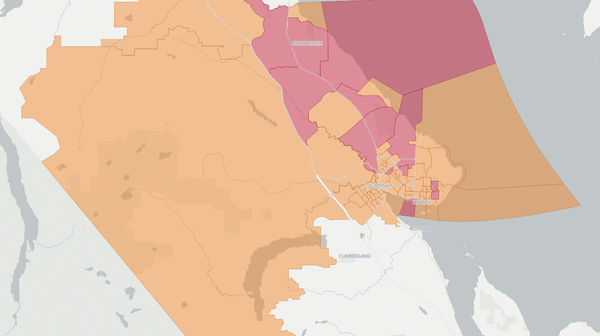
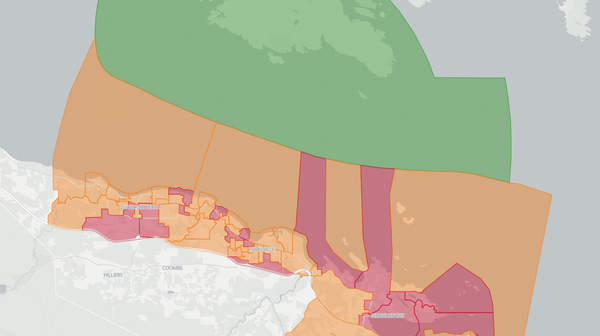
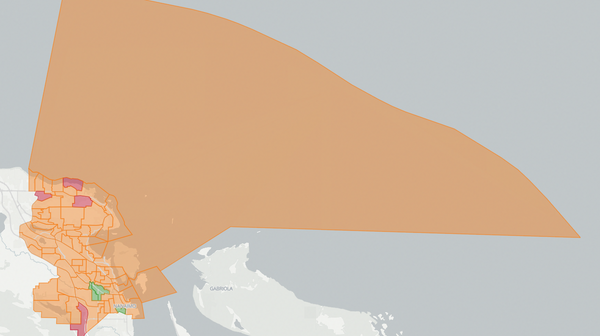
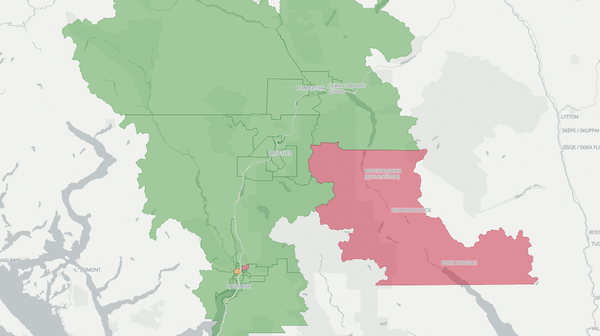
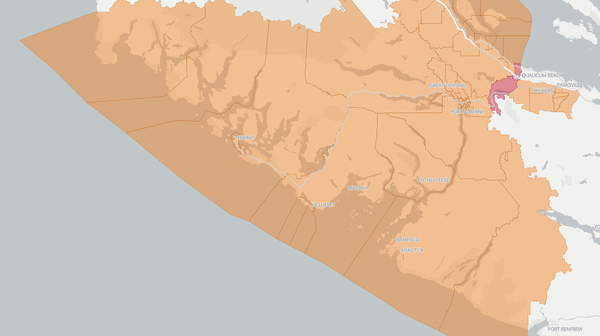
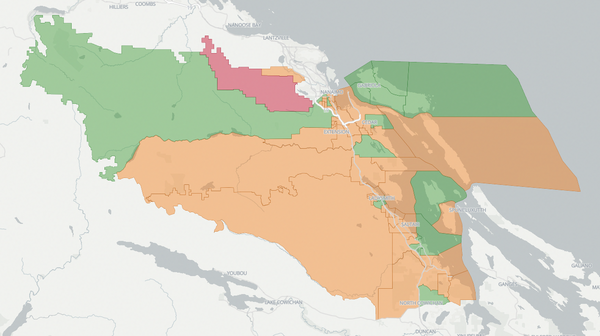
Powell River-Sunshine Coast — 2020 British Columbia Provincial Election Results Map
Powell River-Sunshine Coast — 2020 Election Results
Poll-by-poll results for Powell River-Sunshine Coast in the 2020 British Columbia election. The BC NDP candidate won this riding. Explore detailed voting data, candidate results, and turnout statistics at the poll level.
Riding information
Auto generated. Flag an issue.Powell River—Sunshine Coast
Powell River—Sunshine Coast is a sprawling coastal riding that stretches from the Sunshine Coast communities of Gibsons and Sechelt northward to the city of Powell River. The riding's communities are linked by Highway 101 and utterly dependent on BC Ferries for their connection to the rest of the province—ferry fares and service reliability are perennial concerns that shape daily life, business costs, and tourism. Powell River's economy was historically built on its pulp and paper mill, but declining global newsprint demand had put the mill's viability in question, while the Sunshine Coast relied increasingly on tourism, retirement migration, and the creative economy. The NDP had held the seat continuously since 2005.
The 2020 snap election played out against a backdrop of frustration in rural and remote communities over the pandemic-era election call. The NDP incumbent sought a fifth term, while the BC Green Party mounted a strong challenge from the environmental flank in a riding where conservation values ran deep. The contest was a three-candidate race that tested whether Green momentum could break the NDP's long hold.
Candidates
Nicholas Simons (BC NDP) — Simons grew up in Montreal, studied criminology at the University of Ottawa and earned a master's degree from Simon Fraser University. Before entering politics, he worked as a child-protection social worker, a financial assistance worker, and the crime prevention coordinator for the Northwest Territories. From 1997 to 2005, he served as executive director of health and social development for the Sechelt Nation. He was also an accomplished cellist.
Kim Darwin (BC Green Party) — Darwin was an independent mortgage consultant based in Sechelt who had operated her own mortgage brokerage for over sixteen years. She had served on the BC Green Party's provincial council executive from 2014 until March 2020, when she stepped down to explore a run for the party leadership. The 2020 election was her second campaign as a candidate, having finished third in the riding in 2017.
Sandra Stoddart-Hansen (BC Liberal Party) — Stoddart-Hansen was a consultant with experience in both the public and private sectors, including twelve years with Transport Canada and a role as vice-president at Hill and Knowlton, a government relations firm. She had recently completed a term as chair of the BC Ferry Authority board of directors and had been a permanent Sunshine Coast resident since 2011.
Local Issues
The Highway 101 corridor between Gibsons and Sechelt emerged as a major infrastructure issue during the NDP's first term, driven by the completion of a provincial corridor study conducted between March 2019 and August 2020. The study identified safety and capacity problems along the route, where accident rates were elevated due to the combination of residential driveways, uncontrolled crossings, and surge volumes of ferry-related traffic. The collision-prone Joe Road/Orange Road intersection was flagged for immediate attention, and the Ministry of Transportation committed to engineering work on protected left-turn lanes and geometry improvements at the site. The study also ranked a Gibsons bypass higher than improvements within the existing corridor as a longer-term solution, and the province announced public consultation on the bypass concept. The BC Liberals promised fifty million dollars toward the bypass project if elected, while the NDP pointed to the corridor study and its incremental safety improvements as a more measured approach. For residents and commuters who navigated the highway daily, the practical urgency of the issue transcended partisan framing.
BC Ferries fares and service reliability remained the overriding concern in a riding whose communities depended on ferry service as their primary link to the outside world. The NDP government had introduced modest fare freezes on some routes and invested in fleet renewal—including the new Island Class vessels—but coastal communities continued to press for a fundamental restructuring that would treat ferry routes as extensions of the provincial highway system rather than as a user-pay service. Fares on Powell River routes had more than doubled since 2003, and residents argued that rising costs functioned as an unfair toll on daily life, increasing expenses for commuters, businesses, and visitors. The pandemic compounded the issue, as reduced sailings and capacity limits disrupted travel patterns for ferry-dependent communities and raised questions about the long-term financial sustainability of BC Ferries' operating model.
The forestry sector's continued decline weighed on Powell River, where the Catalyst Paper mill—historically the city's largest employer—was operating under increasingly difficult market conditions. The global decline in newsprint demand and the mountain pine beetle's long-term impact on fibre supply put the mill's viability in question, and residents watched with concern as other interior and coastal mills curtailed or closed permanently during the NDP's first term. The broader challenge of economic diversification—how to build a post-forestry economy in a community whose identity and infrastructure had been shaped by the industry for more than a century—remained unresolved, though tourism, aquaculture, and the creative economy offered partial alternatives.
Health care access in the more remote portions of the riding persisted as a deep concern. Residents of Powell River and smaller communities along the coast faced limited specialist services, physician shortages, and sometimes had to travel significant distances—often involving ferry crossings—for care. The COVID-19 pandemic strained the capacity of small rural health facilities, and the riding's growing retiree population placed additional demand on primary care, home support, and long-term care services that were already stretched thin. Mental health and addiction services were particularly scarce outside of the Sunshine Coast's larger centres, and the opioid crisis—while less statistically prominent than in urban centres—was a growing concern in communities with limited harm reduction infrastructure.