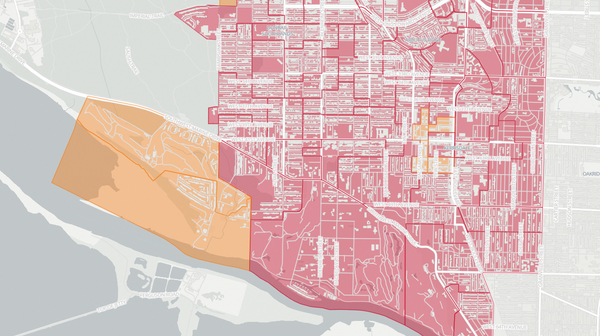
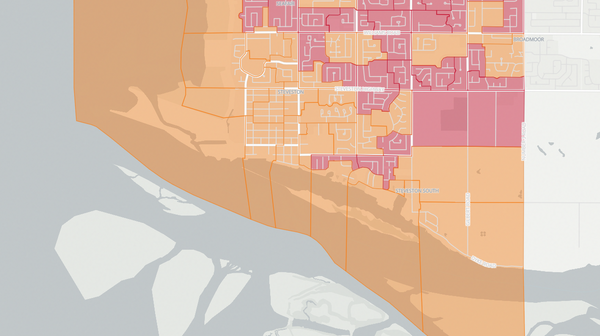
Nanaimo — 2020 British Columbia Provincial Election Results Map
Nanaimo — 2020 Election Results
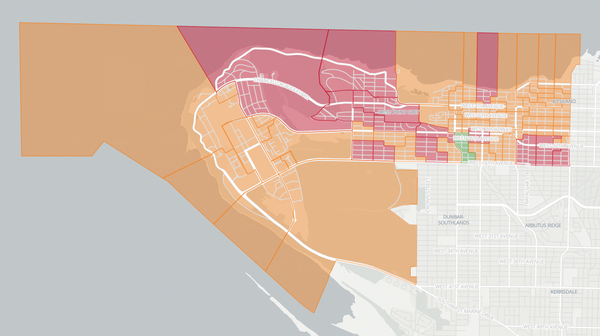
Poll-by-poll results for Nanaimo in the 2020 British Columbia election. The BC NDP candidate won this riding. Explore detailed voting data, candidate results, and turnout statistics at the poll level.
Riding information
Auto generated. Flag an issue.Nanaimo
Nanaimo is central Vancouver Island's largest city, a growing community of nearly 100,000 in the metro area that serves as a regional hub for commerce, health care, and transportation. Once defined by coal mining and later by forestry and pulp mills, the city has evolved into a more diversified economy anchored by retail, education through Vancouver Island University, and its role as a gateway to the Island via BC Ferries. The riding covers the urban core of the city, from the waterfront and downtown to the neighbourhoods stretching inland. The NDP had held the seat continuously since 2005, and it was won in a 2019 by-election after the sitting MLA resigned to become mayor of Nanaimo.
The 2020 snap election found the NDP incumbent seeking her first full term in a riding whose trajectory was increasingly defined by the tension between growth and social distress. Homelessness had surged, the opioid crisis was deepening, and the city's hospital infrastructure had not kept pace with population growth. The seat was considered safe for the NDP, but the scale of the social challenges gave the campaign unusual urgency.
Candidates
Sheila Malcolmson (BC NDP) — Malcolmson held a bachelor's degree in environmental and resource studies from Trent University. Before entering federal politics, she was elected four times to the Islands Trust Council, serving six years as chair, where she championed ferry service, marine safety, and oil spill prevention. As MP for Nanaimo—Ladysmith from 2015 to 2019, she focused on vessel abandonment and women's equality before making the jump to provincial politics. Appointed Parliamentary Secretary for Environment in July 2019, she worked on addressing marine-sourced plastic debris and abandoned vessels along the coast.
Lia Marie Constance Versaevel (BC Green Party) — Versaevel brought 27 years of experience with the BC Ministry of the Attorney General, having served as a correctional officer, probation officer, and family justice counsellor. She held a bachelor's degree in sociology and a diploma in public sector management from the University of Victoria, and a master's degree in conflict analysis and management from Royal Roads University. After returning to Vancouver Island in 2013, she re-established her mediation practice, Accord Family Mediation Services, and served as president of Family Mediation Canada from 2015 to 2017.
Kathleen Jones (BC Liberal Party) — Jones was a retired social worker who had spent much of her career in the Comox Valley and Campbell River, as well as in Washington state, helping children, families, and vulnerable adults. She retired to Nanaimo in 2012 and was active as a community volunteer with Block Watch, Nanaimo RCMP Community Policing, and Canadian Blood Services.
Local Issues
The overlapping crises of homelessness and opioid addiction had escalated sharply during the period between elections. In the summer of 2018, activists established a tent encampment known as Discontent City on a vacant lot at 1 Port Drive near the downtown core. The camp rapidly grew to an estimated 300 to 350 residents, becoming the largest tent city in British Columbia at the time. The encampment cost the City nearly $80,000 in its first two months for garbage removal, portable toilets, and water service. In September 2018, a BC Supreme Court justice ordered residents to vacate within 21 days, citing escalating crime and violence within the camp, criminal activity in surrounding areas, and harm to downtown businesses. The episode laid bare the depth of Nanaimo's housing and social services shortfall. A March 2020 homeless count found 433 people experiencing homelessness in the city, a sharp increase from 174 recorded just four years earlier, and the pandemic made conditions worse by straining shelter capacity and disrupting outreach programs.
Health care infrastructure was a growing frustration as Nanaimo's population approached 100,000 in the metro area. The Nanaimo and District Hospital Foundation launched its largest fundraising campaign in 2020, seeking support for expanded cardiac care, a cancer service centre, and a new patient tower at Nanaimo Regional General Hospital. The hospital's medical staff president publicly stated that programs, funding, and facilities had not kept pace with medical need and population growth on the central and northern Island over the preceding two decades. Patients requiring cardiac catheterization or comprehensive cancer treatment still had to travel to Victoria or Vancouver, and advocates argued that a regional centre of Nanaimo's size should not lack those capabilities. The campaign for hospital upgrades became a prominent issue on the doorstep, with residents wanting commitments from all parties that provincial funding would follow.
The Western Forest Products strike, which began on July 1, 2019, had a pronounced effect on Nanaimo and the surrounding mid-Island communities. Approximately 3,000 United Steelworkers Local 1-1937 members walked off the job at WFP facilities across Vancouver Island, and the dispute dragged on for nearly eight months before a ratification vote in February 2020. Forest workers rallied in Nanaimo after four months on strike, highlighting the hardship faced by families who saw their savings dwindle while the company and union remained at an impasse. Businesses in forestry-dependent communities reported falling revenues as workers cut back spending, and the strike reinforced broader anxieties about the long-term viability of the forest economy on Vancouver Island.
Housing affordability continued to climb the agenda as Metro Vancouver's overheated real estate market pushed buyers and renters further up-Island. Nanaimo's relative affordability compared to the Lower Mainland made it attractive to relocating families and remote workers, but the resulting demand drove up prices and squeezed long-time residents. The rental vacancy rate remained extremely low, and the NDP government's speculation and vacancy tax, introduced in 2018, had limited direct impact in Nanaimo compared to its effect in more investor-heavy markets like the Lower Mainland. The city's Affordable Housing Strategy set targets for hundreds of new housing units across a range of needs, but construction had not kept pace with the scale of the problem.