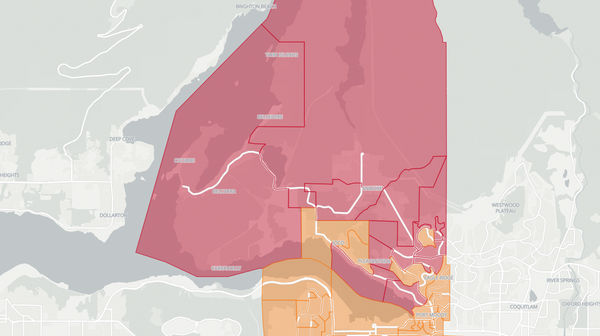
West Vancouver-Sea to Sky — 2020 British Columbia Provincial Election Results Map
West Vancouver-Sea to Sky — 2020 Election Results
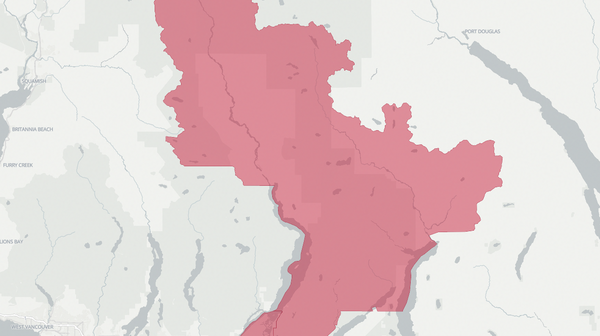
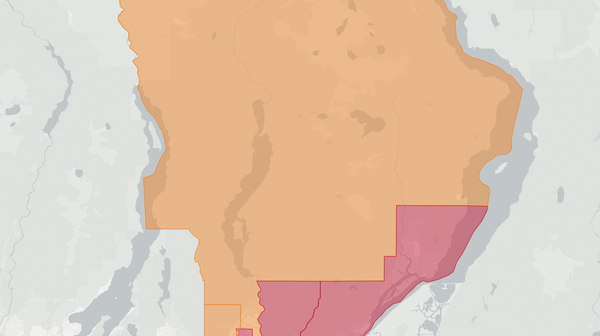
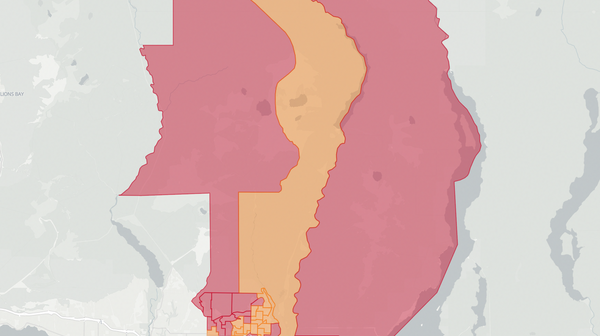
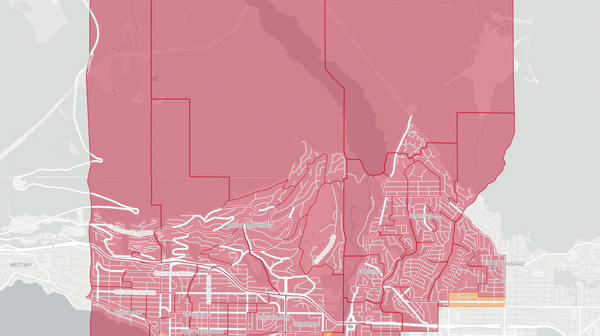
Poll-by-poll results for West Vancouver-Sea to Sky in the 2020 British Columbia election. The BC Liberal Party candidate won this riding. Explore detailed voting data, candidate results, and turnout statistics at the poll level.
Riding information
Auto generated. Flag an issue.West Vancouver-Sea to Sky
West Vancouver-Sea to Sky stretches from the western portion of West Vancouver along Howe Sound up the Sea-to-Sky Highway through Lions Bay, Squamish, Whistler, and Pemberton, and includes Bowen Island. It is a geographically vast riding that links affluent suburban West Vancouver with the fast-growing outdoor recreation and resource communities of the corridor. Squamish, growing by hundreds of residents per year, was transitioning from a forestry and industrial town into a commuter and adventure-tourism hub, while Whistler's economy remained almost entirely dependent on seasonal tourism and the resort industry. Pemberton and the surrounding area retain a more rural, agricultural character. The riding's landscapes — the ecological recovery of Howe Sound, old-growth forests, and alpine wilderness — give environmental issues particular weight with local voters.
Politically, the riding had been held by the BC Liberals since its creation, but it was becoming increasingly competitive. In 2017, the Liberal incumbent won with just 43 per cent of the vote as the Greens and NDP split the centre-left vote almost evenly. Heading into 2020, the riding was widely seen as a three-way contest, with the BC Greens eyeing it as their best opportunity to win a seat outside Vancouver Island for the first time. The result would prove to be the closest in the province, ultimately requiring a judicial recount to determine the winner after an unprecedented volume of mail-in ballots reversed the election-night result.
Candidates
Jordan Sturdy (BC Liberal Party) — Sturdy grew up in Vancouver and moved to Pemberton in 1989, where he and his wife established North Arm Farm. He served as mayor of Pemberton for eight years and held positions on the Squamish Lillooet Regional District board and the Fraser Basin Council. First elected in 2013, he was seeking a third term and had served as Parliamentary Secretary to the Minister of Environment under the previous government.
Jeremy Valeriote (BC Green Party) — Valeriote was a geological engineer by training who had spent over 20 years in environmental consulting in the mining and environmental management sectors. He served as a councillor for the Town of Gibsons from 2014 to 2018 and completed a Master of Arts in Leadership Studies at Royal Roads University in 2020. He was a Whistler resident at the time of the election.
Keith Murdoch (BC NDP) — Murdoch was an organizer with the United Food and Commercial Workers union for more than 15 years and a co-founder of the Whistler Workers' Alliance in 2017. He focused his campaign on worker housing, transit funding, and the NDP's commitment to regional bus service in the Sea-to-Sky corridor.
Local Issues
The Woodfibre LNG project and the proposed Burnco aggregate mine at McNab Creek placed Howe Sound's environmental future at the centre of the riding's political debate during the 2017–2020 term. Woodfibre LNG, a $1.6-billion liquefied natural gas facility proposed for a former pulp mill site seven kilometres southwest of Squamish, received a facilities permit from the BC Oil and Gas Commission in July 2019, advancing the project closer to construction. The provincial environmental assessment office granted a five-year extension on the project's environmental assessment certificate the day after the election. Meanwhile, the Burnco proposal for a sand and gravel mine at McNab Creek on Howe Sound's western shore — with a planned capacity of up to 1.6 million tonnes per year over 16 years — received both provincial and federal environmental assessment approvals in spring 2018, but faced sustained opposition from local residents and environmental groups who argued the assessments were flawed and relied on industry-funded science. The Sunshine Coast Regional District voted unanimously in October 2018 to deny the rezoning application needed for aggregate processing. Resolutions opposing both projects were passed by the District of West Vancouver, the Town of Gibsons, and the Squamish Lillooet Regional District, reflecting broad community sentiment that the ecological recovery of Howe Sound — where herring spawns, orca sightings, and humpback whale returns had been celebrated as conservation successes following decades of industrial pollution from the former Britannia Mine — should not be jeopardized by new industrial activity.
Worker housing remained a crisis across the Sea-to-Sky corridor throughout the NDP's term. In Whistler, the Resort Municipality adopted a new Employee Rental Housing policy in July 2019, an outcome of recommendations from the Mayor's Task Force on Resident Housing, to address the chronic shortage of accommodation for the resort and service industry employees who kept the tourism economy running. The Whistler Housing Authority administered a waitlist for 327 rental units and 988 price-controlled ownership units, but demand far exceeded supply. Squamish, which was growing by 600 to 700 people per year and had approved 800 residential units in 2020 alone, experienced sharp increases in housing costs that priced out long-time residents and workers despite the surge in construction. Average rents in both communities rose faster than wages, and the gap between the cost of living and service-sector incomes left many workers commuting from as far as Lillooet or sleeping in vehicles. The NDP government's efforts to support affordable housing in resort and high-growth communities were a key campaign topic, but the scale of the problem continued to outpace the available solutions.
The old-growth forestry debate intensified across British Columbia during the NDP's term and resonated deeply in a riding where the natural environment was both an economic asset and a source of community identity. Environmental groups staged protests and blockades on Vancouver Island and parts of the mainland to oppose the harvesting of old-growth timber. The provincial government commissioned an independent Old Growth Strategic Review, which released its report in September 2020 with 14 recommendations. The panel — co-chaired by professional foresters Garry Merkel, a member of the Tahltan Nation, and Al Gorley — called for a paradigm shift toward ecosystem-based management and recommended immediate deferrals of development in old forests where ecosystems were at very high and near-term risk of irreversible biodiversity loss. The government announced initial deferrals covering approximately 353,000 hectares, but the report's broader recommendations were still being assessed as voters headed to the polls.
COVID-19 devastated the corridor's tourism-dependent economy. Whistler Blackcomb closed its ski operations on March 15, 2020, and the resort municipality's revenue from hotel taxes, which funded local services and infrastructure, collapsed. Restaurants, guiding operations, and outdoor recreation businesses across the corridor laid off staff and faced an uncertain summer season. The pandemic also disrupted the flow of temporary foreign workers and working holiday visa holders who typically filled seasonal positions in hospitality and food service. In Squamish, the outdoor recreation boom that had been drawing climbers, mountain bikers, and hikers from across the Lower Mainland paradoxically intensified during the pandemic, straining trails and parking infrastructure even as the town's commercial economy struggled.