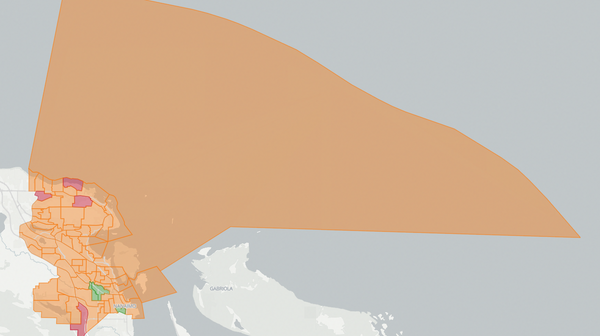
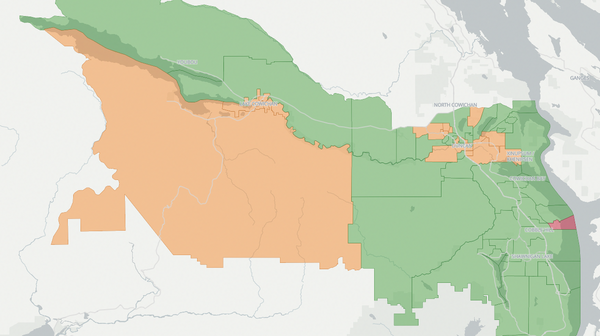
Courtenay-Comox — 2020 British Columbia Provincial Election Results Map
Courtenay-Comox — 2020 Election Results
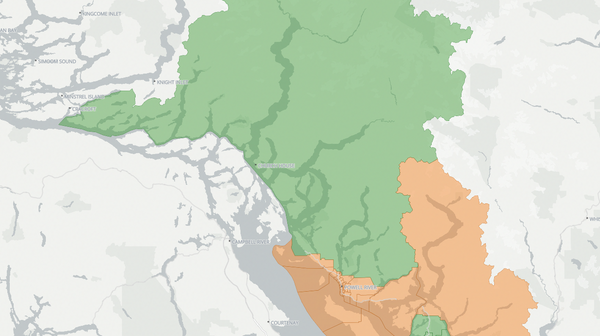
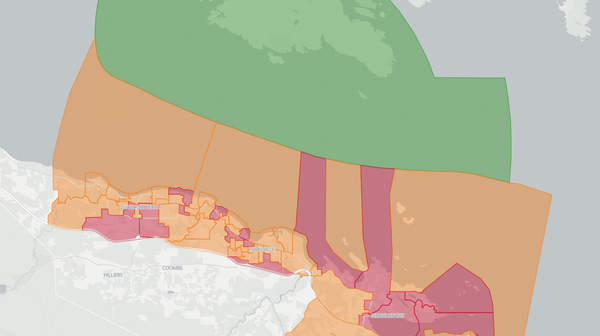
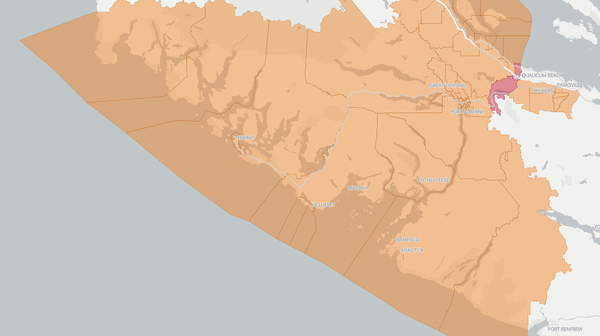
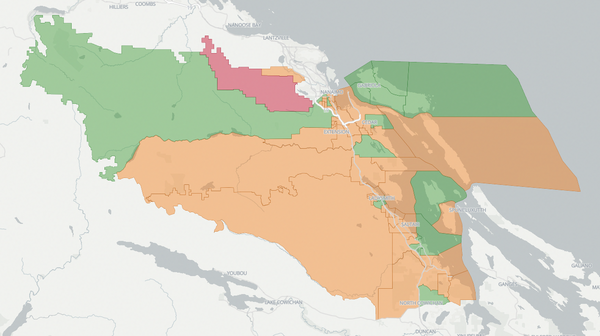
Poll-by-poll results for Courtenay-Comox in the 2020 British Columbia election. The BC NDP candidate won this riding. Explore detailed voting data, candidate results, and turnout statistics at the poll level.
Riding information
Auto generated. Flag an issue.Courtenay-Comox
Courtenay-Comox takes in the Comox Valley on the east coast of Vancouver Island, encompassing the City of Courtenay, the Town of Comox, the Village of Cumberland, and surrounding rural areas including the K'omoks First Nation. The valley's economy mixes military employment at 19 Wing CFB Comox, a growing health-care sector anchored by the North Island Hospital, tourism tied to Mount Washington Alpine Resort and coastal recreation, and a productive agricultural base in dairy, poultry, and the local food movement. The riding's population had been growing steadily as retirees and young families from more expensive centres relocated to the valley, putting pressure on housing, health care, and schools. The NDP narrowly won the seat in 2017, and the 2020 snap election tested whether the party could consolidate its hold or whether the Liberals could reclaim it.
Candidates
Ronna-Rae Leonard (BC NDP) — Leonard was the incumbent MLA, first elected in 2017. A former Courtenay city councillor who had served from 2005 to 2014, she had organized the Comox Valley Cycling Task Force and the Housing Task Force during her time in municipal politics and chaired the Vancouver Island Regional Library Board. She had also worked as an environmental consultant with local streamkeeper organizations.
Brennan Day (BC Liberal Party) — Day held degrees in political science and international relations from Vancouver Island University. He had a background in the energy sector and experience managing large natural resource projects internationally. This was his first run for provincial office.
Gillian Anderson (BC Green Party) — Anderson was a longtime riding resident and community volunteer with a background in wildlife habitat conservation. She had worked with the Merville Water Guardians to help protect the local aquifer. She had previously sought the NDP nomination in Courtenay-Comox for the 2017 election, losing to Leonard, before running for the Greens in 2020.
Local Issues
Health care was the most frequently cited concern among Comox Valley residents heading into the 2020 vote. The North Island Hospital Comox Valley Campus had opened on October 1, 2017, replacing the aging St. Joseph's General Hospital, but the new facility quickly faced staffing challenges that undermined its promise. By 2020, an estimated 13,500 residents — roughly 20 per cent of the Valley's population — were without a family physician, according to local medical leaders. Retirements, departures, and the Valley's growing population all contributed to the shortfall. The Comox Valley Division of Family Practice launched recruitment campaigns, but the shortage left thousands relying on walk-in clinics and the hospital's emergency department for routine care. The pandemic placed additional demands on hospital resources and compounded burnout among health-care workers already stretched thin.
The COVID-19 pandemic created immediate economic anxiety across the Valley's diverse economy. The Comox Valley Regional District established an Economic Recovery Task Force in May 2020, bringing together the City of Courtenay, Town of Comox, Village of Cumberland, K'omoks First Nation, and CFB 19 Wing Comox to develop a coordinated recovery plan. Tourism and hospitality businesses — including those tied to Mount Washington Alpine Resort, the Valley's second-busiest winter recreation destination in BC behind Whistler — had been hit hard by travel restrictions and public health orders. Local retailers participated in the Support Local BC program, which allowed customers to purchase gift certificates for independent businesses. But for many operators, the uncertainty of the pandemic's duration and the prospect of a second wave loomed over any recovery planning.
Affordability pressures had intensified as the Comox Valley's reputation as a desirable place to live continued to attract newcomers. Housing prices climbed during the 2017-2020 period, and rental vacancy rates dropped, making it increasingly difficult for young families and workers in the service sector to find housing. The influx of retirees from more expensive centres like Victoria and the Lower Mainland pushed prices beyond the reach of local workers, particularly those in hospitality, retail, and health care support roles. The Comox Valley Coalition to End Homelessness reported growing numbers of people experiencing housing instability, and homelessness services in Courtenay saw increased demand during the NDP's term. The provincial government's rental protections and housing investments were part of the campaign conversation, but the pace of new affordable housing construction lagged behind the need.
Protection of agricultural land and the natural environment rounded out the local agenda. The Comox Valley's productive farming sector — including dairy, poultry, and the growing local food movement — faced pressure from residential encroachment, and the Agricultural Land Reserve remained a touchpoint in debates about growth management. The Merville aquifer, a critical groundwater source for parts of the riding, was the subject of ongoing community monitoring by groups like the Merville Water Guardians, who raised concerns about contamination risks from development and agricultural runoff. Climate change and its effects on salmon-bearing streams, drought patterns, and wildfire risk added urgency to environmental discussions in a riding where the tension between growth and ecological stewardship remained unresolved.