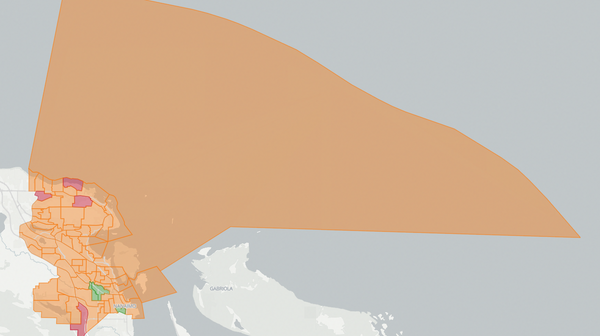
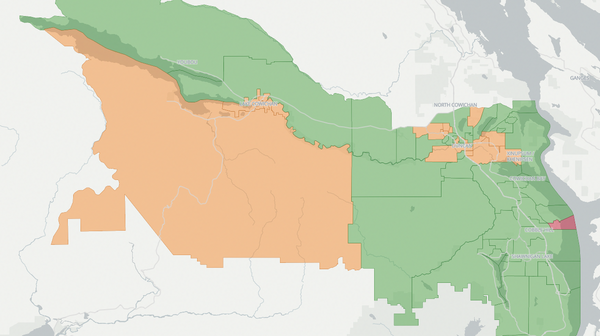
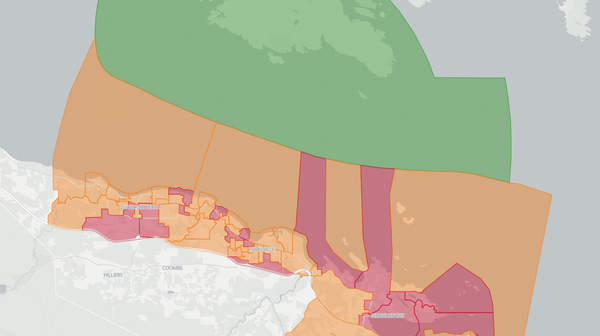
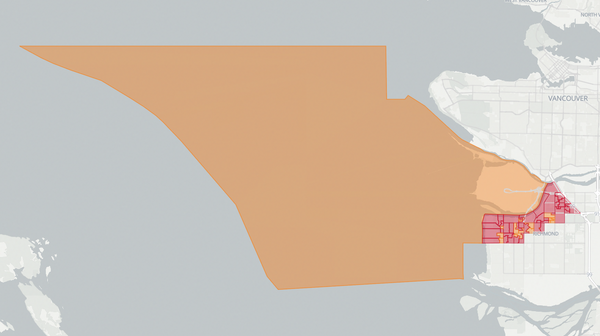
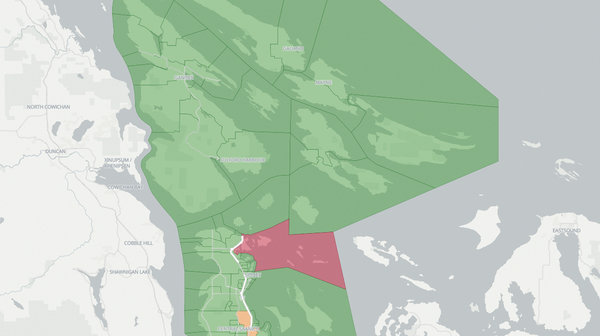
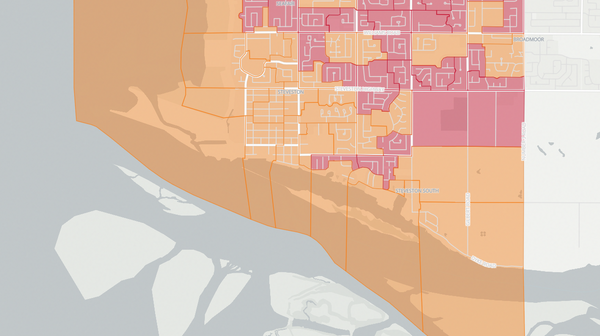
Nanaimo-North Cowichan — 2020 British Columbia Provincial Election Results Map
Nanaimo-North Cowichan — 2020 Election Results
Poll-by-poll results for Nanaimo-North Cowichan in the 2020 British Columbia election. The BC NDP candidate won this riding. Explore detailed voting data, candidate results, and turnout statistics at the poll level.
Riding information
Auto generated. Flag an issue.Nanaimo—North Cowichan
Nanaimo—North Cowichan covers a stretch of southeastern Vancouver Island that takes in the communities of Ladysmith, Chemainus, North Cowichan, Gabriola Island, and parts of south Nanaimo. The riding's character is shaped by its mix of small mill towns, agricultural land in the Cowichan Valley, island communities accessible only by ferry, and the suburban growth radiating south from Nanaimo. Forestry has historically been the dominant industry, with sawmills in Chemainus and Cowichan Bay providing the economic backbone for generations, though the sector has been in long-term decline. The NDP had held the seat continuously since 2005, winning four consecutive elections under the same incumbent.
The 2020 snap election saw the NDP incumbent seeking a fifth consecutive term in what was considered a safe seat. But the campaign unfolded amid the aftermath of an eight-month Western Forest Products strike that had devastated the riding's mill communities, intensifying old-growth forestry debates and a growing housing crisis on Gabriola Island.
Candidates
Doug Routley (BC NDP) — Routley's pre-political career spanned the blue-collar industries of Vancouver Island: construction, logging, sawmills, and tree planting. He also worked as a school custodian and served as a school trustee before entering provincial politics. During the NDP government's term from 2017 to 2020, he served on several legislative committees, bringing twelve years of opposition experience to his first stint on the governing side.
Chris Istace (BC Green Party) — Istace was a 46-year-old Chemainus resident, business owner, and freelance writer. He came to Vancouver Island after 21 years in the oil and gas industry and two terms as a city councillor in Estevan, Saskatchewan. On the Island, he served as president of the Chemainus Business Improvement Association and was a director of the Cowichan Trail Stewardship Society, involved in trail development, maintenance, and community stewardship programs.
Duck (Don) Paterson (BC Liberal Party) — Paterson was a longtime Ladysmith town councillor who had sat on council for 32 years at the time of the election. He campaigned on the BC Liberal recovery plan, prioritizing economic activity and job creation in the region through development of the Duke Point industrial area, increased forestry activity, and support for local tourism.
Local Issues
The Western Forest Products strike that began in July 2019 hit the riding's mill communities hard. WFP's Chemainus sawmill, which resumed operations in late February 2020 after the eight-month walkout ended, was the first of the company's facilities to restart. However, WFP's mills in Cowichan Bay and Ladysmith remained idle even after the strike's resolution, with the company citing insufficient log supplies and weak commodity markets as the reasons for the continued shutdown. The prolonged closure left hundreds of workers in limbo and cast a shadow over communities where the forestry industry had been the primary employer for generations. Union members had ratified the agreement with 81.9 per cent support after securing wage increases, improved benefits, and a safety boot allowance, but the selective restart of mills underscored the structural challenges facing the coastal forest sector beyond any single labour dispute.
North Cowichan's municipal forest reserve became a flashpoint for the broader old-growth debate during the NDP's term. In February 2019, council voted to halt commercial harvesting in the municipality's 5,000-hectare forest reserve, limiting activity to the completion of existing 2018 contracts and the salvage of blowdowns while a public consultation and expert review took place. The decision reflected the growing tension between residents who valued the forests for recreation, watershed protection, and ecological integrity, and those who pointed to the revenue that logging generated for municipal services. The issue mirrored the province-wide conversation triggered by the Old Growth Strategic Review, whose panel recommended a fundamental shift toward ecosystem-based stewardship, and it resonated in a riding where both mill workers and environmental advocates held strong convictions.
Gabriola Island, accessible by a short BC Ferries crossing from Nanaimo, faced a housing crisis that intensified between 2017 and 2020. A community survey found that over half of the island's rental population lived in inappropriate, unstable, or substandard housing, with 52 per cent of renter households spending more than 30 per cent of their income on shelter. The Gabriola Housing Society, which received charitable status in 2019, acquired three lots on Paisley Place and secured funding from BC Housing's Project Development Fund to advance plans for an affordable housing development. But the island's challenges were compounded by its dependence on groundwater: with no municipal water system and roughly 300 private wells, summertime over-pumping was leading to saltwater intrusion in some coastal areas, raising questions about the island's capacity to absorb further population growth without major infrastructure investment.
Health care access remained an issue across the riding's smaller communities, where residents expressed frustration about physician shortages and the difficulty of reaching specialist services without travelling to Nanaimo or Victoria. The opioid crisis had spread into mid-Island towns that had previously considered themselves insulated from the problem, and harm reduction services in Ladysmith and Chemainus were limited compared to what was available in larger urban centres.