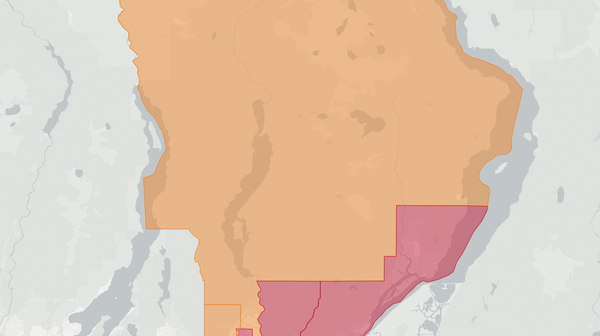
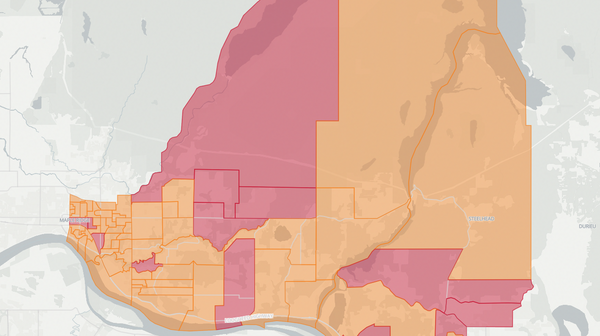
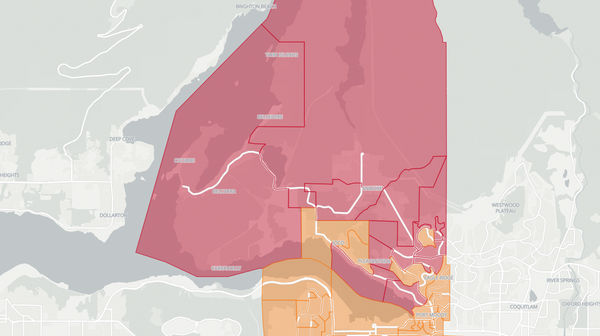
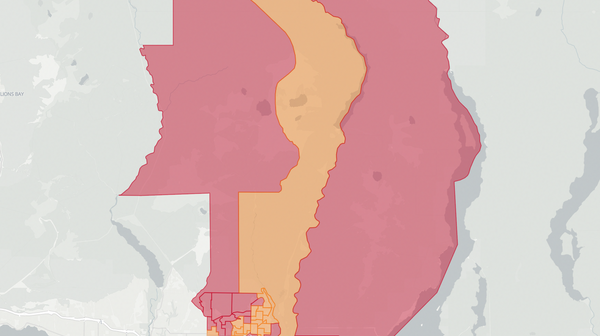
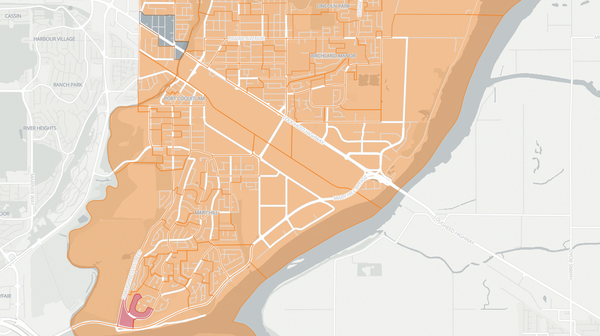
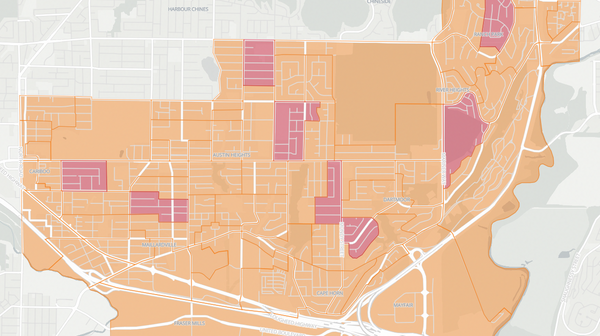
Maple Ridge-Pitt Meadows — 2020 British Columbia Provincial Election Results Map
Maple Ridge-Pitt Meadows — 2020 Election Results
Poll-by-poll results for Maple Ridge-Pitt Meadows in the 2020 British Columbia election. The BC NDP candidate won this riding. Explore detailed voting data, candidate results, and turnout statistics at the poll level.
Riding information
Auto generated. Flag an issue.Maple Ridge—Pitt Meadows
Maple Ridge—Pitt Meadows encompasses the City of Pitt Meadows and the western portions of Maple Ridge, communities that sit at the rural-urban interface where Metro Vancouver's suburban edge meets the agricultural expanse of the Fraser Valley. Approximately seventy-eight percent of Pitt Meadows is within the Agricultural Land Reserve, giving the riding a distinct character within the metropolitan region. The economy is shaped by commuter patterns into Vancouver and the Tri-Cities, agriculture, and the local service sector, while the CP Rail corridor running through Pitt Meadows plays an outsized role in daily transportation dynamics.
The NDP won the riding in 2017, and their first-term incumbent sought re-election in 2020. The contest was a straight two-candidate race—the Greens did not field a candidate—setting up a direct head-to-head between the NDP incumbent and a Liberal challenger in a riding the NDP was favoured to hold.
Candidates
Lisa Beare (BC NDP) — Beare was the incumbent MLA and Minister of Tourism, Arts and Culture. She grew up in Maple Ridge and earned a diploma in local government management from the University of Victoria. She had worked as a flight attendant for Air Transat, where she became involved in her union, CUPE Local 4078, serving as vice-president. She was a trained commercial pilot and former president of local chapters of The 99s International Organization of Women Pilots. She was elected to the Maple Ridge school board in 2014 and also served on the board of Variety, the Children's Charity.
Cheryl Ashlie (BC Liberal Party) — Ashlie was a former Maple Ridge city councillor, school trustee, and health care project manager. Named the Maple Ridge Community Foundation's Citizen of the Year in 2017, she was among the first BC Liberal candidates nominated for the 2020 election, receiving her nomination in February. She had been actively campaigning for months to close the gap in a riding the NDP had won in 2017.
Local Issues
Transit and commuting were at the heart of daily life in Maple Ridge—Pitt Meadows, and the January 2020 launch of TransLink's RapidBus service connecting Maple Ridge and Pitt Meadows to Coquitlam along the Lougheed Highway corridor was the most significant transit improvement the riding had seen in years. The service was designed to offer fast, reliable connections that could rival SkyTrain speeds, giving commuters an alternative to the West Coast Express—whose limited schedule and higher cost were not practical for all workers. But the RapidBus routes crossed the Harris Road rail crossing in Pitt Meadows, one of the busiest segments of CP Rail's network in British Columbia, where trains blocked the crossing for up to three and a half hours per day. Three bus routes serving the riding—the 701, 722, and 791—all used the Harris Road crossing, and the frequent train traffic caused delays that undermined the reliability TransLink was trying to deliver. The City of Pitt Meadows and the Vancouver Fraser Port Authority were working on an underpass project to separate road and rail traffic at Harris Road, but the project was still in planning stages at election time.
Housing affordability and the tension between development and agricultural preservation shaped the riding's identity. Pitt Meadows' vast agricultural footprint, protected by the ALR, created a sharp boundary between suburban density and farmland. The NDP government's strengthening of ALR protections through Bill 52—eliminating the two-zone system and capping house sizes on agricultural land—was welcomed by the farming community, which had watched mega-homes proliferate on ALR parcels in other parts of Metro Vancouver. But the constraints on land supply intensified the affordability challenge: rising housing costs pushed the issue to the forefront as families who had moved to the area for its relative affordability found prices climbing toward levels associated with communities further west. The limited supply of rental housing was particularly acute for young families and service-sector workers.
The pandemic's impact on tourism and the arts was both a provincial and a personal issue for Beare, whose ministerial portfolio placed her at the centre of the government's response to an industry in crisis. Locally, businesses dependent on events, festivals, and hospitality struggled through a season of cancellations and restrictions. The Maple Ridge and Pitt Meadows community had built a significant calendar of local events—from the Country Fest to farmers' markets—and the loss of an entire season's programming affected not only businesses but the social fabric of communities that relied on these gatherings.
Health care access remained a perennial concern. The availability of family physicians, mental health services, and the capacity of Ridge Meadows Hospital—which served both this riding and neighbouring Maple Ridge—Mission—had not kept pace with the population growth that continued to push eastward from Metro Vancouver's core. The opioid crisis, which had devastated communities across the Fraser Health region, added urgency to demands for expanded addiction treatment and harm-reduction services. Meanwhile, the May 2018 freshet season had brought flood advisories to low-lying areas along the Fraser River, reminding residents that the same river systems that defined the riding's agricultural character also posed seasonal risks to homes and infrastructure.