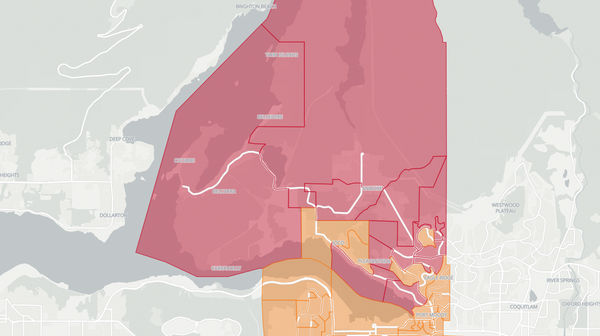
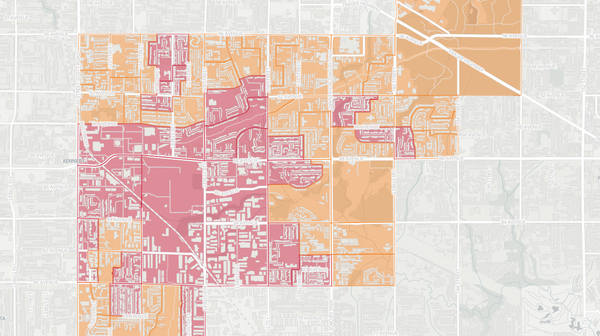
Port Coquitlam — 2020 British Columbia Provincial Election Results Map
Port Coquitlam — 2020 Election Results
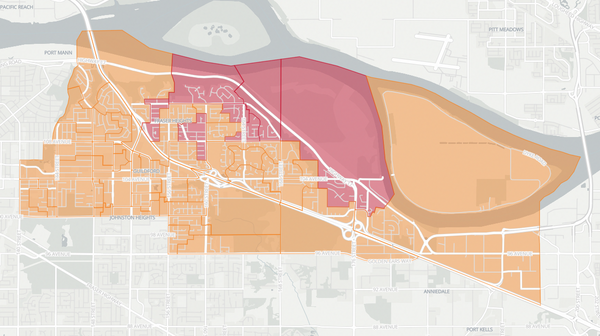
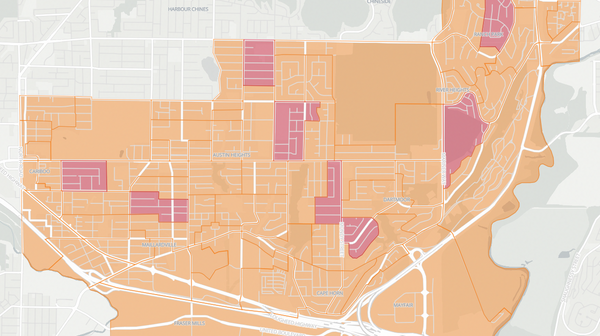
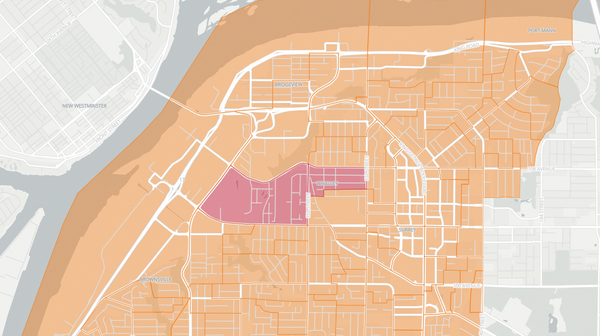
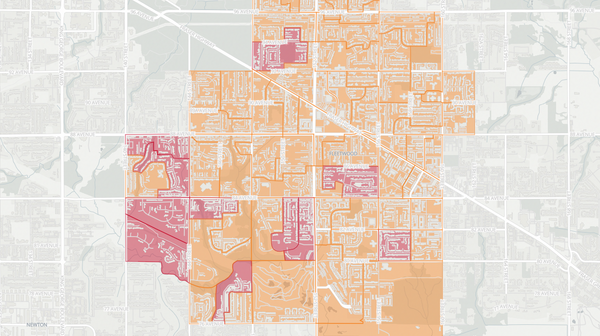
Poll-by-poll results for Port Coquitlam in the 2020 British Columbia election. The BC NDP candidate won this riding. Explore detailed voting data, candidate results, and turnout statistics at the poll level.
Riding information
Auto generated. Flag an issue.Port Coquitlam
Port Coquitlam sits in the northeast corner of Metro Vancouver, a suburban city that evolved from blue-collar roots into a growing residential community while retaining its middle-class character. It remained, by regional standards, one of the more affordable municipalities in Metro Vancouver, attracting families priced out of Vancouver and Burnaby. The city lacked a SkyTrain station despite being surrounded by the rapid transit network, leaving commuters dependent on buses and cars, and the Dominion Triangle area was transitioning from industrial to mixed-use development. Politically, the riding had been an NDP stronghold since 1991, with the exception of the 2001 Liberal landslide.
The 2020 election was widely seen as a safe NDP seat. The incumbent had held the riding for nearly three decades, and the party's provincial momentum reinforced an already formidable advantage. Three challengers contested the seat, but the central question was less about the outcome than about the margin of the NDP's hold on this suburban anchor.
Candidates
Mike Farnworth (BC NDP) — Born in Bebington, England, Farnworth was raised in Port Coquitlam and held a bachelor's degree in geography from Simon Fraser University. He served three terms on Port Coquitlam city council beginning in 1983 before winning the provincial seat in 1991. During the NDP's time in government from 1991 to 2001, he held a series of senior cabinet portfolios including Municipal Affairs and Housing, Employment and Investment, Health, and Social Development and Economic Security. Returning to the Legislature in 2005, he was appointed Minister of Public Safety and Solicitor General when the NDP formed government in 2017.
Mehran Zargham (BC Liberal Party) — Zargham was a project manager at BC Ferries and a graduate of BCIT's mechanical engineering program and UBC's Master of Engineering program. A first-time candidate who had lived in the Tri-Cities since 2003, he had been active in student leadership at BCIT, serving as president of the Mechanical Engineering Student Society and helping to grow the Engineers Without Borders campus chapter into a nationally recognized initiative.
Erik Minty (BC Green Party) — Minty was an engineer and Simon Fraser University graduate who had lived in Port Coquitlam since the mid-1990s. He was a co-founder of ABAKiS, a company that developed software for families with autism, and was also a youth soccer and hockey coach in the community.
Lewis Clarke Dahlby ran for the Libertarian Party with negligible support.
Local Issues
The campaign for a SkyTrain extension into Port Coquitlam advanced significantly during the NDP's first term. In early 2020, the city launched a formal feasibility study examining a roughly two-kilometre extension of the Millennium Line from Coquitlam Central Station eastward into downtown Port Coquitlam, paralleling the Canadian Pacific Railway right-of-way. The analysis examined possible land use changes, economic benefits, and ridership projections, with a ballpark cost estimate of approximately $400 million. The infrastructure groundwork already existed—the first metres of track and the required switches for a future eastward extension had been built as part of the Evergreen Extension, completed in 2016—and the city positioned its study to align with TransLink's Transport 2050 process, which was developing the region's next thirty-year transportation strategy. Despite this momentum, Port Coquitlam remained the only Tri-Cities municipality without a station on the rapid transit network, and commuters continued to face lengthy travel times to employment centres in Vancouver and Burnaby.
Housing affordability was eroding one of Port Coquitlam's traditional advantages. What had been one of Metro Vancouver's more affordable communities for middle-class homeownership saw prices rise steadily between 2017 and 2020, squeezing the families that formed the riding's demographic core. The Dominion Triangle area in the city's northeast—bounded by Lougheed Highway, Dominion Avenue, and the Pitt River—was transitioning from industrial to mixed-use development, with proposals for hundreds of townhouse and apartment units reshaping the neighbourhood's character. The tension between accommodating population growth and preserving Port Coquitlam's identity as a more affordable, family-oriented alternative to Vancouver and Burnaby was a recurring theme in municipal and provincial discussions.
Farnworth's role as Minister of Public Safety brought several provincial-level issues into sharp local focus. The Cullen Commission of Inquiry into Money Laundering in British Columbia, established by the NDP government in 2019, was holding hearings during the campaign period and had already produced revelations about the scale of suspected criminal proceeds flowing through BC casinos—findings that touched directly on Farnworth's ministerial responsibilities. The NDP government's overhaul of ICBC auto insurance, transitioning the Crown corporation to an Enhanced Care no-fault model that reduced average premiums by roughly twenty percent, was a pocketbook issue that resonated with the riding's commuter-heavy population. The opioid epidemic and its policing implications remained an ongoing concern, as the Tri-Cities experienced rising overdose numbers in line with the broader provincial crisis.
The COVID-19 pandemic shaped the final months of the NDP's first term in ways that were acutely felt in suburban communities like Port Coquitlam. Public health restrictions disrupted small businesses along Shaughnessy Street and in the Dominion Triangle commercial area, while the provincial government's emergency benefit programs and rent supplement measures became immediate bread-and-butter issues for residents. Farnworth's visibility as a senior minister during the pandemic response—including his role in coordinating public safety aspects of the province's emergency orders—reinforced his profile in a riding where his incumbency was already formidable.