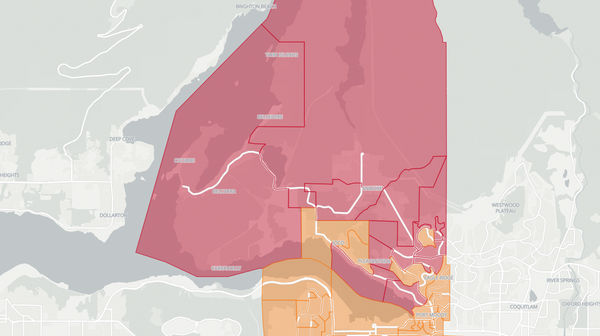
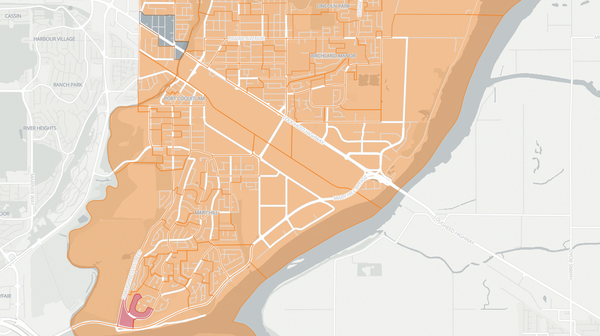
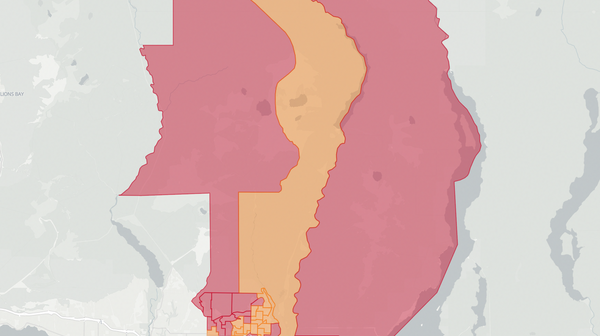
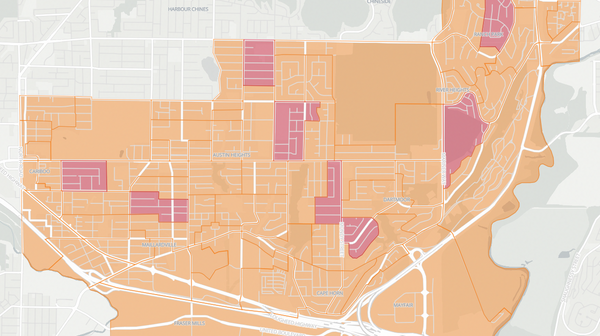
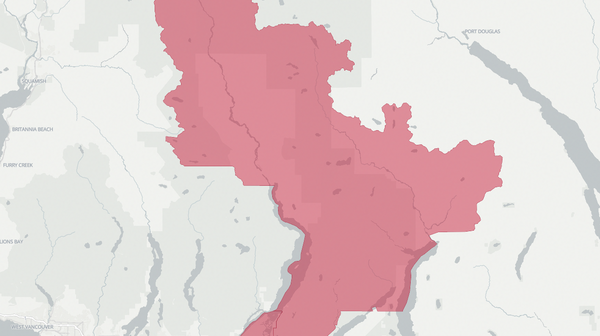
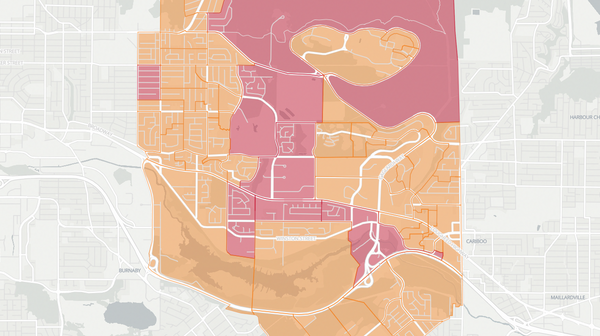
Coquitlam-Burke Mountain — 2020 British Columbia Provincial Election Results Map
Coquitlam-Burke Mountain — 2020 Election Results
Poll-by-poll results for Coquitlam-Burke Mountain in the 2020 British Columbia election. The BC NDP candidate won this riding. Explore detailed voting data, candidate results, and turnout statistics at the poll level.
Riding information
Auto generated. Flag an issue.Coquitlam-Burke Mountain
Coquitlam-Burke Mountain sits on the eastern edge of Metro Vancouver's Tri-Cities, encompassing one of the fastest-growing residential areas in the region. Burke Mountain itself had been rapidly transformed from forested hillside to dense suburban subdivision during the late 2010s, with thousands of new homes built to accommodate families seeking relatively affordable housing within commuting distance of Vancouver. The gap between the pace of housing development and the provision of schools, transit, and community amenities had become the defining tension in the riding's politics. The seat had changed hands repeatedly in its short history — the BC Liberals won it from the NDP in 2017 by a razor-thin 87 votes — and the 2020 snap election presented another competitive contest in a riding both major parties considered must-win territory.
Candidates
Fin Donnelly (BC NDP) — Donnelly was a former member of Parliament who represented New Westminster-Coquitlam from 2009 to 2015 and Port Moody-Coquitlam from 2015 to 2019. He held a bachelor of arts in philosophy with a minor in environmental studies from the University of Victoria. Before entering politics, he gained national attention by swimming the length of the Fraser River twice to raise awareness about salmon habitat, and also swam the Strait of Georgia and the Strait of Juan de Fuca. He had served as a Coquitlam city councillor from 2002 to 2009 and founded the Rivershed Society of British Columbia.
Joan Isaacs (BC Liberal Party) — Isaacs was the incumbent one-term MLA, having won the seat in 2017. She had more than three decades of experience in the financial services industry and had lived in Coquitlam for over 30 years. She was involved in community organizations focused on housing and homelessness, mental health, youth and families, and restorative justice.
Adam Bremner-Akins (BC Green Party) — Bremner-Akins was a Simon Fraser University political science student who had been active in environmental advocacy. Born in Port Coquitlam, he had served as secretary for the BC Green Party and held a position on the party's Provincial Council.
Local Issues
School capacity was the most urgent concern on Burke Mountain. Thousands of families had moved into new subdivisions, but school construction had lagged well behind housing development. By 2019, School District 43 (Coquitlam) had nearly 110 portables in use across the district — a stark indicator of how enrollment growth had outpaced brick-and-mortar infrastructure. The provincial government announced $52.3 million for a new Burke Mountain elementary school on Sheffield Avenue, along with expansions to Westwood Elementary, Panorama Heights, and Dr. Charles Best Secondary — creating a total of 820 new student spaces. The Westwood Elementary expansion was completed in 2020, but the Burke Mountain elementary school was not expected to open until 2021 at the earliest, leaving families to contend with another school year of portable classrooms and busing to distant schools. The gap between the pace of housing construction and the provision of schools had become the defining tension in the riding's politics.
Transit connectivity remained a deep frustration for residents. The Evergreen Extension of the SkyTrain had opened in December 2016, but its nearest stations at Coquitlam Central and Lincoln remained a significant distance from Burke Mountain's residential streets. TransLink had introduced the 191 bus route connecting Burke Mountain to Coquitlam Central Station, but service frequency was limited and travel times were long. The last-mile gap left many families car-dependent despite living in a metropolitan area ostensibly designed around transit-oriented development. Candidates debated how to accelerate local transit improvements, with the NDP pointing to its regional transit investments and the Liberals arguing the government had failed to prioritize connections in the Tri-Cities.
Housing affordability had shifted from a future concern to an immediate financial burden. Real estate prices in the Tri-Cities continued to climb during the 2017-2020 period despite the NDP government's speculation and vacancy tax, which collected $2.2 million from foreign owners of Coquitlam properties alone in 2020 — the highest amount in the Tri-Cities. Young families who had moved to Burke Mountain seeking relatively more affordable housing found that rising costs and lengthy commutes were eroding the advantages they had sought. The NDP government's broader housing strategy, including rental protections and restrictions on short-term vacation rentals, formed part of the campaign conversation, but the daily reality for many households was one of stretched budgets and long drives to work.
The COVID-19 pandemic added a layer of uncertainty to all these concerns. Parents managing remote schooling in already overcrowded homes, workers whose commutes had been replaced by telecommuting but who worried about job security, and small business owners in the Tri-Cities who had seen revenue plummet during the spring shutdown all brought pandemic-specific anxieties to the ballot box. The NDP government's pandemic response — including emergency business supports and the temporary $300 recovery benefit — became part of the broader debate about which party was best positioned to manage the crisis.