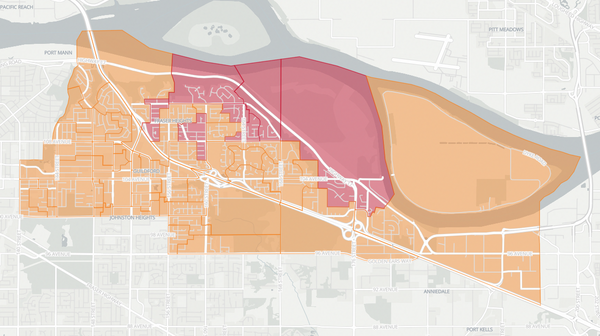
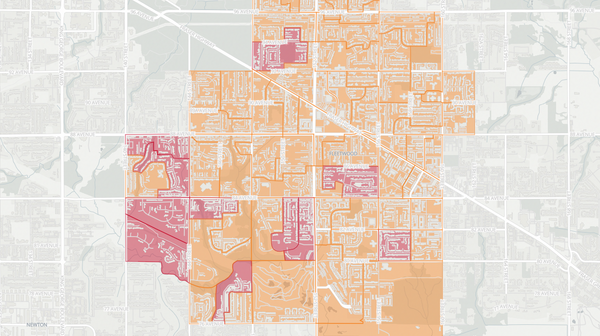
Langley East — 2020 British Columbia Provincial Election Results Map
Langley East — 2020 Election Results
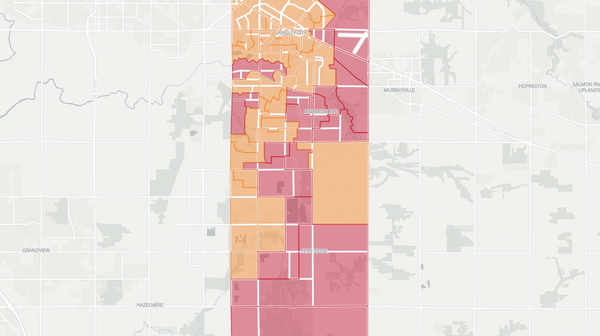
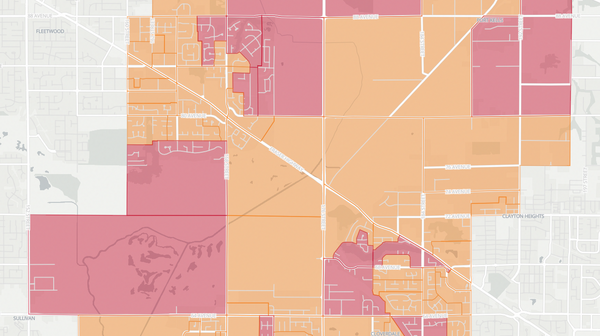
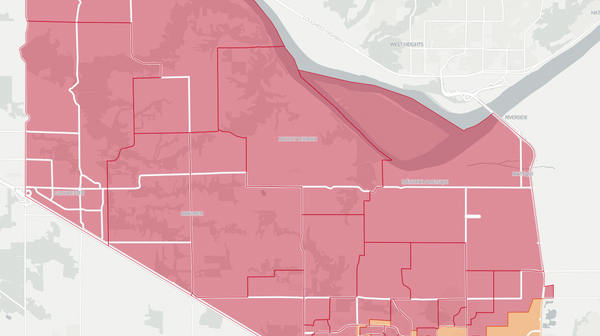
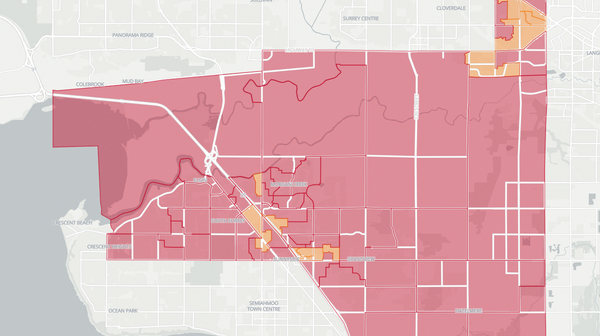
Poll-by-poll results for Langley East in the 2020 British Columbia election. The BC NDP candidate won this riding. Explore detailed voting data, candidate results, and turnout statistics at the poll level.
Riding information
Auto generated. Flag an issue.Langley East
Langley East spans the eastern reaches of the Township of Langley, where newer suburban developments in the Willoughby and Brookswood areas mix with equestrian properties, blueberry farms, and communities along the Trans-Canada Highway corridor. The riding sits at the boundary between Metro Vancouver's suburban expansion and the agricultural heartland of the Fraser Valley, with the Agricultural Land Reserve shaping land use and development patterns. The economy blends agriculture—significant blueberry and poultry operations, horse farms—with construction, retail, and the commuter-driven service sector.
The riding had been held by the BC Liberals under various names since 1996, making it one of the longest-held centre-right seats in the Fraser Valley. The 2020 election marked the first time the seat was open in over two decades, following the retirement of the longtime incumbent. With a BC Conservative candidate also on the ballot, the prospect of a split centre-right vote gave the NDP a rare opportunity to break through in territory that had never elected a New Democrat.
Candidates
Megan Dykeman (BC NDP) — Dykeman held a master's degree in international relations from Macquarie University in Sydney, Australia, and a certificate in Negotiation and Leadership from Harvard Law School. She was the managing director of consulting firm Strategics Canada and owned a specialty poultry farm in Langley Township. She had served as a Langley school board trustee since 2011, including as vice-chair from 2014 to 2018 and chair from 2018 to 2020. She was also a founding leader of the Langley 4-H poultry club.
Margaret Kunst (BC Liberal Party) — Kunst was a first-term councillor on the Township of Langley council, elected in 2018. She had extensive community involvement spanning twenty-five years, including leadership roles with the PuCKS Powerplay Foundation and other local organizations. Her candidacy drew scrutiny after she was one of three councillors to vote against endorsing a rainbow crosswalk, a controversy that became a prominent campaign issue.
Cheryl Wiens (BC Green Party) — Wiens was a laboratory scientist who held a master's degree in molecular biology and biochemistry from Simon Fraser University. She worked in agricultural diagnostics, helping farmers and growers with disease identification. She had served as communications coordinator for the BC Greens of Langley and as a regional councillor at large on the party's provincial council.
Ryan Warawa (Conservative) — Warawa was the son of the late Mark Warawa, who had served five terms as the federal Conservative MP for Langley—Aldergrove. He had been involved with the BC Conservative Party since 2004, serving as both vice-president and president. His campaign emphasized palliative care, an issue personal to him following his father's death from cancer in 2019.
Alex Joehl ran for the Libertarian Party and Tara Reeve as an independent, both receiving minor support.
Local Issues
The Agricultural Land Reserve and land-use planning were particularly salient in Langley East, where the boundary between suburban sprawl and protected farmland defined the riding's character. The NDP government's Bill 52, which took effect in February 2019, eliminated the two-zone system that had allowed non-agricultural uses on some ALR land, capped primary residences at 500 square metres, and created new penalties—up to $1 million or six months' imprisonment for a first offence—for the illegal dumping of construction and demolition waste on farmland. Langley's large equestrian community and significant blueberry and poultry operations gave agricultural policy a personal dimension for many voters. Some farming families welcomed the crackdown on mega-homes and fill dumping; others worried that the restrictions were too rigid for agricultural properties where housing for multiple generations or farm workers was a practical necessity.
The split on the political right was itself a consequential local issue. Coleman's retirement had left a vacuum, and the presence of both a Liberal and a Conservative candidate raised the prospect of a divided centre-right vote—exactly the scenario the NDP needed to break through in territory that had never elected a New Democrat. Warawa's candidacy drew on a recognizable family name in the Langley—Aldergrove corridor, and his emphasis on palliative care—rooted in the personal experience of his father's passing—gave the Conservative campaign an emotional resonance that complicated the Liberals' efforts to consolidate the right. The rainbow crosswalk controversy that trailed Kunst's candidacy added a social-values dimension to a race that might otherwise have been fought primarily on economic ground.
Transportation and commuting dominated daily life in Langley East. Residents relied heavily on the Trans-Canada Highway and arterial roads to reach employment centres elsewhere in Metro Vancouver, and traffic congestion was a persistent source of frustration. The NDP's elimination of bridge tolls in 2017 had removed one commuter cost, and the approved Surrey-Langley SkyTrain extension offered a future promise of rapid transit—but the project remained years from completion, and residents in Langley East's more rural reaches would still depend on park-and-ride connections even after the line opened. The gap between transit planning timelines and the daily reality of long commutes left many voters skeptical.
Housing affordability was tightening across the Township as development pressure from Metro Vancouver pushed prices upward. New subdivisions in the Willoughby and Brookswood areas brought young families seeking their first homes, but the school system struggled to keep pace—the Langley school district was absorbing roughly 1,000 additional students per year, most concentrated in the Willoughby catchment. Health care access, including the shortage of family physicians and wait times at Langley Memorial Hospital, rounded out the concerns that voters weighed as they cast ballots in a riding whose political identity was being remade by Coleman's exit and the demographic changes reshaping the Fraser Valley.