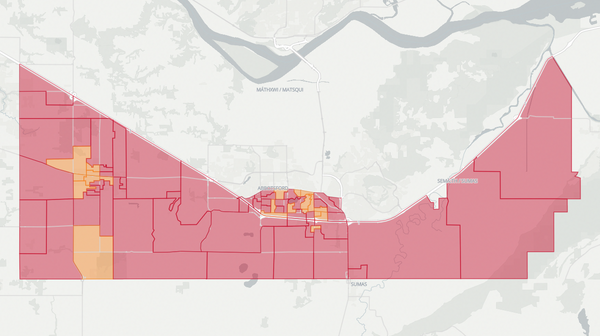
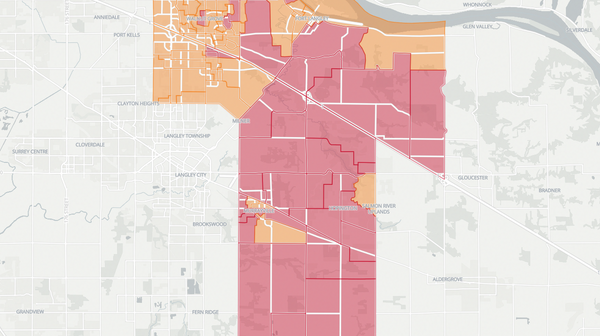
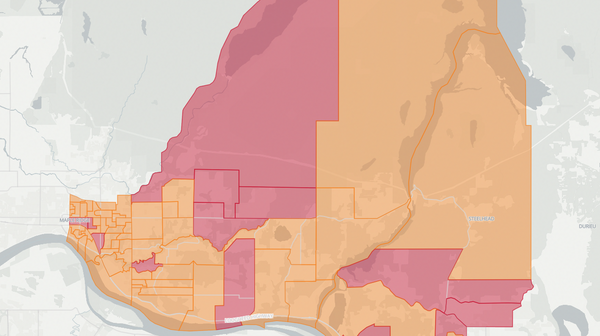
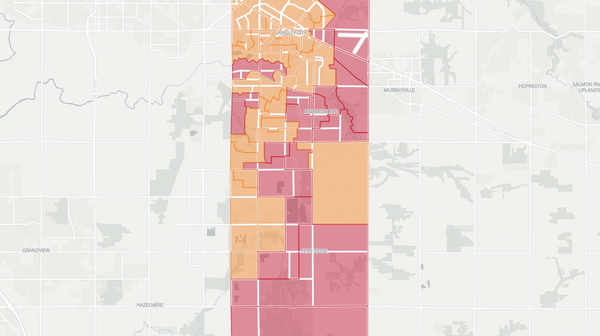
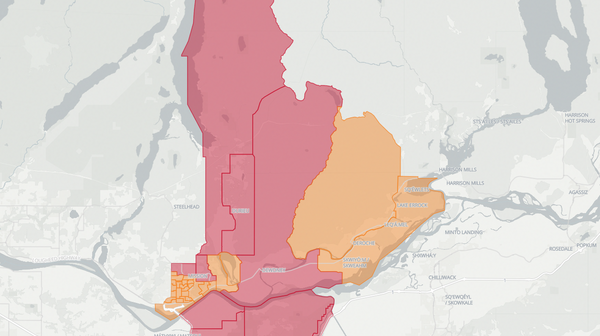
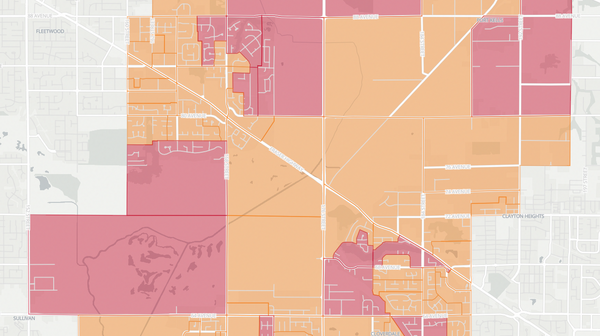
Abbotsford West — 2020 British Columbia Provincial Election Results Map
Abbotsford West — 2020 Election Results
Poll-by-poll results for Abbotsford West in the 2020 British Columbia election. The BC Liberal Party candidate won this riding. Explore detailed voting data, candidate results, and turnout statistics at the poll level.
Riding information
Auto generated. Flag an issue.Abbotsford West
Abbotsford West covers the western portion of the city of Abbotsford, taking in established residential neighbourhoods, commercial corridors, and the agricultural fringe that marks the transition from suburban development to the Fraser Valley's farmland. The riding is home to a diverse economy anchored by agri-food processing — Abbotsford accounts for more than half of British Columbia's agri-business income — alongside manufacturing, logistics, and a growing professional services sector. Highway 1 bisects the riding, and the daily commute to Metro Vancouver shapes household budgets and transportation politics.
Abbotsford West had been held by the same BC Liberal MLA since a 1994 by-election, making it one of the longest-held seats in the province. The seven-term incumbent sought re-election in 2020, and a five-candidate contest tested whether the NDP's pandemic-era momentum could penetrate one of the Fraser Valley's most durable centre-right strongholds.
Candidates
Michael de Jong (BC Liberal Party) — De Jong was the incumbent MLA, first elected in 1994 and continuously returned to the legislature since. A lawyer by training who had operated his own Abbotsford firm, he also served two terms as a school trustee for Abbotsford School District 34 before entering provincial politics. Over his career in cabinet, he held portfolios including Attorney General, Minister of Health, Minister of Forests, Minister of Aboriginal Relations and Reconciliation, and Minister of Finance. His tenure as Finance Minister from 2012 to 2017 had produced five consecutive balanced budgets.
Preet Rai (BC NDP) — Rai was a four-term Abbotsford school trustee, first elected to the school board in 2008 and re-elected most recently in 2018. He was also a chartered accountant with deep community ties, serving on the executive committee to raise funds for the Canuck Place Children's Hospice in Abbotsford. He had lived in Abbotsford for more than two decades.
Michael Henshall (Conservative) — Henshall was a real estate professional who had lived in the Fraser Valley for 25 years. He had worked in commercial fishing, the construction industry, and ESL teaching after attending Trinity Western University and UBC, where he obtained his real estate and property management licence.
Kevin Eastwood (BC Green Party) — Eastwood was an assistant grower at a native plant nursery in Aldergrove. He studied Applied Biology in Plant and Soil Science at UBC and held a Bachelor of Liberal Arts and Sciences from Quest University Canada. He had previously run for the Greens in the same riding in 2017 and had worked as a wildland firefighter and invasive species technician.
Sukhi Gill (B.C. Vision) received a minor share of the vote.
Local Issues
The NDP government's ICBC reform was among the most debated policy changes in the riding. In February 2020, Attorney General David Eby announced the shift to Enhanced Care, a no-fault insurance model that would take effect in May 2021, replacing the existing tort-based system. The government projected average premium savings of roughly $400 per driver — approximately twenty per cent — while increasing care and treatment benefits for injured parties to a maximum of $7.5 million. In a commuter-dependent riding where many households owned multiple vehicles, the promise of lower premiums resonated, but de Jong and other Liberal critics argued the reform stripped British Columbians of their right to sue for pain and suffering in most crash scenarios. The legal community in the Fraser Valley was particularly vocal in its opposition.
Highway 1 widening remained the signature transportation issue. While the NDP government had completed the new 216th Street interchange in Langley and widened four kilometres of highway in September 2020, the improvement stopped well short of Abbotsford. Fraser Valley mayors had pressed the province at the 2020 Union of BC Municipalities convention to commit to extending the widening eastward to Whatcom Road, a stretch of roughly twenty-two additional kilometres. Residents who spent hours each day on the congested corridor questioned whether the NDP would match the urgency they felt about an infrastructure deficit that had built up over decades.
COVID-19 and its effects on the local economy shaped the 2020 campaign in concrete ways. Abbotsford's diverse economy — which accounted for more than half of British Columbia's agri-business income and included over fifty food and beverage processing firms — faced pandemic-related disruptions to supply chains, labour availability, and export logistics. The food processing sector alone generated an estimated $2.2 billion in annual activity, and worker safety in processing plants had become a subject of public health scrutiny. Small businesses along the riding's commercial corridors confronted uncertainty about evolving restrictions, and candidates debated both the NDP's emergency support programs and longer-term plans for economic diversification.
The elimination of MSP premiums, completed in January 2020, and their replacement with the employer health tax on businesses with payrolls exceeding $500,000, had altered the household cost equation. The NDP argued that the change delivered net savings of approximately $800 million per year to British Columbians, with ninety-six per cent of the employer health tax revenue coming from the largest five per cent of employers. Critics, including de Jong, countered that the new payroll levy was a job-killing tax that disproportionately burdened mid-sized employers in sectors like manufacturing and logistics that were well represented in the riding. The debate over which approach — individual premiums or employer-side taxation — better served a region with both large agri-food processors and thousands of small enterprises became a recurring theme at candidates' forums.