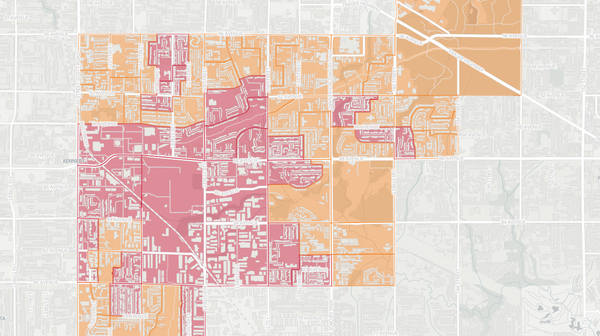
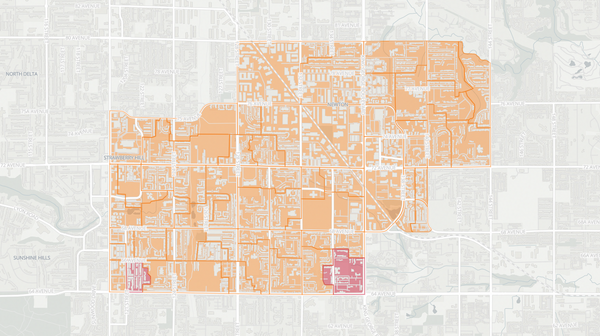
Surrey-Cloverdale — 2020 British Columbia Provincial Election Results Map
Surrey-Cloverdale — 2020 Election Results
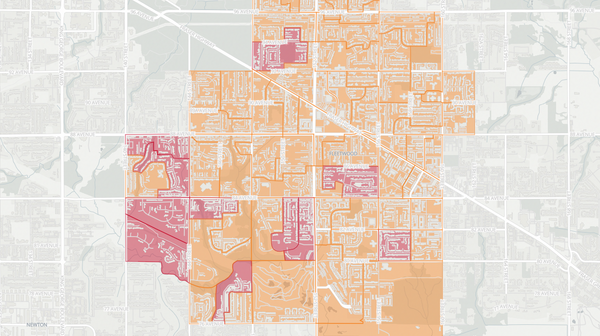
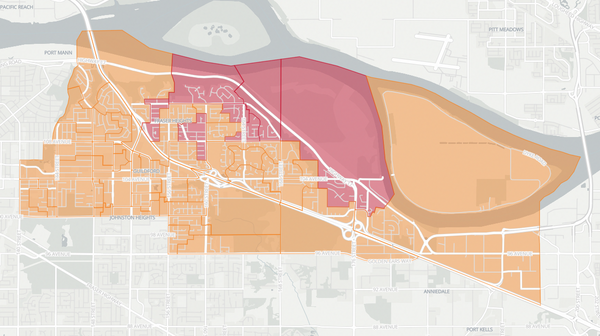
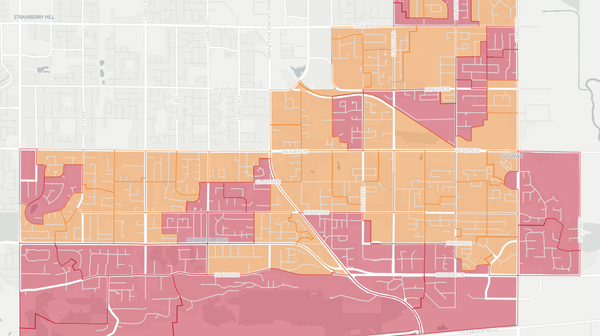
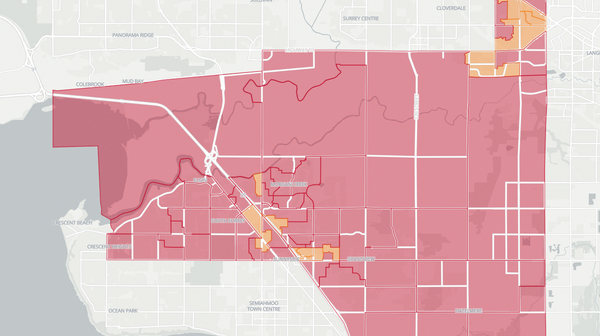
Poll-by-poll results for Surrey-Cloverdale in the 2020 British Columbia election. The BC NDP candidate won this riding. Explore detailed voting data, candidate results, and turnout statistics at the poll level.
Riding information
Auto generated. Flag an issue.Surrey-Cloverdale
Surrey-Cloverdale encompasses the historic Cloverdale town centre — home to the annual Cloverdale Rodeo at the Cloverdale Fairgrounds — the rapidly expanding Clayton Heights neighbourhood to the north, and semi-rural properties along the city's eastern boundary near the Agricultural Land Reserve. This mix of old-town character, new suburban density, and agricultural fringe gives the riding a distinct identity within Surrey's political map, and the explosive growth in Clayton Heights had made school overcrowding and community infrastructure the dominant local concerns.
The riding had been a BC Liberal seat since its creation in 1991, making it one of the party's longest-held constituencies in the province. But the political ground in Surrey was shifting: the NDP had won four of the city's nine ridings in 2017, and with the NDP polling strongly across the Lower Mainland in 2020, Cloverdale was widely identified as one of the Liberals' most vulnerable seats.
Candidates
Mike Starchuk (BC NDP) — Born in Vancouver, Starchuk moved to Surrey in the 1960s and spent his career with the Surrey Fire Service, rising to become the city's chief fire prevention officer before retiring in 2014. He was elected to Surrey City Council in 2014 as a Surrey First candidate, where he chaired the Environmental Sustainability Advisory Committee, the Agricultural and Food Security Committee, and the Seniors Committee. He lost his council re-election bid in 2018.
Marvin Hunt (BC Liberal Party) — First elected to Surrey City Council in 1988, Hunt served twenty-five consecutive years in municipal politics, during which he chaired the Metro Vancouver Board, served as president of the Union of BC Municipalities, and chaired the International Committee of the Federation of Canadian Municipalities. He won his first provincial seat in Surrey-Panorama in 2013 before moving to contest Surrey-Cloverdale in 2017.
Rebecca Smith (BC Green Party) — Smith served as executive director of the Surrey Hospice Society and had previously been executive director of the BC Psychological Association. She had contested the federal riding of Cloverdale-Langley City for the NDP in 2015 and ran as the NDP candidate in Surrey-Cloverdale in the 2017 provincial election before switching to the provincial Greens for the 2020 campaign.
Aisha Rehana Bali (Conservative) — Bali ran for the BC Conservative Party and received a modest share of the vote.
Marcella Williams ran as an Independent and received minimal support.
Local Issues
The policing transition dominated Surrey's political discourse heading into the 2020 election. Following Mayor Doug McCallum's October 2018 election victory on a platform of replacing the RCMP, Surrey City Council voted in November 2018 to begin the transition to a new Surrey Police Service. The NDP government approved the transition plan in early 2020, while the BC Liberals promised a binding referendum on the question if elected. For Cloverdale residents, the debate was deeply personal: the neighbourhood had long-standing relationships with local RCMP detachment officers, and opinions were divided on whether a new municipal force would provide more responsive community policing or simply impose higher costs without improving public safety outcomes. Property crime, auto theft, and concerns about drug trafficking along the 176th Street corridor remained persistent irritants for residents who attended all-candidates events.
School overcrowding in the Clayton Heights portion of the riding had reached crisis proportions by 2020. Katzie Elementary School housed fifteen portable classrooms — the most of any elementary school in the city — and was among the most overcrowded schools in the Surrey School District, which spent over $10.7 million annually on its 361 portables across the district. The population of students learning in portables across Surrey exceeded the entire enrollment of the New Westminster school district. The NDP government had announced plans for two new elementary schools on Maddaugh Road and Regent Road in Clayton Heights, which would create an additional 1,260 student spaces, and promised 500-seat expansions at Clayton Heights Secondary. However, the NDP's 2017 pledge to eliminate portables in Surrey remained unfulfilled, and parents in Clayton Heights — one of the fastest-growing neighbourhoods in the province — questioned whether construction timelines would keep pace with the continued influx of young families.
The opioid crisis and pandemic-related economic disruption compounded long-standing public safety concerns in the riding. British Columbia recorded 1,716 illicit drug toxicity deaths in 2020 — a seventy-four per cent increase over 2019 — with Surrey among the hardest-hit communities in the province. The economic fallout from COVID-19 restrictions hit small businesses along the Cloverdale strip and in the Clayton commercial area, where restaurants, personal service providers, and independent retailers faced months of reduced revenue or outright closure. The NDP's emergency business supports, including the BC Small and Medium Sized Business Recovery Grant, were welcomed but came late in the pandemic timeline for many operators who had already depleted their reserves.
The riding's semi-rural southern precincts raised additional concerns about agricultural land protection and the management of urban-rural boundary pressures. Development proposals that encroached on properties near the Agricultural Land Reserve boundary drew opposition from residents who valued Cloverdale's agricultural heritage — symbolized by the Cloverdale Fairgrounds and the annual rodeo — and worried that the relentless pace of residential construction in Clayton Heights would eventually consume the last remaining farmland in the area.