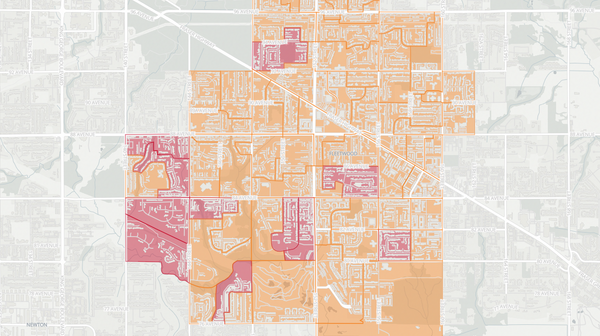
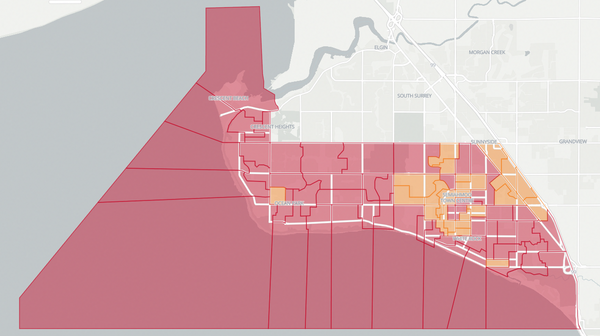
Langley — 2020 British Columbia Provincial Election Results Map
Langley — 2020 Election Results
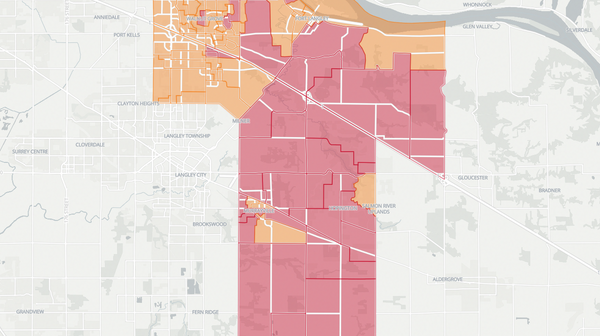
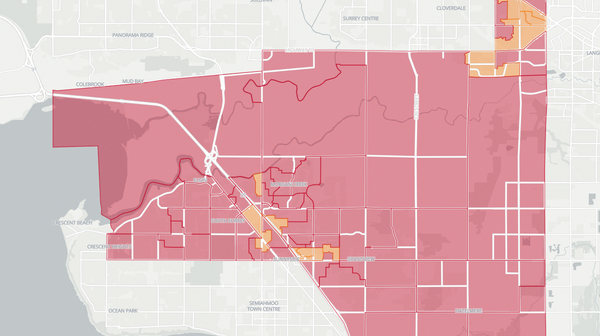
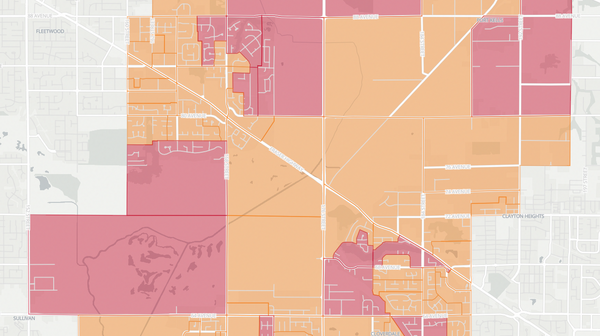
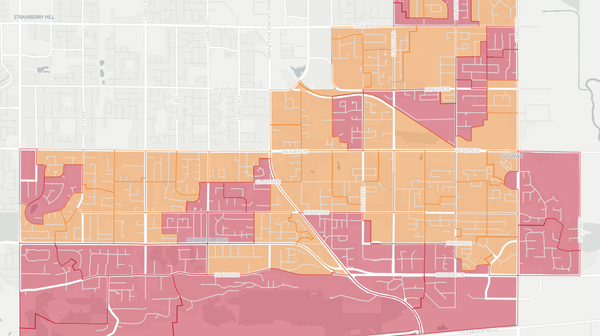
Poll-by-poll results for Langley in the 2020 British Columbia election. The BC NDP candidate won this riding. Explore detailed voting data, candidate results, and turnout statistics at the poll level.
Riding information
Auto generated. Flag an issue.Langley
Langley covers the urban core and surrounding neighbourhoods of the Township of Langley, blending suburban residential areas with Agricultural Land Reserve farmland in the Fraser Valley east of Metro Vancouver. The riding's population had continued to grow, drawn by housing prices that remained lower than those in Vancouver and Burnaby, and the community served as a bedroom suburb for commuters who depended on Fraser River crossings to reach employment centres elsewhere in the region. The economic character mixes retail and service industries with agriculture, construction, and a growing logistics sector tied to the township's highway access.
The seat had been a bedrock BC Liberal riding since 2005, held by a long-serving incumbent through four terms. In 2020, the NDP saw an opportunity to contest the seat as broader party momentum in the Fraser Valley suburbs shifted the competitive landscape. The snap election during the pandemic set up a contest between the entrenched Liberal incumbent and a first-time NDP challenger.
Candidates
Andrew Mercier (BC NDP) — Mercier was raised in Langley and returned to the community after obtaining a Juris Doctor from the Schulich School of Law at Dalhousie University. He had served as executive director of the BC Building Trades and as legal counsel for Teamsters Local 213. His campaign emphasized workers' rights, affordability, and community investment.
Mary Polak (BC Liberal Party) — Polak was the incumbent MLA, first elected in 2005. She had worked in the public opinion research industry before entering politics. She had served as a trustee and chair of the Surrey School Board before her election to the legislature. Over four terms, she held cabinet portfolios including Children and Family Development, Aboriginal Relations and Reconciliation, Transportation and Infrastructure, and Environment.
Bill Masse (BC Green Party) — Masse was a retired economist who had spent thirty years at the federal Department of Fisheries and Oceans. He was the BC Green Party's policy chair from 2014 to 2017 and had lived in Langley for twenty-two years. In retirement, he was active in community organizations including the Langley Performing Arts Society, the Triple A Senior Housing Society, and the Langley Field Naturalists.
Shelly Jan ran for the Conservative Party, receiving modest support.
Local Issues
The long-promised SkyTrain extension to Langley advanced from aspiration to planning reality during the NDP's term and was the most consequential infrastructure question in the riding. In November 2018, the Mayors' Council on Regional Transportation agreed with Surrey's decision to cancel the controversial light rail transit plan and approved the Surrey-Langley SkyTrain extension instead. The sixteen-kilometre elevated guideway along Fraser Highway from King George Station to 203 Street would transform commuting options for Langley residents and spur transit-oriented development along the corridor. By election day, the project was in the planning and design phase, and residents followed its progress closely—aware that previous promises of rapid transit to Langley had been made and broken over decades.
Affordability and housing remained dominant concerns in a riding where many residents had moved precisely because it was more affordable than communities closer to Vancouver. But prices were catching up, and the rapid pace of suburban development created tensions between those who wanted more housing and those who valued the agricultural character of the Township. The NDP government's Bill 52, passed in November 2018 and brought into force in February 2019, strengthened Agricultural Land Reserve protections by eliminating the two-zone system that had allowed non-agricultural uses on some reserve land, capping primary residences at 500 square metres, and creating new offences for illegal dumping of construction waste on farmland. The changes were welcomed by farming advocates but opposed by some property owners who felt their development options had been curtailed.
School overcrowding was an acute pressure point in the rapidly growing Willoughby neighbourhood of the Township. Enrolment growth in the Langley school district was outpacing construction timelines, with some schools—like R.C. Garnett Elementary, designed for 350 students—operating at nearly 160 percent capacity. The Willoughby area, which had been relatively undeveloped a decade earlier, was absorbing new families at a pace that the funded school construction profile could not match. Parents pressed candidates on classroom conditions, the reliance on portable classrooms, and the availability of support services for students with special needs.
Health care access—particularly the shortage of family physicians accepting new patients and long wait times for specialist referrals—rounded out the concerns that suburban voters brought to the polls. The pandemic added urgency, as parents navigated shifting school protocols and workers in essential industries faced heightened health risks. Langley's growing population had strained the capacity of Langley Memorial Hospital, and residents in the riding's southern reaches often looked to Surrey Memorial Hospital for emergency services, adding to the sense that health infrastructure had not kept pace with community growth.