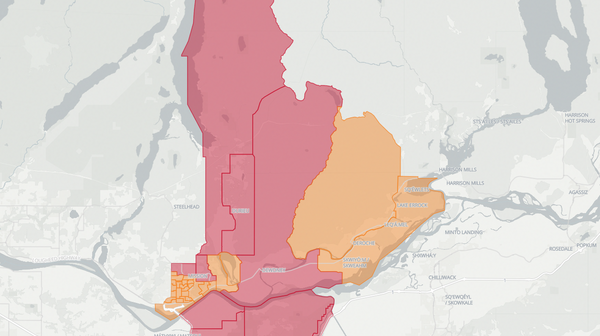
Fraser-Nicola — 2020 British Columbia Provincial Election Results Map
Fraser-Nicola — 2020 Election Results
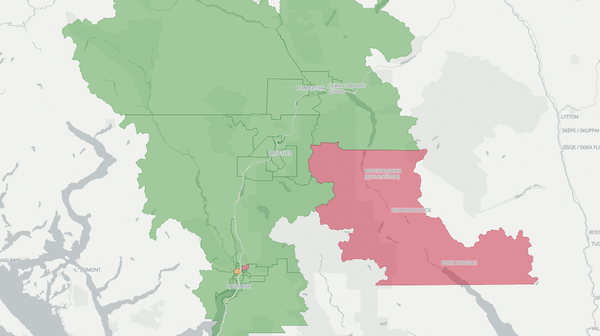
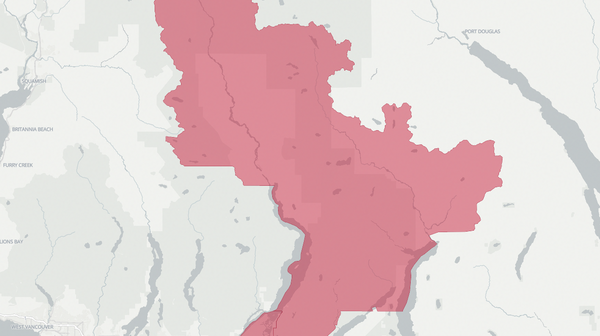
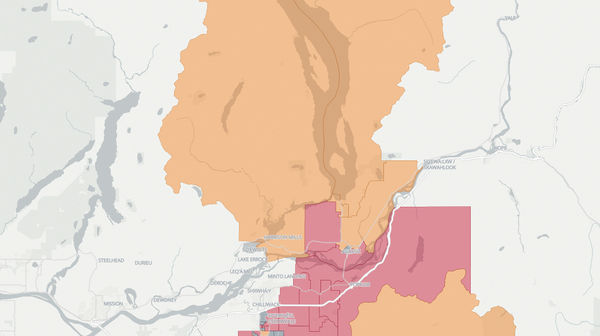
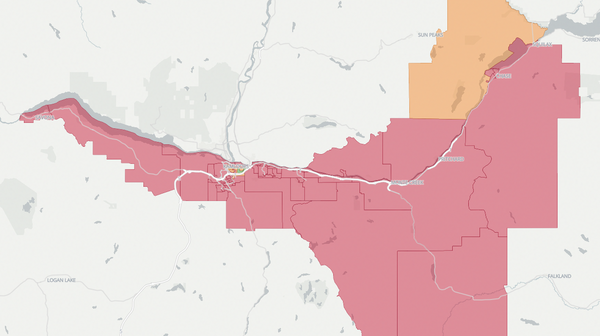
Poll-by-poll results for Fraser-Nicola in the 2020 British Columbia election. The BC Liberal Party candidate won this riding. Explore detailed voting data, candidate results, and turnout statistics at the poll level.
Riding information
Auto generated. Flag an issue.Fraser-Nicola
Fraser-Nicola is a sprawling interior constituency covering Hope, Merritt, Ashcroft, Cache Creek, Lillooet, Logan Lake, and Lytton, spanning the Nicola-Thompson-Fraser Canyon region across thousands of square kilometres of ranching country, forested uplands, and river valleys. The riding's economy depends on forestry, ranching, mining, and agriculture, and its large Indigenous population — including communities of the Nlaka'pamux, Secwepemc, and Syilx nations — gives reconciliation and Indigenous governance issues particular salience. The BC Liberals had held the seat since 2013, and the two-term incumbent entered the 2020 snap election well-entrenched, while NDP organizational strength in the riding was weakened by an internal nomination dispute that triggered the mass resignation of the entire riding association executive.
Candidates
Jackie Tegart (BC Liberal Party) — Tegart was the two-term incumbent MLA, first elected in 2013. Before entering provincial politics, she had served on the Ashcroft village council for three terms and spent 17 years on the Gold Trail School District board, including 15 as chair. She had also served as president of the BC School Trustees Association, worked as a facilitator for BC Healthy Communities, and been a coordinator for Community Futures.
Aaron Sumexheltza (BC NDP) — Sumexheltza was a practising criminal defence lawyer at the Indigenous Justice Centre in Merritt and the former elected chief of the Lower Nicola Indian Band, where he served two terms from 2013 to 2019. He also served on the Board of Commissioners for BC Housing and had been a member of the province's Climate Solutions and Clean Growth Advisory Council. Born and raised in Merritt from a ranching family, his legal work included representing survivors of residential schools.
Jonah Timms (BC Green Party) — Timms held a degree in geography from the University of Victoria. He had worked for the Alberta government conducting FireSmart wildfire risk surveys in small communities from the Rockies to the boreal forest. He moved to Lillooet to work as a First Nations Relations Advisor for the BC Ministry of Forests, forming relationships with St'at'imc and Nlaka'pamux communities.
Dennis Adamson (Independent) — Adamson was serving his fourth term as electoral director of rural Area B of the Fraser Valley Regional District. A resident of Yale, he was the vice president of the NDP riding association executive who resigned in protest over the party's nomination process before declaring his own candidacy.
Mike Bhangu (Independent) — Bhangu was a Merritt city councillor, nonfiction author, and actor who entered the race as an independent after growing disillusioned with the party system.
Local Issues
The forestry crisis struck the riding's economic heartland during the NDP's term with devastating force. Tolko Industries had permanently closed its Nicola Valley sawmill in Merritt in 2016, citing declining timber supply after the mountain pine beetle harvest — a closure that removed 250 million board feet of lumber capacity and eliminated dozens of jobs. Then in May 2019, Aspen Planers, the remaining major mill in Merritt, cut half its shifts and laid off 50 workers, blaming a lack of access to logs, collapsing lumber prices, and punitive softwood lumber duties at the U.S. border. An estimated 150 additional jobs were indirectly affected. The back-to-back closures and curtailments gutted the community's industrial employment base and left Merritt — a city of roughly 7,000 people — searching for an economic future beyond the sawmill. The NDP government's approach to timber allocation, stumpage rates, and the broader old-growth forestry review was scrutinized by workers and contractors who felt the province was failing resource-dependent communities.
Reconciliation and Indigenous water governance took on new dimensions during the NDP's term. In 2018, the provincial government and the chiefs of the Nicola Valley's five First Nation bands — including Upper Nicola, Lower Nicola, Coldwater, Nooaitch, and Shackan — signed a Memorandum of Understanding to co-lead a Water Sustainability Act pilot project in the Nicola watershed. The agreement aimed to establish collaborative management of water resources, develop a sustainability plan, improve drought response, and create a more robust environmental flow protection framework. The initiative represented a tangible step toward the NDP's commitment to implementing the United Nations Declaration on the Rights of Indigenous Peoples, but progress was slow and the challenges immense — the Nicola River system faced chronic overallocation, with competing demands from ranchers, municipalities, and First Nations for a water supply that drought years made increasingly precarious.
Health care access remained an acute concern across the riding's vast geography. Residents of Ashcroft, Cache Creek, Lillooet, and Lytton often had to travel hours to reach hospitals and specialists in Kamloops, and the chronic shortage of family physicians in rural communities left many without a regular doctor. Ambulance response times in remote parts of the riding were a source of anxiety, particularly for aging populations in small towns where volunteer first responders were sometimes the only available help. The COVID-19 pandemic exposed additional vulnerabilities in the riding's Indigenous communities, where overcrowded housing and limited health infrastructure elevated risks. The NDP government's expansion of telehealth services during the pandemic offered some relief, but residents in communities with unreliable internet access — a common reality along the Highway 1 and 5A corridors — found the digital alternative of limited practical value.
Highway safety and maintenance remained a recurring frustration for residents who depended on Highway 1 through the Fraser Canyon and Highway 5A through the Nicola Valley for daily travel, emergency services, and the movement of goods. Winter road conditions, rockfall hazards, and the absence of reliable cell service along remote stretches of highway compounded the risks for drivers in a riding where a trip to the grocery store or a medical appointment could mean an hour or more behind the wheel. The NDP government invested in highway maintenance contracts and widening projects, but the scale of the riding's road network — spanning hundreds of kilometres of mountain highways — meant that residents' complaints about potholes, inadequate lighting, and slow snow-clearing response times persisted throughout the term.