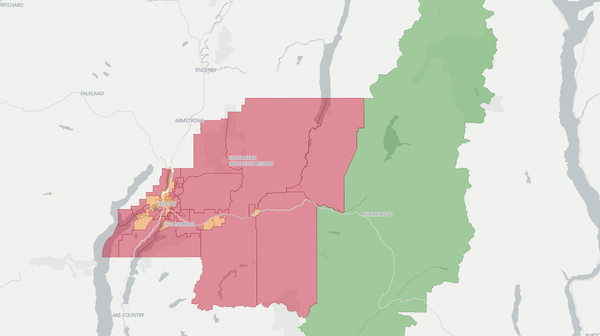
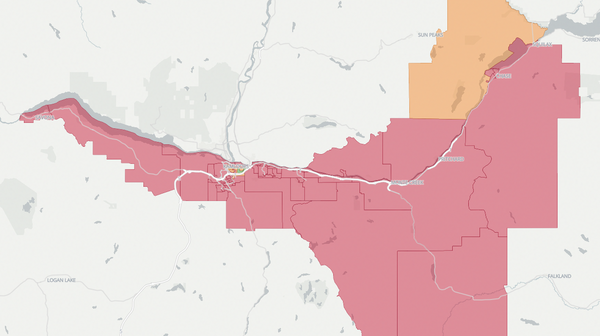
Kelowna West — 2020 British Columbia Provincial Election Results Map
Kelowna West — 2020 Election Results
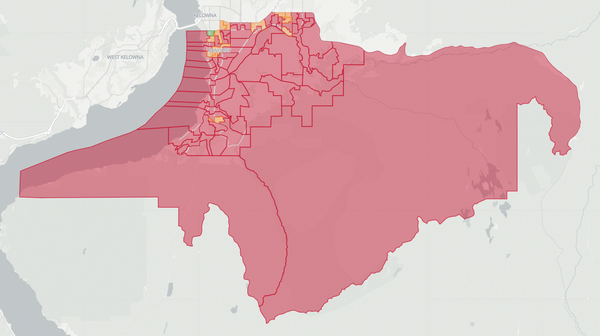
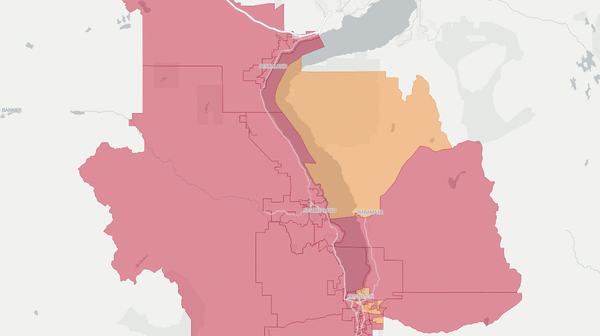
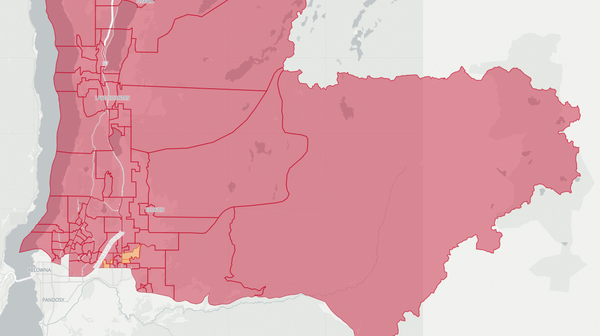
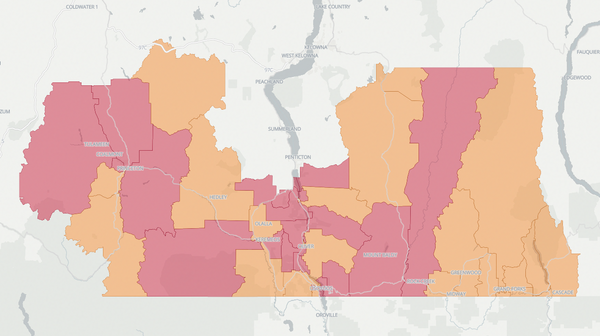
Poll-by-poll results for Kelowna West in the 2020 British Columbia election. The BC Liberal Party candidate won this riding. Explore detailed voting data, candidate results, and turnout statistics at the poll level.
Riding information
Auto generated. Flag an issue.Kelowna West
Kelowna West encompasses the municipality of West Kelowna and communities along the western shore of Okanagan Lake, an area defined by its vineyards, lakefront properties, and the William R. Bennett Bridge connecting it to downtown Kelowna. West Kelowna's sixteen wineries and the broader Westside Wine Trail form a cornerstone of the local economy alongside tourism, construction, and the service sector. The community's daily life is shaped by its dependence on the bridge crossing, which funnels tens of thousands of commuters into Kelowna each day.
The riding had been a BC Liberal stronghold, notably serving as Premier Christy Clark's seat until her resignation from the legislature after the 2017 election. The Liberals retained the seat in a 2018 by-election, and their candidate sought a full re-election term in 2020. For the NDP, the riding remained an uphill contest in a community where centre-right politics had long predominated.
Candidates
Ben Stewart (BC Liberal Party) — Stewart was the incumbent MLA, a third-generation Kelowna-area resident, and the co-founder of Quails' Gate Estate Winery, one of the Okanagan's most recognized wineries. He served as MLA for Westside-Kelowna from 2009 to 2013, holding the portfolios of Citizens' Services, Community and Rural Development, and Agriculture. After serving as BC's Special Representative in Asia from 2013 to 2016, he won the Kelowna West by-election in February 2018.
Spring Hawes (BC NDP) — Hawes was a mortgage broker in the Okanagan and a former Invermere town councillor who had served two terms. She had owned and operated a health food store in Invermere for twelve years and served for seven years as chair of Access in the Community for Equality in the Upper Columbia Valley. She had also served on the Interior Health board of directors.
Peter A. Truch (BC Green Party) — Truch was a transportation engineer and small business owner with twenty years of experience in transportation planning at local, national, and international levels. He was fluent in English, French, and German, and had begun learning the Syilx language to honour the traditional territory on which the riding is situated. His campaign centred on transportation improvements addressing key intersections and transit around the William R. Bennett Bridge.
Matt Badura ran for the Libertarian Party and Magee Mitchell as an independent, both receiving minor support.
Local Issues
Transportation congestion on the William R. Bennett Bridge was the most persistent local frustration and had worsened measurably since 2017. Traffic peaked at 59,218 vehicles per day in 2018, with summer months pushing volumes even higher as roughly 8,000 additional vehicles per day used the crossing in July and August. Incidents on the bridge—even minor fender-benders—routinely paralyzed West Kelowna commuters. A three-vehicle collision in May 2018 closed both Kelowna-bound lanes for over ninety minutes, stretching a typical half-hour commute past three hours for many drivers. West Kelowna's mayor described the municipality as being held hostage by the bridge and Highway 97, and all candidates acknowledged the severity of the problem. Debate centred on whether highway expansion, enhanced transit, or a second lake crossing was the appropriate long-term solution, though provincial transportation planners suggested transit improvements rather than a second bridge.
The NDP's speculation and vacancy tax generated particular controversy in West Kelowna. The municipality passed a resolution seeking to opt out of the tax, with some residents and business owners arguing that it penalized seasonal homeowners and discouraged investment in the tourism-dependent economy. Lakefront properties—many owned by families who used them as summer residences—were caught in a policy designed primarily for Metro Vancouver's overheated market. Supporters of the tax pointed to the revenue it directed toward affordable housing in the region, but the political fault line it created between the NDP government and West Kelowna voters was unmistakable.
The COVID-19 pandemic hit the Okanagan wine and tourism industries with particular force in 2020. Stewart's deep connections to the wine sector—as co-founder of Quails' Gate—made economic recovery a personal campaign theme. Wineries, restaurants, and hospitality businesses that depended on summer tourism faced a dramatically reduced season as public health orders limited tasting-room capacity and interprovincial travel slowed to a trickle. West Kelowna's sixteen wineries and the broader Westside Wine Trail, which had been expanding steadily through new tasting experiences and food pairings, confronted an existential threat to their business models.
The opioid crisis continued to claim lives across the Central Okanagan, and the pandemic amplified the toll by isolating people struggling with addiction and disrupting access to support services. Residents pressed candidates for expanded treatment options and mental health services that could address the root causes of addiction in their community. Wildfire risk remained a background concern as well, with the Okanagan's dry summers and expanding urban-wildland interface keeping emergency preparedness on the agenda for homeowners and municipal planners alike.