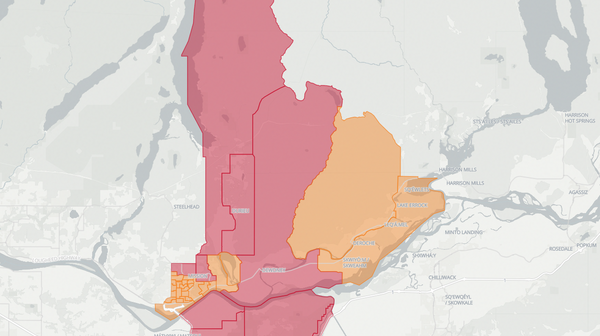
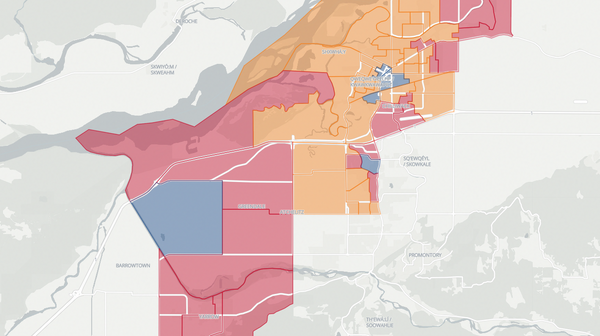
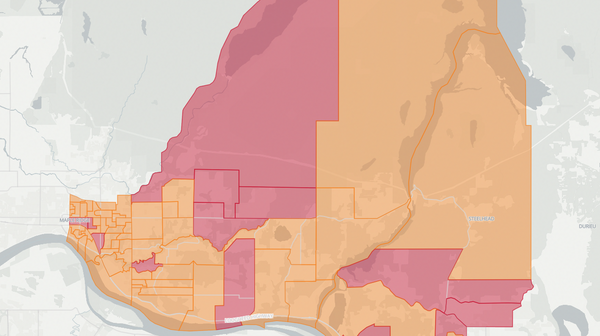
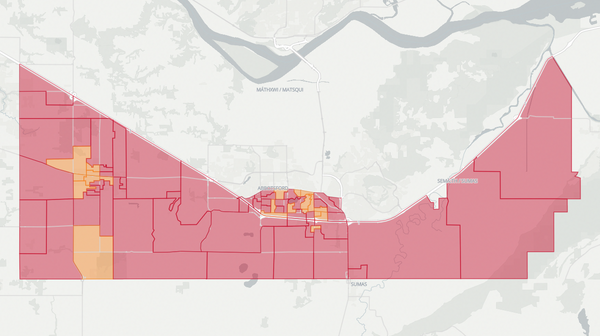
Chilliwack-Kent — 2020 British Columbia Provincial Election Results Map
Chilliwack-Kent — 2020 Election Results
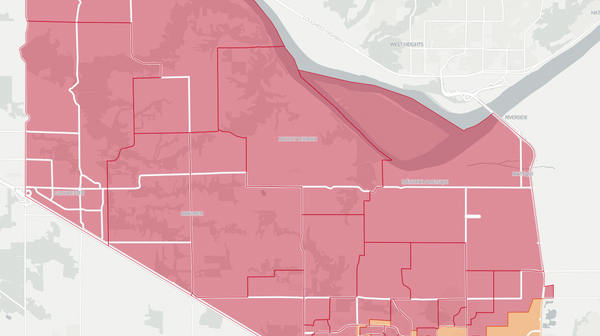
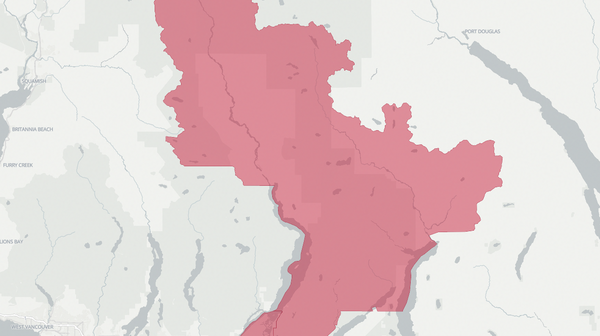
Poll-by-poll results for Chilliwack-Kent in the 2020 British Columbia election. The BC NDP candidate won this riding. Explore detailed voting data, candidate results, and turnout statistics at the poll level.
Riding information
Auto generated. Flag an issue.Chilliwack-Kent
Chilliwack-Kent covers the eastern Fraser Valley city of Chilliwack and the surrounding rural district of Kent, stretching from the suburban subdivisions of Promontory and Sardis south to Cultus Lake and east along the Trans-Canada Highway toward the agricultural floodplain. The riding blends a rapidly growing suburban core with dairy, poultry, and berry farms on some of the most productive agricultural land in the province, and its population surged during the late 2010s as families priced out of Metro Vancouver settled in the area. The BC Liberals had held the seat since 2013, and heading into the 2020 snap election, BC Liberal incumbent Laurie Throness's mid-campaign resignation from the party over controversial remarks fractured the centre-right vote and turned what had been a safe seat into one of the most unpredictable races in British Columbia.
Candidates
Kelli Paddon (BC NDP) — Paddon had spent more than fifteen years working in the community living sector, including policy and government relations work with Community Living BC. She developed and hosted the Chilliwack Non-Profit Round Table, a quarterly forum connecting local non-profit organizations with government services and decision-makers. She also created the "Work it Out" pre-employment training program for newly released offenders, and had previously worked as a community support worker, youth employment counsellor, and instructor. She was recognized as Chilliwack's Best Community Activist by The Chilliwack Progress.
Laurie Throness (BC Liberal Party / Independent) — Throness was the two-term incumbent MLA, first elected in 2013 under the old Chilliwack-Hope boundaries. He had previously worked as a policy researcher in the federal Opposition Leader's office, providing research and advice to Preston Manning, Stockwell Day, and Stephen Harper, and later served as chief of staff to federal minister Chuck Strahl. He held degrees from the University of Waterloo and Queen's University, as well as a PhD in history from Cambridge. His resignation from the BC Liberal Party mid-campaign, following remarks comparing free birth control to eugenics, meant his name appeared on the ballot as a Liberal candidate while he campaigned as an independent.
Jason Lum (Independent) — Lum was a sitting Chilliwack city councillor and chair of the Fraser Valley Regional District. His independent candidacy attracted broad community support and split the centre-right vote, with his campaign described as an unprecedented showing for an independent in the Chilliwack area.
Jeff Hammersmark (BC Green Party) — Hammersmark had a background in logistics and supply chain management, rising to a senior management position with a major global company. Born to deaf parents, he left the corporate world to care for his son, who had been diagnosed with autism spectrum disorder. He initially ceased campaigning to support independent candidate Jason Lum, then resumed his campaign after the Throness controversy erupted, though he continued to endorse Lum.
Libertarian candidate Eli Gagné also ran but received minimal support.
Local Issues
Homelessness dominated local debate heading into the 2020 election. A Fraser Valley Regional District point-in-time count conducted in March 2020 found 306 people experiencing homelessness in Chilliwack — up from 221 in the 2017 count and a dramatic increase from 73 in 2014. Family breakdown, unaffordable housing, and addiction were identified as the three leading causes. The NDP government responded during its term with two major modular supportive housing projects in the city. BC Housing purchased land and buildings at 45944 Yale Road for approximately $9 million to construct a 46-unit facility operated by RainCity Housing, which opened in spring 2019 with 24/7 support staff, an Indigenous cultural liaison, and a safe-use room. A second 46-unit complex on Trethewey Avenue followed later that year. The projects provided tangible housing for chronically homeless individuals but also generated community debate about the pace and location of supportive housing facilities in the city.
The opioid crisis deepened sharply across the Fraser Valley during the NDP's term, with fentanyl contamination driving overdose deaths to record levels. Local organizations including the Ann Davis Transition Society and the Salvation Army's Centre of Hope struggled to meet rising demand for crisis intervention and treatment referrals. The province's Mental Health and Addictions ministry established a Mobile Integrated Crisis Response team in Chilliwack, pairing mental health workers with police officers to provide a compassionate alternative to conventional law enforcement responses. The Foundry Chilliwack youth centre, part of a province-wide network, was also announced during this period to provide integrated mental health, substance use, and primary care services for young people aged 12 to 24.
Rapid residential growth reshaped the riding's infrastructure needs between 2017 and 2020. Families priced out of Metro Vancouver continued to pour into Chilliwack's Promontory, Sardis, and South Vedder neighbourhoods, straining school capacity and creating congestion along Vedder Road and Highway 1 on-ramps. The province approved a $40-million expansion of Sardis Secondary School to add 400 student seats and bring capacity to 1,600, but interim overcrowding left many students in portables. The city's own planning processes struggled to keep pace — a South Vedder neighbourhood plan was initiated to manage the commercial and residential densification along the Vedder Road corridor, while the Promontory area continued to fill with new subdivisions that lacked proportional investment in parks, sidewalks, and local amenities.
Agricultural land protection remained a persistent undercurrent in a riding where the boundary between suburban development and productive farmland was increasingly blurred. The Agricultural Land Reserve faced incremental pressure from the expansion of residential neighbourhoods and commercial projects, and local farmers raised concerns about the long-term viability of dairy, poultry, and berry operations in a community undergoing rapid urbanization. The tension between growth and preservation of the riding's agricultural heritage was a defining issue for voters with deep roots in Chilliwack's farming economy.