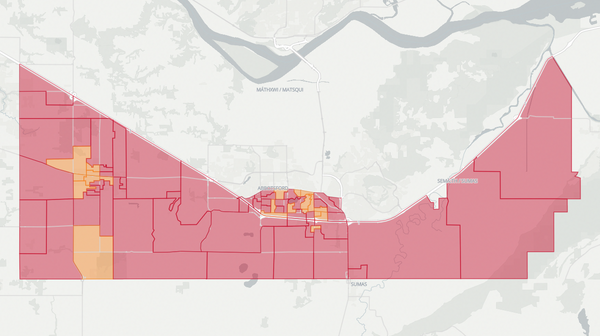
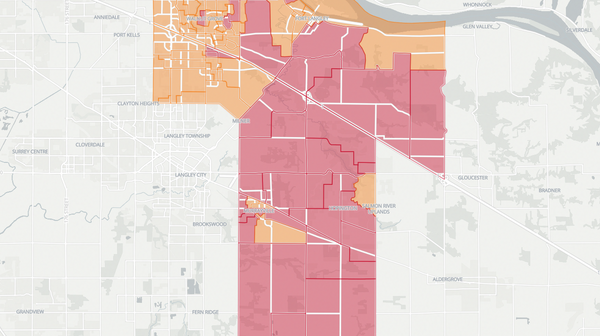
Abbotsford-Mission — 2020 British Columbia Provincial Election Results Map
Abbotsford-Mission — 2020 Election Results
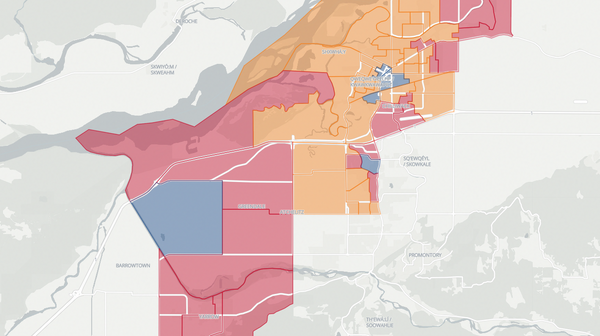
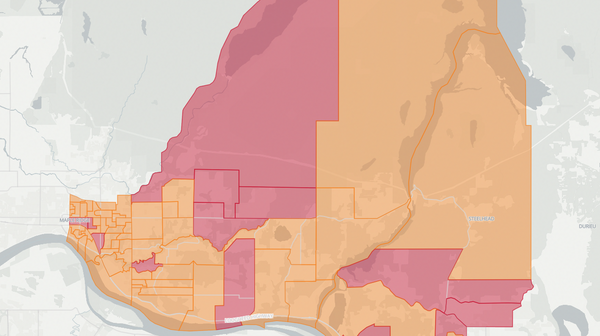
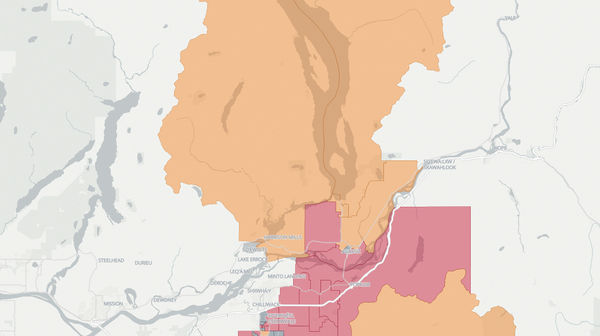
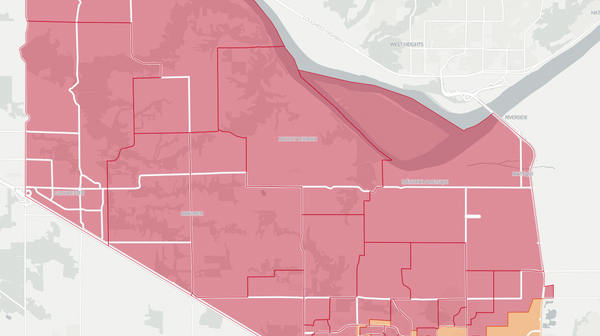
Poll-by-poll results for Abbotsford-Mission in the 2020 British Columbia election. The BC NDP candidate won this riding. Explore detailed voting data, candidate results, and turnout statistics at the poll level.
Riding information
Auto generated. Flag an issue.Abbotsford—Mission
Abbotsford—Mission straddles the Fraser River, linking the agricultural city of Abbotsford on the south bank with the smaller community of Mission to the north, connected by a single bridge. The riding takes in berry farms, dairy operations, and poultry barns on the Abbotsford side alongside Mission's mill-town heritage and growing suburban subdivisions that have attracted commuters priced out of Metro Vancouver. Rapid population growth along the Highway 1 corridor had pushed housing costs upward and strained municipal infrastructure, while the aging sewer trunk line carrying Mission's wastewater under the Fraser to the JAMES Treatment Plant in Abbotsford posed an ongoing environmental risk.
The BC Liberals had held the seat since its creation, and two-term incumbent Simon Gibson sought re-election in 2020. The NDP targeted the riding as part of a broader push into the Fraser Valley, and a five-candidate field tested whether shifting demographics and affordability pressures had made this traditionally centre-right seat competitive in a pandemic-era snap election.
Candidates
Pam Alexis (BC NDP) — Alexis was serving as Mayor of Mission at the time of the election call, having won the mayoralty in 2018. Her path in public life began in 2005 when she was elected as a Mission school trustee, a position she held until 2011. She subsequently won a seat on Mission District Council in 2014, earning the highest vote total of any council candidate. Alexis held a Bachelor of Fine Arts from the University of Victoria and had worked as an ESL teacher and at the Clarke Theatre. She was also active in the Rotary Club of Mission Midday, where she served as president and earned multiple Paul Harris Fellowships.
Simon Gibson (BC Liberal Party) — Gibson was the two-term incumbent MLA, first elected in 2013 after more than three decades on Abbotsford City Council. He held a PhD in education from Simon Fraser University, an honours degree in journalism from Carleton University, and had worked as a marketing manager for a major credit union and as a partner in an Abbotsford-based manufacturing company. During his legislative career, he served as Parliamentary Secretary for Independent Schools.
Stephen Fowler (BC Green Party) — Fowler was a teacher in the Abbotsford School District with nearly 25 years of experience in the classroom. During the campaign, he identified climate change and the unfinished sewer line between Mission and Abbotsford as the riding's most pressing concerns.
Trevor Hamilton (Conservative) and Aeriol Alderking (Christian Heritage Party of B.C.) also contested the riding.
Local Issues
The most urgent infrastructure concern in the riding was the deteriorating sewer trunk line that carried all of Mission's wastewater under the Fraser River to the JAMES Treatment Plant in Abbotsford. The existing pressurized pipe, installed in 1983, could not be internally inspected due to its design, and engineers warned that decades of rough water and rock movement had placed it at significant risk of failure. Mission's mayor described the prospect of a rupture as an environmental disaster that could send an estimated eleven million litres of raw sewage and industrial waste into the Fraser River each day, threatening salmon habitat, endangered sturgeon, and downstream ecosystems. A twinning project had been launched with federal and provincial cost-sharing in 2017, but costs had ballooned from an initial estimate of roughly $8 million to more than $30 million, and the underwater portion of the crossing remained incomplete. During the campaign, the NDP pledged $11 million to finish the project, making it a central issue at all-candidates forums.
The NDP government's three-year record on affordability was closely scrutinized in a riding where household costs had risen sharply. The elimination of MSP premiums — phased out entirely by January 2020 and replaced by an employer health tax on larger businesses — had delivered savings of up to $1,800 per family per year. The ICBC overhaul, which introduced a no-fault Enhanced Care model set to take effect in May 2021, promised an average twenty per cent reduction in auto insurance premiums. In a commuter-dependent riding where many residents drove daily to Metro Vancouver for work, ICBC costs had been a persistent frustration, and the reform's potential impact was debated at length.
COVID-19 and economic recovery dominated the broader campaign conversation. Horgan's decision to call an election during the pandemic drew criticism from opposition parties, who argued it was unnecessary and irresponsible. In the Fraser Valley, more than a dozen business organizations, media outlets, and local institutions had formed the Abbotsford Business Community Coalition to coordinate support for enterprises struggling with public health restrictions. Service-sector workers and small business owners in both Abbotsford and Mission expressed concern about the pace of recovery, and candidates debated the adequacy of the NDP government's pandemic support programs alongside proposals for additional stimulus and infrastructure investment.
Housing affordability remained a persistent issue that had intensified since the 2017 election. The NDP's speculation and vacancy tax, introduced in its minority term, had brought thousands of previously empty properties onto the rental market across the province, but the Fraser Valley continued to absorb demand from buyers priced out of Metro Vancouver. Abbotsford's population was on a trajectory toward 200,000, and Mission's growth was accelerating as young families sought more affordable alternatives along the Highway 1 corridor. The resulting pressure on rental availability, school capacity, and municipal services shaped a campaign in which growth management was as contentious as growth itself.