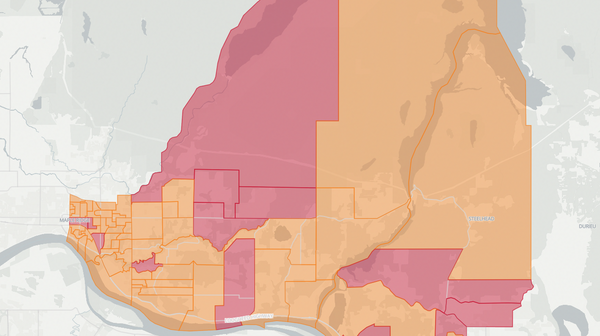
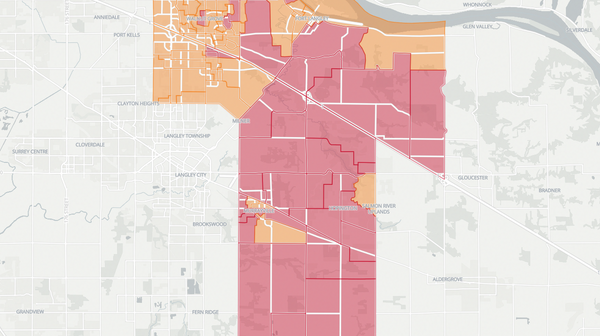
Chilliwack — 2020 British Columbia Provincial Election Results Map
Chilliwack — 2020 Election Results
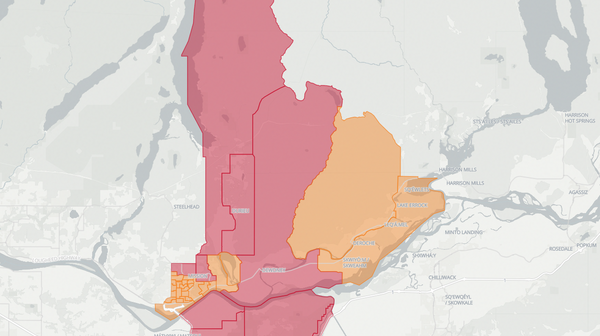
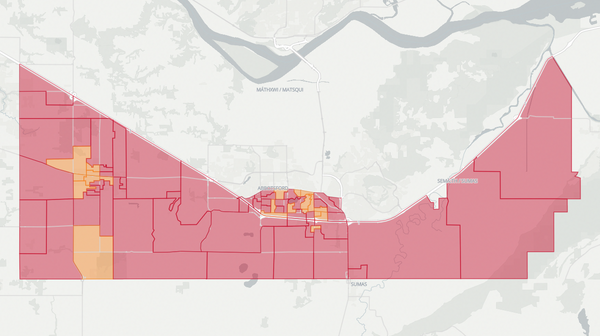
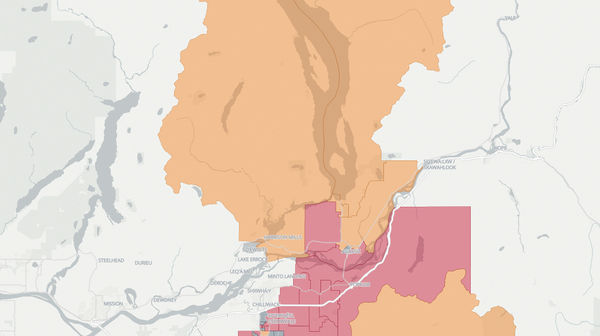
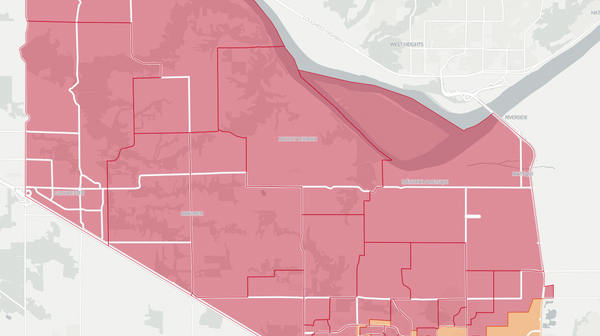
Poll-by-poll results for Chilliwack in the 2020 British Columbia election. The BC NDP candidate won this riding. Explore detailed voting data, candidate results, and turnout statistics at the poll level.
Riding information
Auto generated. Flag an issue.Chilliwack
Chilliwack sits at the eastern edge of the Fraser Valley where the flat agricultural land meets the mountains, a fast-growing city of more than 90,000 that has absorbed a sustained wave of buyers and renters priced out of Metro Vancouver. The riding covers the city proper and surrounding areas, taking in agricultural land, suburban subdivisions, and the commercial strips that serve a population that grew by more than twenty per cent between 2006 and 2016 with no sign of slowing. The opioid crisis had hit the community hard, with Chilliwack's per-capita overdose fatality rate among the highest in the province, and the arrival of provincially funded supportive housing had generated sharp local debate. Highway 1 commuters, healthcare capacity, and housing affordability dominated the riding's politics.
The BC Liberals had held Chilliwack for two terms, but a fractured centre-right field complicated the 2020 contest after a prominent former city councillor left the Liberals for the BC Conservatives over a nomination dispute. The resulting six-candidate race, with the right-of-centre vote split between the Liberal incumbent and the Conservative challenger, set the stage for one of the Fraser Valley's most unpredictable outcomes in a snap pandemic election.
Candidates
Dan Coulter (BC NDP) — Coulter was the chair of the Chilliwack Board of Education, having first been elected as a school trustee in a 2013 by-election and re-elected in 2014 and 2018, when he received the highest vote total. A millwright by trade, he had been severely injured in a workplace accident in 1999 and subsequently became a union local president and advocate for workplace safety.
John Martin (BC Liberal Party) — Martin was the two-term incumbent MLA and an associate professor in the School of Criminology and Criminal Justice at the University of the Fraser Valley, where he had taught for approximately 25 years. He held a Master of Arts in Criminology from Simon Fraser University and a Certificate in Broadcast Communications from the British Columbia Institute of Technology. During his time in the legislature, he served as Parliamentary Secretary to the Minister of Forests, Lands and Natural Resource Operations.
Diane Janzen (Conservative) — Janzen was the executive director of Chilliwack Community Services, where she oversaw roughly $6 million in operations, 105 staff, and 500 volunteers serving close to 7,000 people annually. She had previously served as a Chilliwack city councillor before stepping down in 2011 to run as the federal Liberal Party candidate in the Chilliwack—Fraser Canyon riding.
Tim Cooper (BC Green Party) — Cooper was a physics professor at the University of the Fraser Valley who held a PhD in nuclear physics and had published 50 research papers. In 2003, he shifted his focus to climate science outreach and had delivered more than 150 presentations on climate change.
Josue Anderson (Independent) and Andrew Coombes (Libertarian) also contested the riding.
Local Issues
The opioid crisis and homelessness were the most urgent social issues confronting Chilliwack, and the situation had worsened considerably since the 2017 election. Fentanyl contamination in the illicit drug supply continued to drive overdose deaths, and Chilliwack's per-capita fatality rate remained among the highest in the province. The NDP government's response included the purchase of hotels and motels for emergency supportive housing under the Building BC: Rapid Response to Homelessness program, with forty-six modular housing units with 24/7 support services proposed for a site on the 45000 block of Trethewey Avenue in partnership with the City of Chilliwack. The program drew mixed reactions: supporters saw it as an overdue investment in housing for people experiencing severe addiction and mental health challenges, while opponents objected to the siting of supportive housing in residential neighbourhoods and questioned whether housing-first approaches adequately addressed the root causes of addiction.
Healthcare capacity was a growing concern in one of BC's fastest-growing municipalities. Residents reported difficulty finding family doctors, and Chilliwack General Hospital faced staffing and service-delivery challenges as the city's population surged past 90,000. The NDP government had begun planning for expanded primary care infrastructure, but the riding did not yet have an urgent and primary care centre of the type being opened in other communities. The pandemic intensified these pressures, as COVID-19 tested both hospital capacity and the community's access to mental health and addiction services. Candidates debated provincial investment in primary care, mental health services, and hospital infrastructure to keep pace with the city's expanding population.
Housing affordability continued to transform Chilliwack's political landscape. The city's relative affordability compared to Metro Vancouver had attracted a sustained wave of buyers — Chilliwack's population grew by more than twenty per cent between 2006 and 2016, and that trajectory continued into the election year. Home prices that had once made Chilliwack an affordable alternative were climbing as demand from buyers priced out of Surrey, Langley, and Abbotsford pushed the market upward. The NDP's speculation and vacancy tax did not apply directly to Chilliwack, as it fell outside the designated taxable regions, but the broader suite of housing measures — including rental construction incentives and the foreign buyers tax surcharge — shaped the policy debate. The Greens' and Liberals' alternative proposals for addressing the supply shortage were also discussed in a community that was experiencing firsthand the consequences of being the Fraser Valley's last relatively affordable municipality.
The NDP's ICBC reform loomed large in a riding where many residents depended on personal vehicles and where commuting to Metro Vancouver remained common. The Enhanced Care no-fault model, announced in February 2020 and set to take effect in May 2021, promised average premium savings of roughly twenty per cent — an estimated $400 per driver — while capping care and treatment benefits at $7.5 million for the most seriously injured. The trade-off was the elimination of most lawsuits for pain and suffering, a change that the legal community and some consumer advocates opposed. In Chilliwack, where auto insurance premiums had climbed steeply and household budgets were already stretched by rising housing costs, the promise of lower rates resonated with many voters, even as critics warned that injured parties would receive less overall compensation under the new system.